Few things spike a soapmaker’s heart rate like a batter that looks thick and ready, then turns grainy, separates, or goes from silky to concrete the second you add fragrance. The tricky part is that those disasters often start with two lookalikes: false trace and a fast-moving fragrance oil. They can appear similar in the bowl, but they behave very differently in the mold.
In this guide, I’ll show you how to tell true emulsion from false trace, how to set up your recipe and temperatures to stay in control, and what to do when a fragrance tries to hijack your batch anyway.
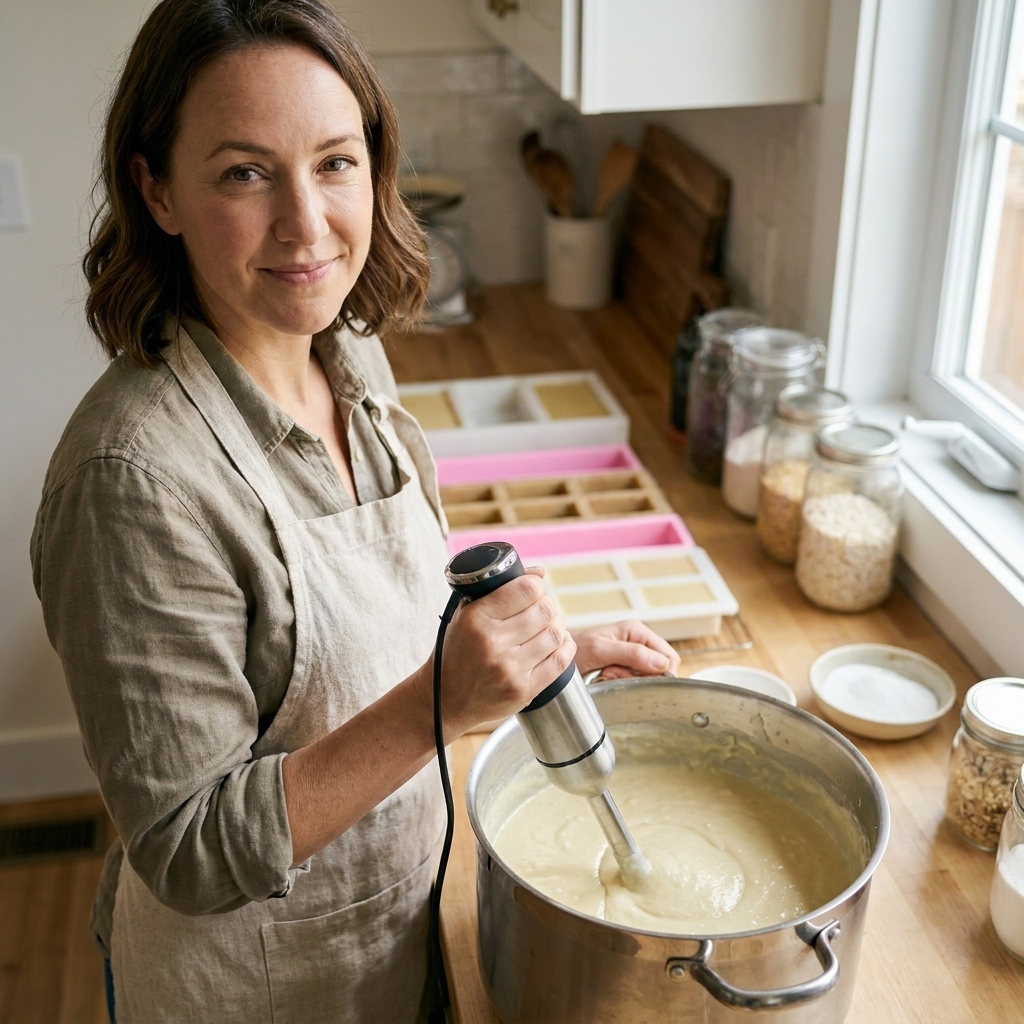
False trace vs true emulsion
Trace is not a single moment. It is a range. But emulsion is a specific, important checkpoint: it means your oils and lye solution are fully combined and will not easily separate. I am going to use “true emulsion” as the goalpost throughout.
What false trace is
False trace happens when the batter thickens because some of your hard fats are cooling and solidifying, not because emulsification and saponification have truly kicked in. It is most common in recipes with a lot of:
- Butters (shea, cocoa, mango)
- Hard oils (coconut, palm, tallow, lard)
- Waxes and high-stearic additives (beeswax, soy wax, stearic acid)
It can also happen when your lye solution is cool and your melted oils are only barely warm, especially in a chilly room.
What true emulsion looks like
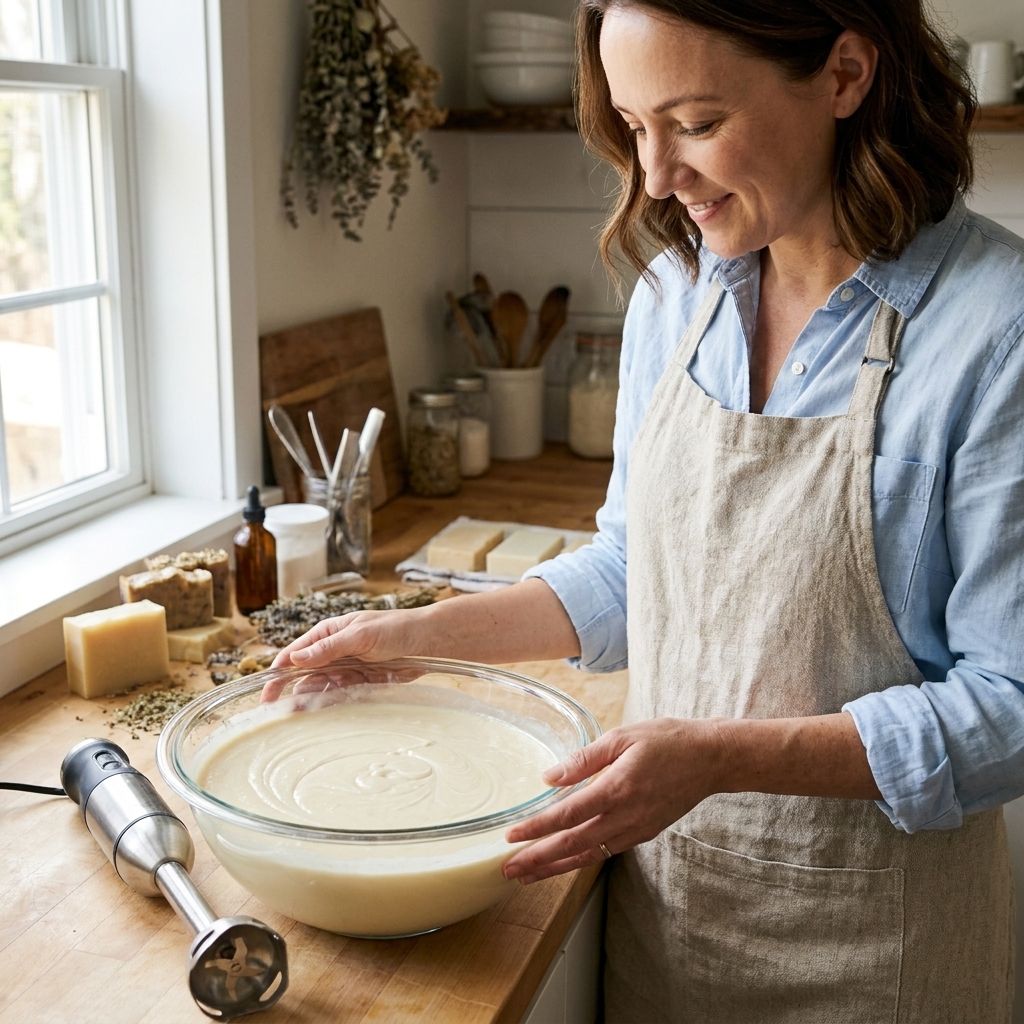
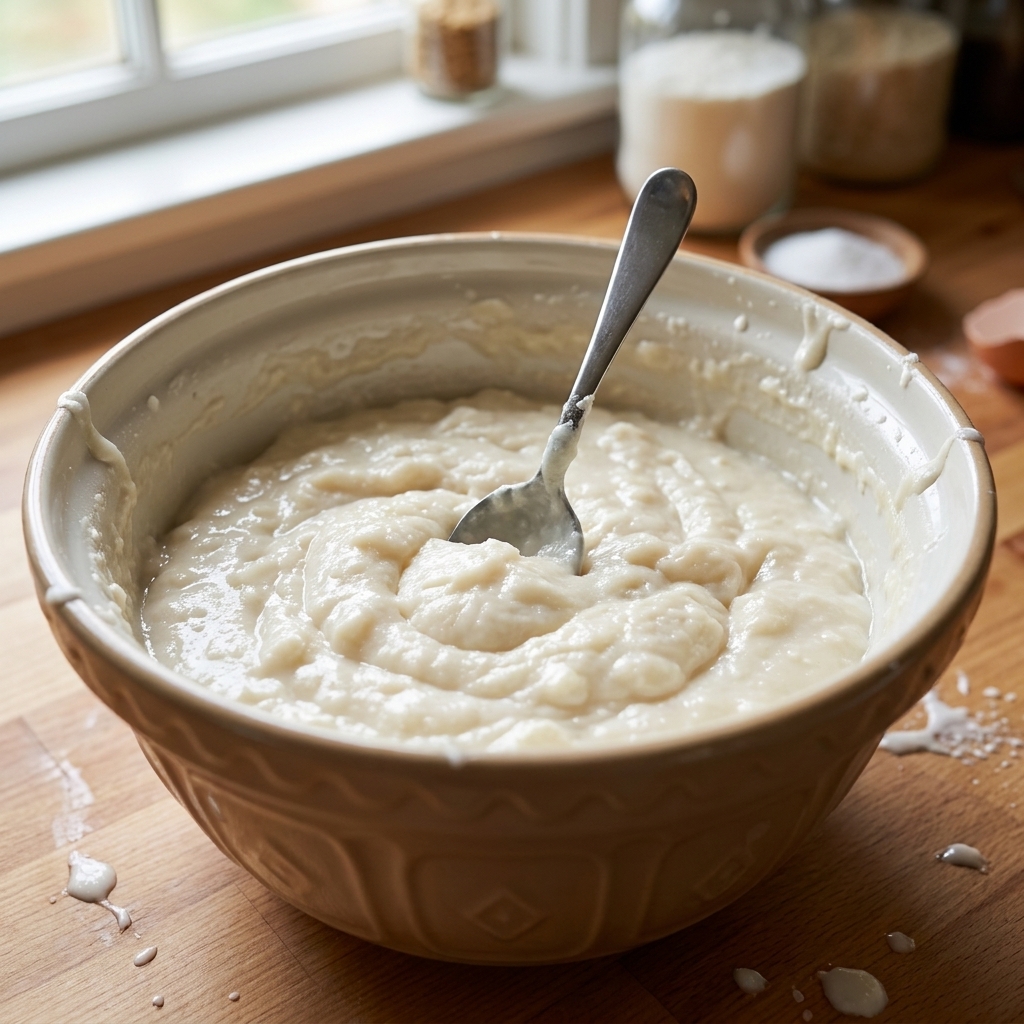
True emulsion usually looks like a uniform, slightly thickened batter with a consistent sheen. It often resembles thin custard or light cream. You may not see defined trails on the surface yet, but the mixture is stable.
A quick sensory check you can trust
I know we all want a foolproof visual cue. In real life, you are looking for a cluster of signs that point to stability.
- Consistency stays even: After you stop blending, the batter should not quickly turn lumpy or grainy around the edges.
- No oily halo: Watch the surface for 30 to 60 seconds. A shiny ring of oil often means you are not fully emulsified yet, although temperature gradients, heavy additives, or extreme water discounts can sometimes make the surface look odd even when you are close.
- Drizzle test: Dip a spoon, lift, and drizzle. In emulsion, the drizzle melts back in smoothly. In false trace, it may sit on top in ridges that look impressive but feel suspiciously waxy.
- Rub test (carefully): With gloves on, rub a small bit of batter between two gloved fingers. False trace often feels like tiny grains or soft wax pearls.
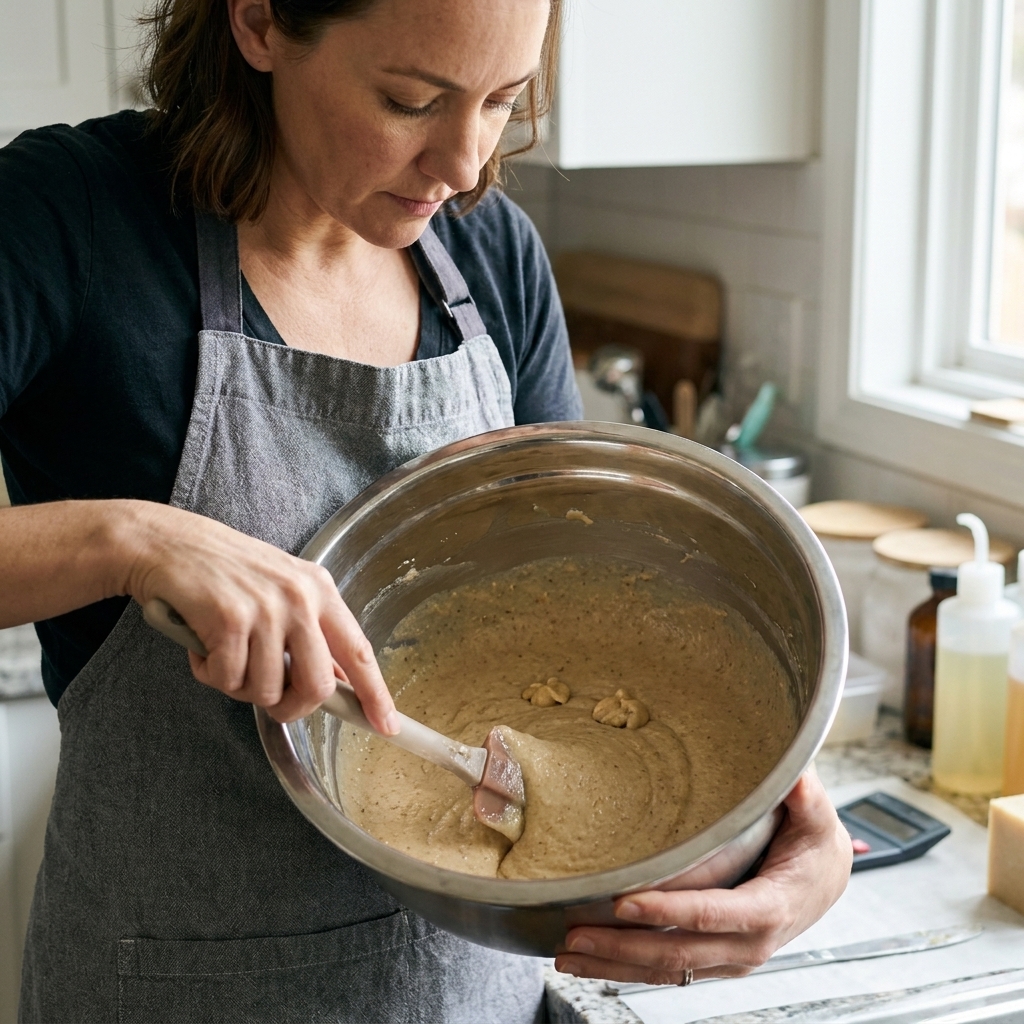
Why false trace is a problem
Soap poured at false trace can look fine for an hour, then:
- Separate in the mold (oil layer, pockets, or a wet line)
- Develop stearic spots (hard white specks from cooled fatty acids)
- Give you a false sense of security, leading you to add fragrance and start swirling before the batter is truly stable
The frustrating part is that false trace tricks you into thinking you are ahead of schedule. You are not. You are just cold.
How to prevent false trace
1) Soap a little warmer with hard fats
If your recipe contains a lot of solid fats, give yourself a warmer buffer so they stay melted while you emulsify. I often aim for roughly the low to mid 90s F with many balanced recipes, then adjust as needed. High-stearic recipes (butters, tallow, added stearic acid, waxes) may need warmer soaping to stay fully melted. High-oleic, mostly-liquid-oil recipes can often soap cooler without issue. The goal is not “hot.” The goal is staying above the point where your hard fats start to re-solidify.
2) Fully melt, then keep it melted
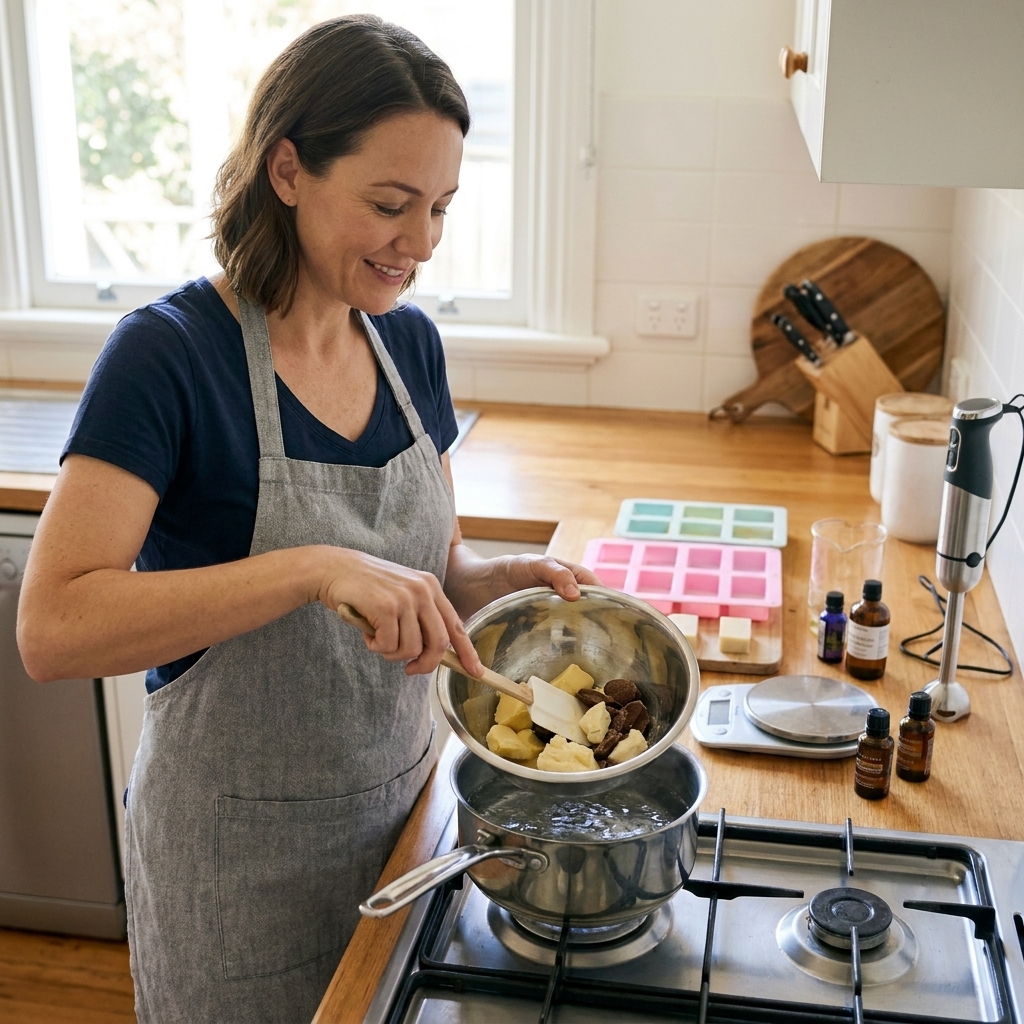
When you melt your oils, do not stop at “mostly melted.” Those last little translucent chips of butter matter. Melt completely, then stir well. If your pot sits on a cold counter, it can cool fast. A folded towel under the pot can help slow heat loss while you prep.
3) Stick blend in short bursts
Continuous blending can push you past emulsion into thicker trace quickly, and it can whip in extra air. I do this instead:
- Blend 2 to 3 seconds
- Stir 10 to 15 seconds
- Repeat until you hit true emulsion
This gives you more control and reduces the odds of thickening a batter that was only thick because it was cooling.
4) Watch additives that change texture fast
Some ingredients can cool batter, thicken it, or create a misleading “false thickness” if they are not well dispersed:
- Milks (especially if partially frozen)
- Honey or sugars (can heat later, which is its own planning issue)
- Clays (thicken, sometimes dramatically)
- Titanium dioxide (can thicken and can clump if not dispersed well)
If you are using a lot of these, keep your base batter more fluid before adding them and make sure they are well dispersed in oil or glycerin as appropriate.
Fragrance oils that accelerate
Some fragrance oils behave politely. Others hit your batter like a switch. Acceleration is when a fragrance causes the soap to thicken much faster than expected. In extreme cases, you get ricing (little beads or granules), then seizing (a sudden thick mass that is difficult or impossible to pour).
Why it happens varies by fragrance composition. Florals, spices, and some essential oils have a reputation for moving faster, but there are exceptions in every direction. Your supplier’s notes and your own testing matter most.
In the bowl, acceleration often shows up as:
- Batter thickening within seconds of adding fragrance
- Grainy “rice” that may or may not blend smooth
- Sudden loss of fluidity, making swirls impossible
Plan for fast fragrances
Check behavior before a full batch
If a fragrance is new to you, do not let a full loaf be the test. Read supplier notes for acceleration and discoloration, then run a small test batch in a simple, known recipe. Even a one-pound batch can save you a lot of frustration.
Choose a simple design
If you already know an oil accelerates, choose a design that loves a thicker trace:
- One-color soap with texture on top
- Simple two-part layers poured quickly
- Spoon plops or rustic pours
- In-the-pot swirl only if you can work fast
Save intricate hangers, delicate drop swirls, and multi-color feather swirls for fragrances that behave.
Soap cooler, but do not trigger false trace
This is the balancing act. Cooler temps can slow reaction and buy time with a fast fragrance. But too cool can solidify hard fats and create false trace. The sweet spot depends on your recipe. For high-olive or high-liquid-oil recipes, you can often soap cooler comfortably. For high-butter or high-stearic recipes, stay warm enough to keep everything truly melted.
Stop at emulsion before fragrance
With an accelerating fragrance, I stop at true emulsion or the thinnest trace possible. If you blend to medium trace first, the fragrance might push you straight into glop territory.
Stage everything first
This sounds obvious, but it matters more with fast fragrances than almost anything else:
- Mold assembled and ready
- Colorants dispersed and within reach
- Spatulas and whisks ready
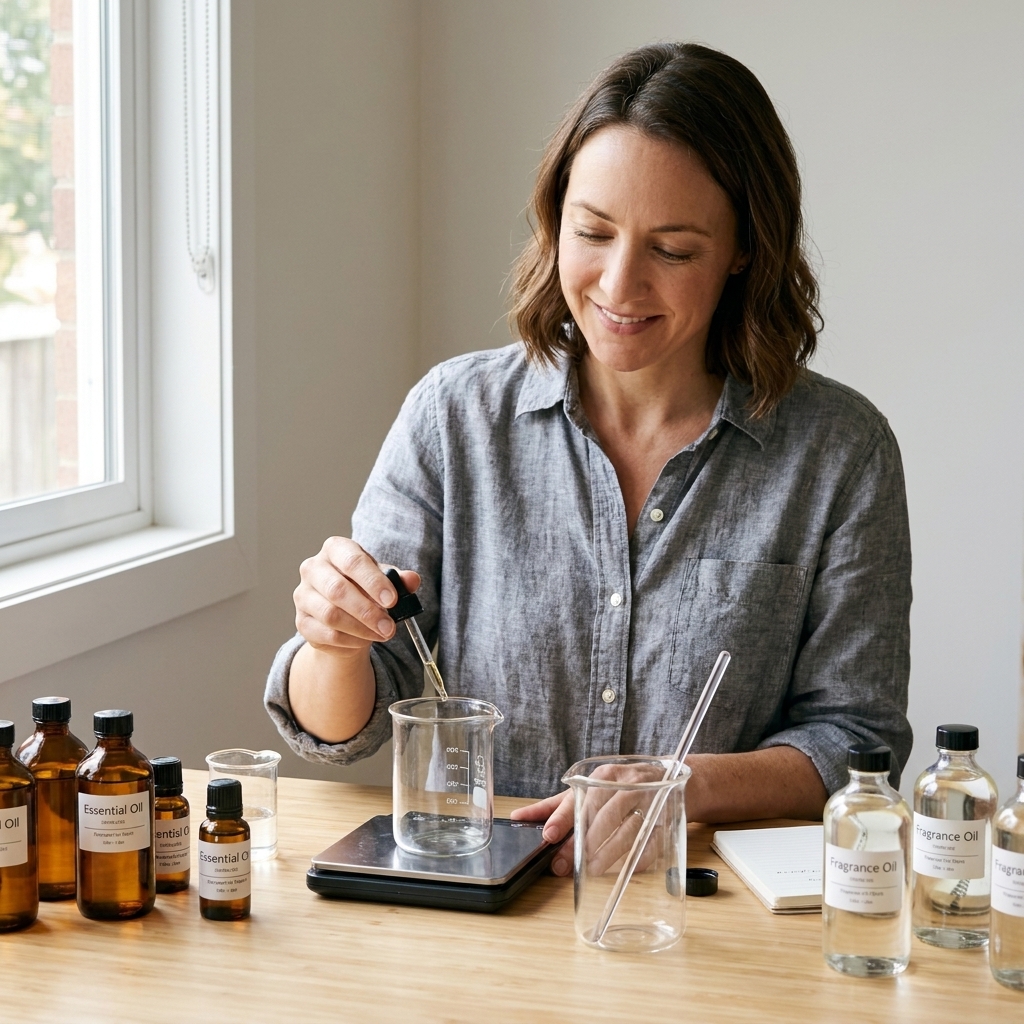
- Fragrance pre-weighed in a small cup
If you need to hunt for a scraper while your batter thickens, your batch will not wait politely.
Mind your water and lye concentration
Higher lye concentration (less water) tends to trace faster and can compound fragrance acceleration. If you are working with a known fast fragrance, consider using a more moderate water amount so you have a little more working time, especially if your recipe is already quick.
Add fragrance strategically
These approaches can help you keep control:
- Hand-stir in the fragrance: Stick blending after fragrance can trigger instant acceleration. I prefer a thorough hand stir first, then a tiny pulse only if needed.
- Split before you scent: If you are doing multiple colors, portion your batter first, then fragrance each portion quickly. This prevents one big bowl from thickening while you divide.
- Anchor in oils: Some soapmakers reserve a small amount of liquid oils from the batch, mix the fragrance into that, then add it back. This can help the fragrance incorporate more smoothly, though it is not a guarantee with truly wild fragrances.
Troubleshooting in real time
If you suspect false trace
Stop, breathe, and warm things up slightly.
- Check temperature of your pot and batter. If it feels like it is cooling fast, it probably is.
- Keep stirring to re-melt any fats trying to set up.
- Use brief blending to reach true emulsion, not thicker trace.
If the batter remains grainy and waxy, gentle warmth can help. Setting your soap pot into a larger pan with warm water for a minute or two can bring it back, as long as you do it carefully and keep everything stable and spill-free.
If the fragrance causes ricing
Ricing is not automatically a failure. First, determine if it is minor or severe.
- Minor ricing: Whisk vigorously. Often those little beads will smooth out.
- Moderate ricing: A few quick pulses with the stick blender can bring it back. Pulse lightly to avoid jumping straight to thick trace.
- Persistent ricing: If it will not smooth out, treat it like a textured rustic soap. Spoon it into the mold and tap firmly to reduce air gaps.
If the batter seizes
Seizing looks dramatic, but it is usually salvageable. Your goal shifts from “pretty swirls” to “fully saponified soap in a mold.”
- Pack it in: Scoop and press the soap into the mold like thick mashed potatoes. Smash down corners to avoid voids.
- Prevent overheating: Do not force gel with extra heat if your recipe also runs hot. Watch for cracking, especially with sugars or milk.
- Consider hot process rescue: If it is fully unworkable in the bowl, you can move the seized mass into a crockpot or double boiler and hot process it. Once it becomes glossy and more uniform, you can spoon it into the mold.
Even if the top looks rustic, the bars can still be perfectly usable and gentle once cured.
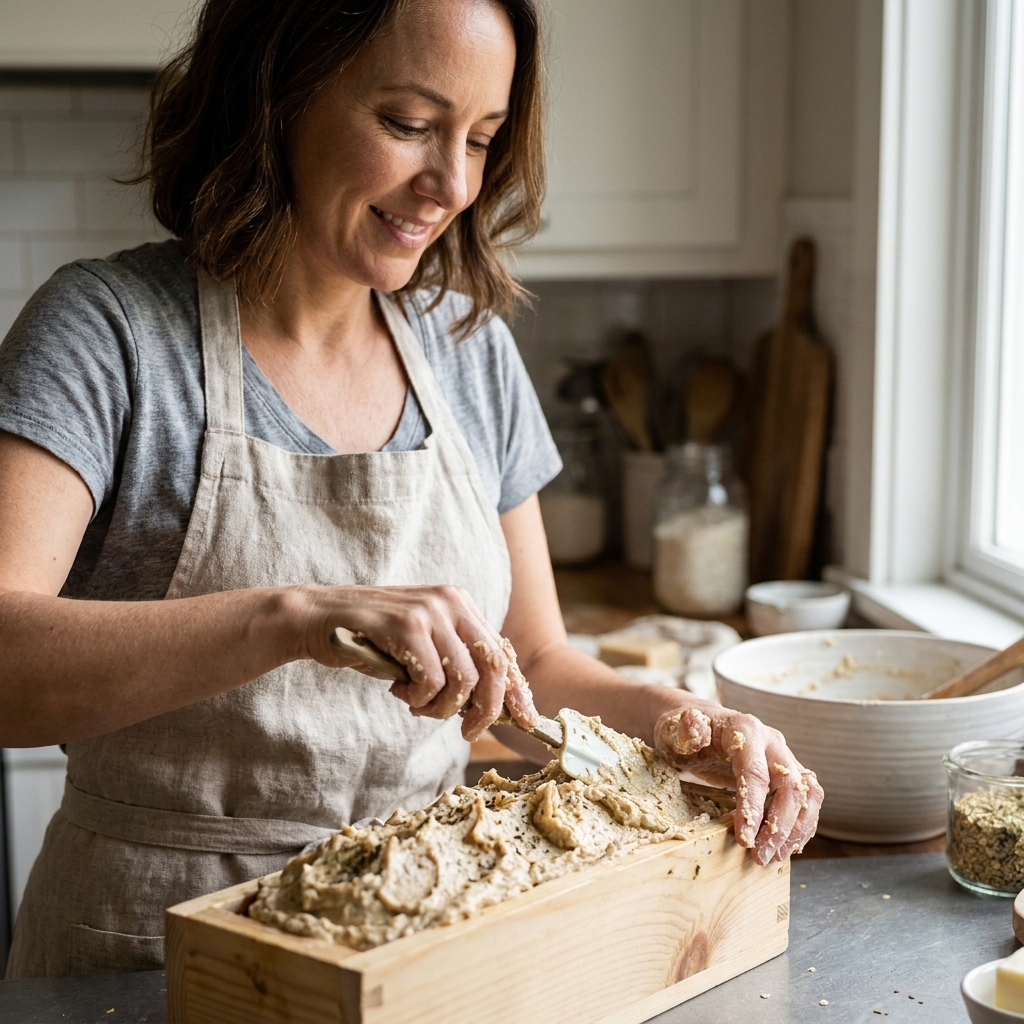
A simple workflow
If you want a repeatable routine that keeps you out of panic mode, here is my go-to order of operations when I know a fragrance can accelerate:
- Mix colorants and set them next to the mold.
- Bring oils and lye to a workable temperature for your recipe, warm enough to avoid false trace.
- Stick blend to true emulsion, not beyond.
- Split batter into containers if using multiple colors.
- Hand-stir fragrance in quickly and thoroughly.
- Color and pour immediately. Skip complicated techniques if the batter starts thickening.
- Texturize the top if you need a plan B that still looks intentional.
Safety notes
When batter starts to misbehave, it is easy to rush. Keep these safety anchors in place:
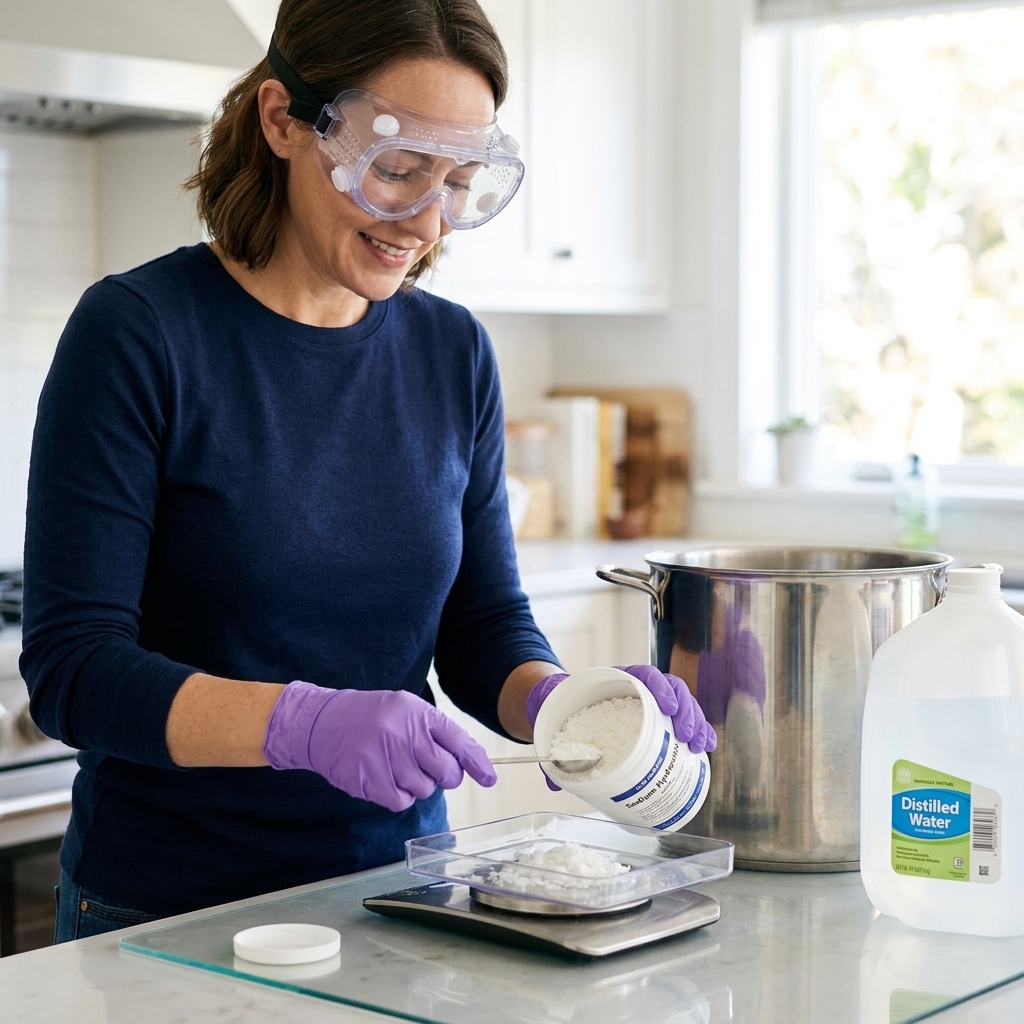
- Wear gloves and eye protection the whole time, especially during salvage attempts.
- Do not add extra water to “thin” seized soap. It can increase separation risk and make it harder to mix evenly, which can leave unevenly saponified areas.
- Be cautious with reheating a batter that contains sugars, milk, or honey. Overheating can lead to volcanoes, cracking, or warped molds.
- Ventilation matters when working with fragrance oils, and even more if you end up hot processing a seized batch.
FAQ
Can false trace turn into separation later?
Yes. A batter that thickened from cooling can look stable, pour thick, then separate in the mold as the oils and lye solution drift apart. That is why confirming true emulsion matters more than chasing pretty trails.
Is false trace more common with butters?
Very common, yes. Shea, cocoa, mango butter, plus high-stearic fats like tallow can start solidifying as your mixture cools. If your room is cool or your lye solution is quite cold, false trace becomes much more likely.
Should I stick blend after adding fragrance?
With a known accelerator, I treat the stick blender like a last resort. Start with a thorough hand stir, then pulse only if you need help smoothing out ricing or fully incorporating. Over-blending after fragrance is a common path to seizing.
Will a seized batch be lye heavy?
Not necessarily. Seizing is usually a texture problem, not a measurement problem. If your recipe was calculated correctly and you measured carefully, the soap should still saponify normally. The bigger risk is air pockets or uneven packing, so press the soap firmly into the mold.
My favorite mindset shift
When a batch accelerates, it is tempting to call it ruined. I try to reframe it as a design change that happened without asking. You can still end up with lovely bars, especially if you lean into a textured top and keep your focus on safe, thorough mixing and a good cure.
And once you learn the difference between false trace and true emulsion, you’ll feel that quiet confidence in the bowl. You are not guessing anymore. You are reading the batter like a story, and you know what comes next.