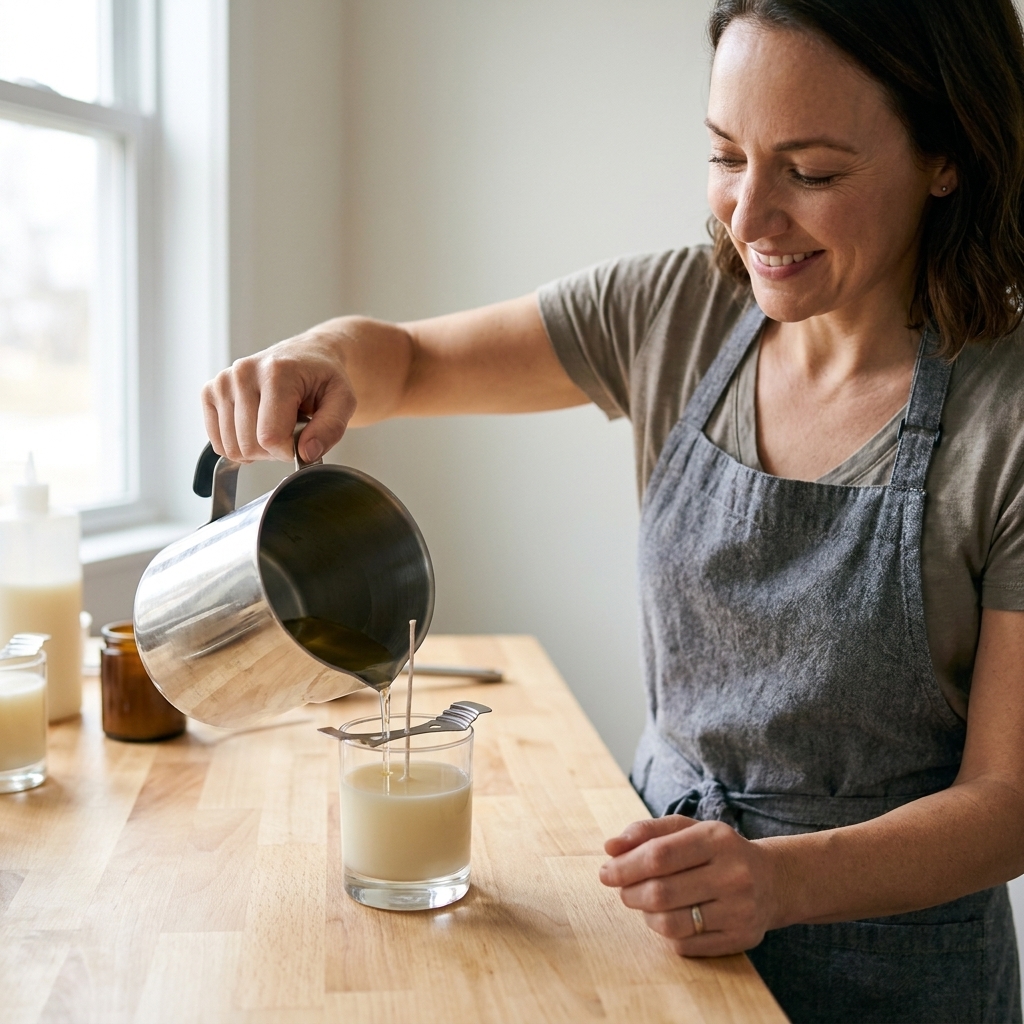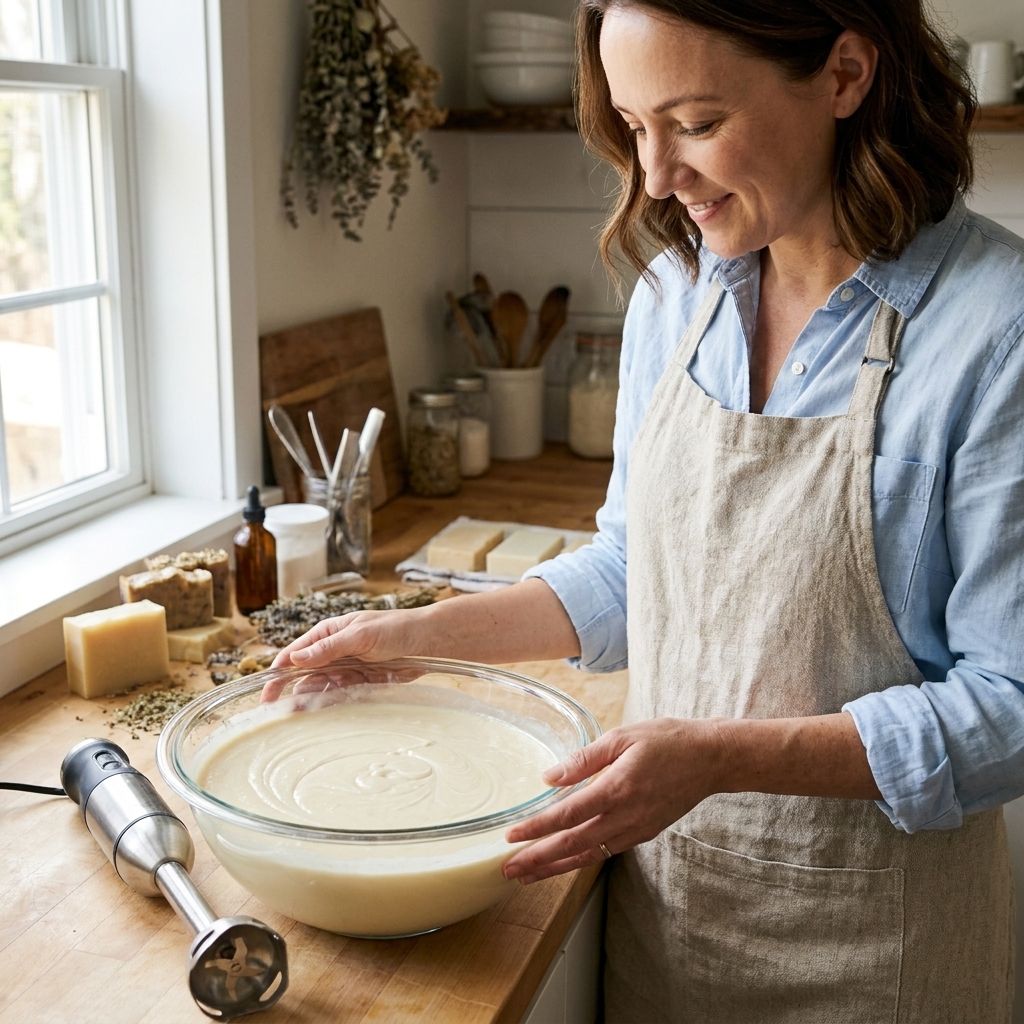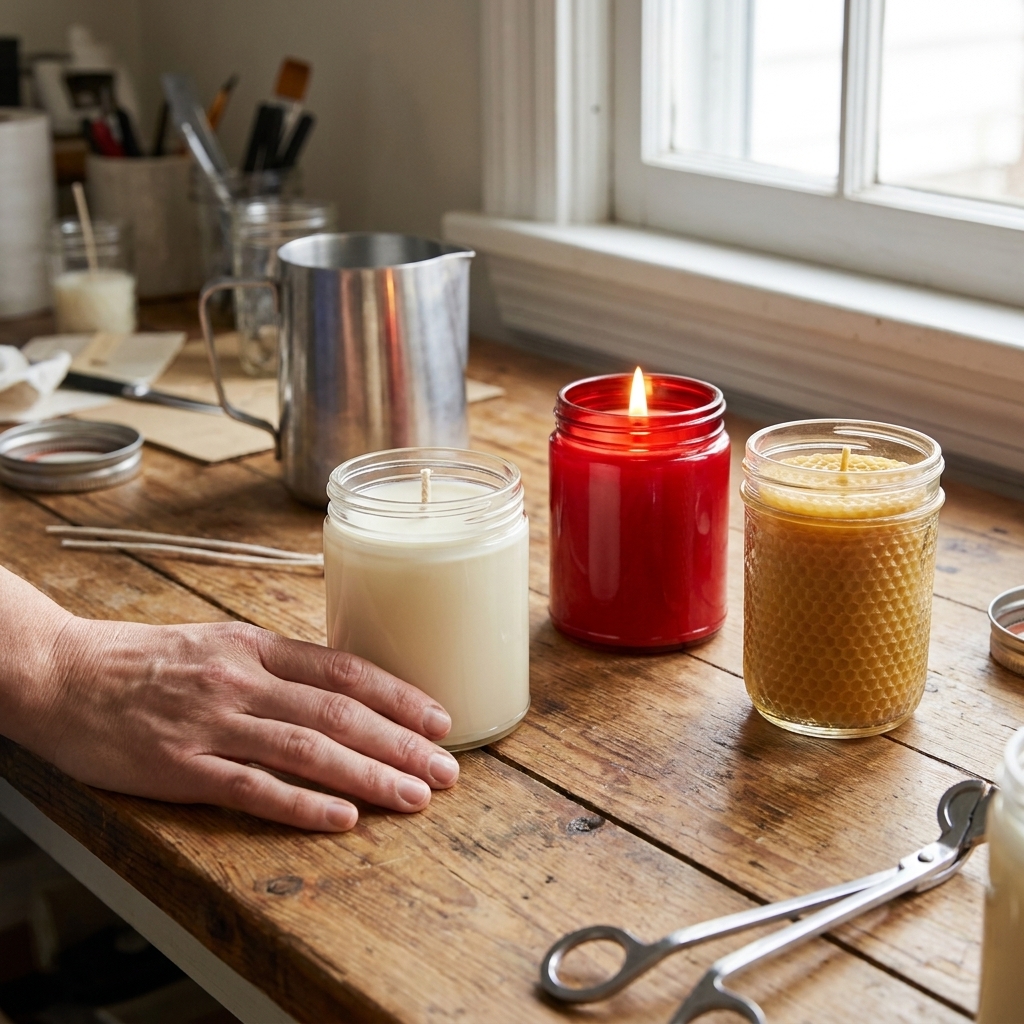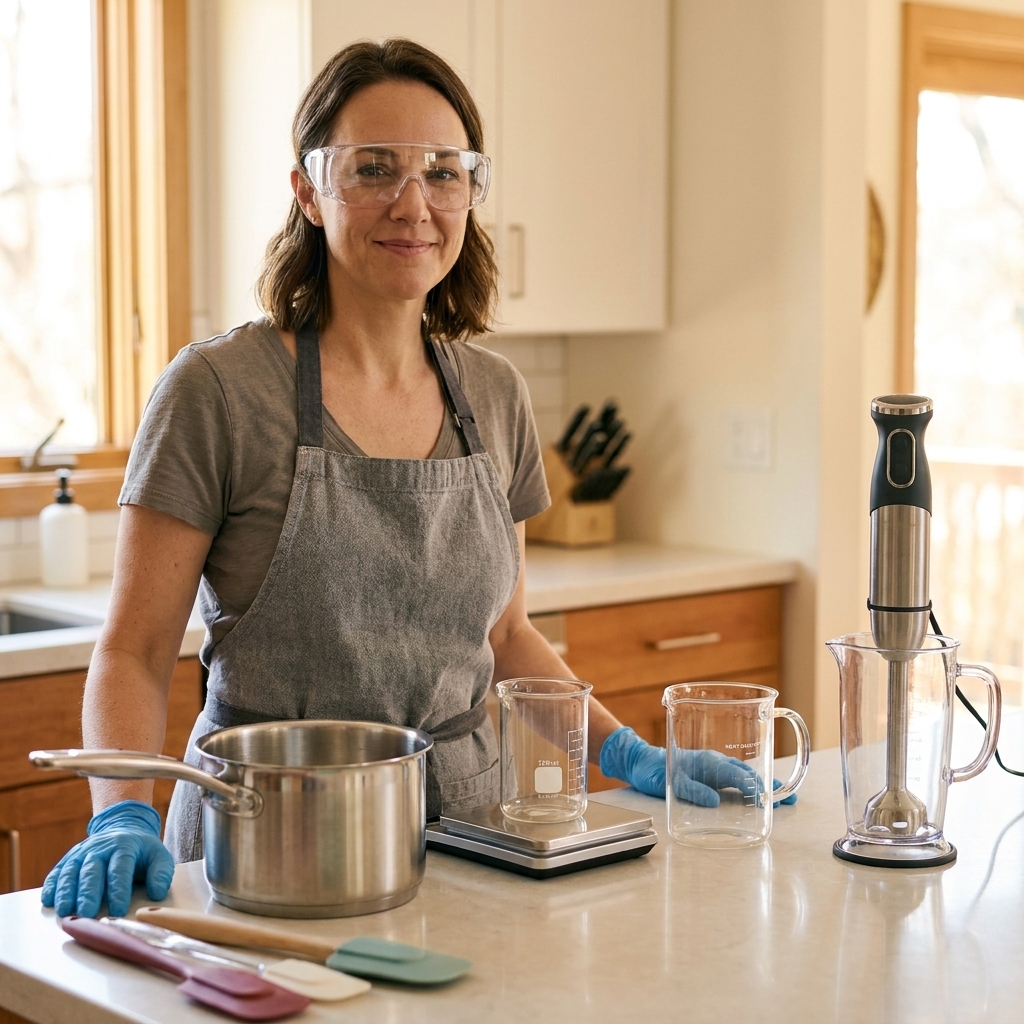
If you have ever stood over a freshly poured candle or a silky traced soap batter and wondered, “Should I scent this with essential oils or fragrance oils?” you are in very good company. I have made beautiful batches with both, and I have also made a few that taught me lessons the hard way, like the time a “bright citrus” essential oil blend all but disappeared in cold-process soap, or when a gorgeous bakery fragrance oil accelerated my batter into instant pudding.
This guide will help you choose the right type of scent for the job, understand safety rules that actually matter, and use realistic usage rates for both soap and candles without wasting money or risking irritation.
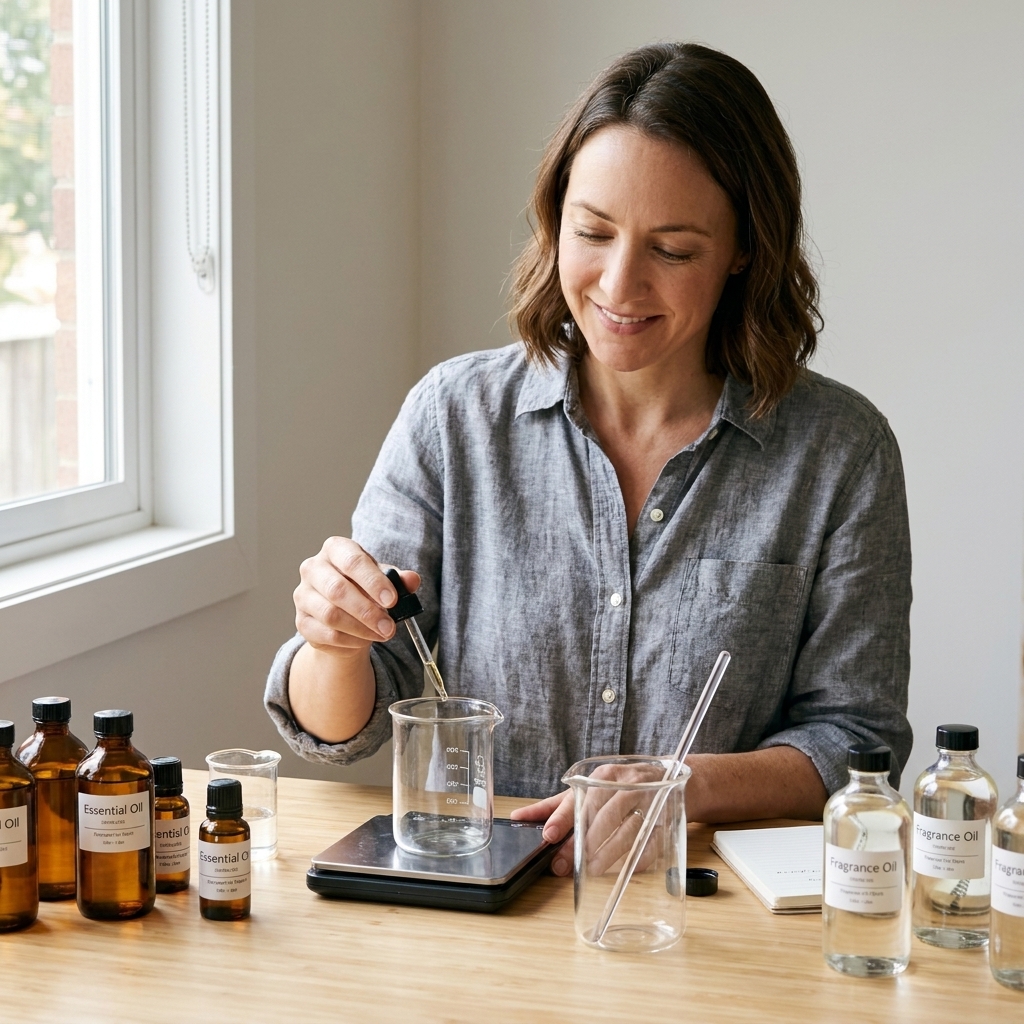
What they are, in plain language
Essential oils (EOs)
Essential oils are concentrated aromatic compounds extracted from plants, usually by steam distillation (lavender, rosemary), cold pressing (many citrus oils), or more specialized methods. They are “natural” in the sense that they come from plants, but they are still potent chemistry in a tiny bottle.
- Pros: Naturally complex aroma, great for herbal, spa, and botanical profiles, often a good fit for “minimal ingredient” brands.
- Cons: More expensive, more variable from batch to batch, many fade in soap or behave unpredictably in hot wax, and safety limits can be surprisingly low.
Fragrance oils (FOs)
Fragrance oils are blends of aroma chemicals, and sometimes natural isolates or essential oil components, created specifically to smell a certain way and to perform in products. Reputable candle and soap fragrance oils are often formulated and tested for specific bases like wax, melt and pour, and cold-process soap, but you should always look for explicit “tested in” notes from the supplier.
- Pros: Stronger scent options, more consistent, typically better performance in wax and soap, and a huge variety of profiles (bakery, laundry-fresh, complex perfumes).
- Cons: Quality varies by supplier, they can cause acceleration or discoloration in soap, and you still need to follow safety documentation.
Key differences for makers
1) Performance in cold-process soap
Cold-process soap is a tough environment: high pH, heat, and curing time. Some scents thrive, and some vanish.
- Essential oils: Resins and woods (cedarwood, patchouli, vetiver) tend to stick around. Many citruses, mints, and delicate florals fade faster. You can anchor with base notes, but you cannot force an oil to be something it is not.
- Fragrance oils: Many are designed to survive saponification, so you can get truer fruit, gourmand, and perfume-type scents that last. The tradeoff is behavior: some FOs accelerate trace, rice, separate, or discolor (especially vanillin-heavy scents that turn soap tan to deep brown).
2) Performance in candles
In candles, scent has to throw cold and hot, stay stable in wax, and not overwhelm the wick into soot and mushrooming.
- Essential oils: Some are lovely in candles, especially robust oils like lavender, eucalyptus, or some conifers, but many are faint when burned. More often than not, the challenge is volatility: bright top notes can thin out during heating, pouring, and cure, so what smells amazing in the bottle can land softer in the burn. You will sometimes see “flash point” discussed in candle circles, but it is not a reliable predictor of throw. Treat flash point primarily as a handling and storage data point, then test for performance in your specific wax and wick setup.
- Fragrance oils: This is where FOs usually shine. A good candle fragrance oil is built for throw, stability, and compatibility with common waxes. You still have to match wick size and wax type, but you start with an ingredient that wants to work with you.
3) Cost and consistency
Essential oils often cost more per ounce, and pricing can swing with harvests and global supply. Fragrance oils are generally more budget friendly for the amount of scent impact you get, and they tend to be consistent from bottle to bottle.
If you sell products, consistency matters. If you are making gifts, cost per batch matters. Both are valid reasons to choose one route or to blend the two.
4) Safety and documentation
“Natural” does not mean “automatically gentler.” Some of the most sensitizing materials used in fragrance are naturally present in essential oils.
For fragrance oils, reputable suppliers provide an IFRA certificate and usage guidelines by product type (soap, candles, lotions, etc.). For essential oils, you often need to reference dermal limits from reliable safety resources and remember that each oil has its own maximum safe rate.
If you sell, build a simple paperwork habit early: keep the SDS and IFRA certificate for every FO you use (and any supplier safety sheets for EOs) on file. Labeling rules and allergen disclosure requirements vary by country and marketplace, so you want your documentation ready if questions come up.
Safety rules I follow
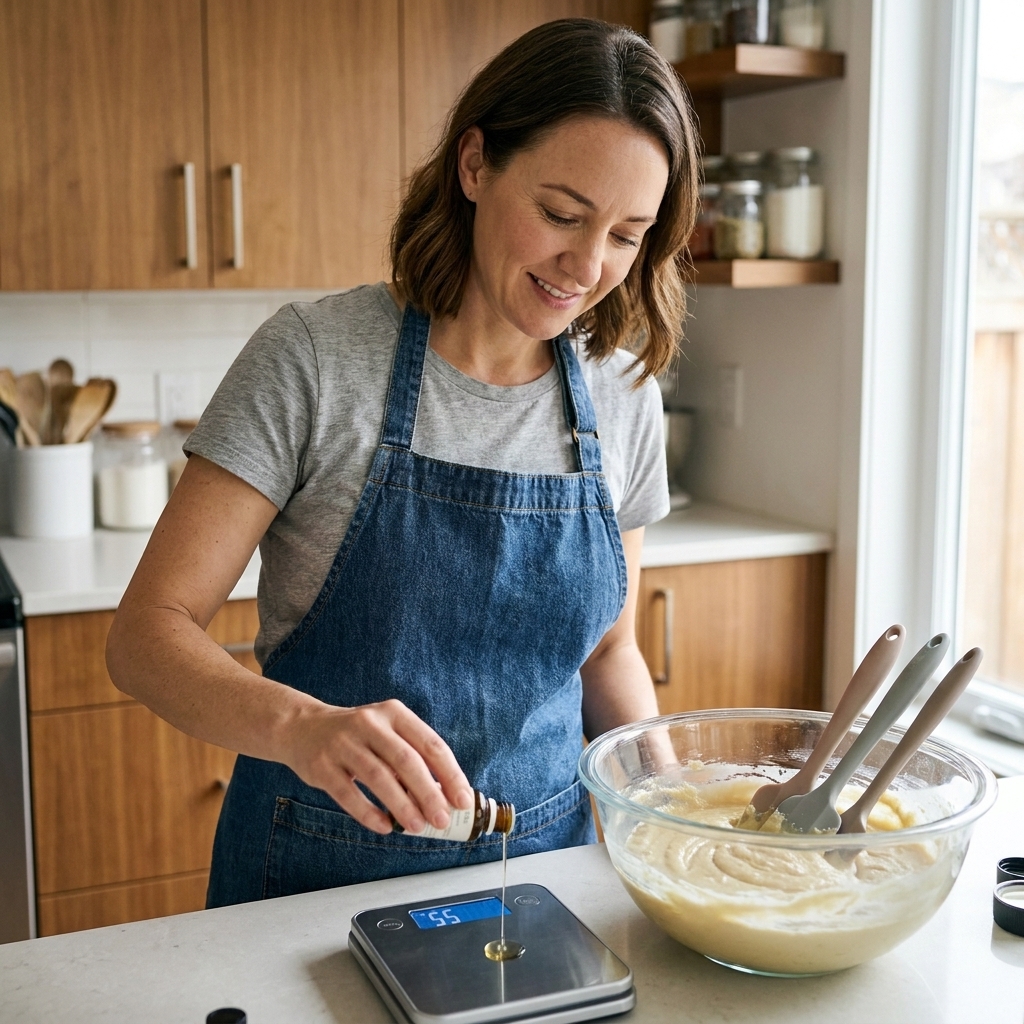
Use a scale, not drops
Drops are not a unit of safety. Viscosity, dropper type, and temperature change drop size. Weigh your scent in grams for repeatable batches and repeatable safety.
Follow IFRA categories for fragrance oils
IFRA limits are not there to ruin your fun. They are there because certain materials can cause sensitization or other issues above specific thresholds. Your fragrance supplier should provide an IFRA certificate that lists maximum usage percentages for different product categories. Use the category that matches what you are making.
Know that essential oils also have limits
Essential oils can cause irritation, sensitization, phototoxicity, and headaches in a poorly ventilated space. Citrus essential oils in particular can be phototoxic depending on the type (especially expressed, not distilled). Bergamot and expressed lime are common examples where you want to pay attention. That matters most for leave-on products, but it is still a sign that “plant-based” does not equal “limitless.”
Extra candle safety note
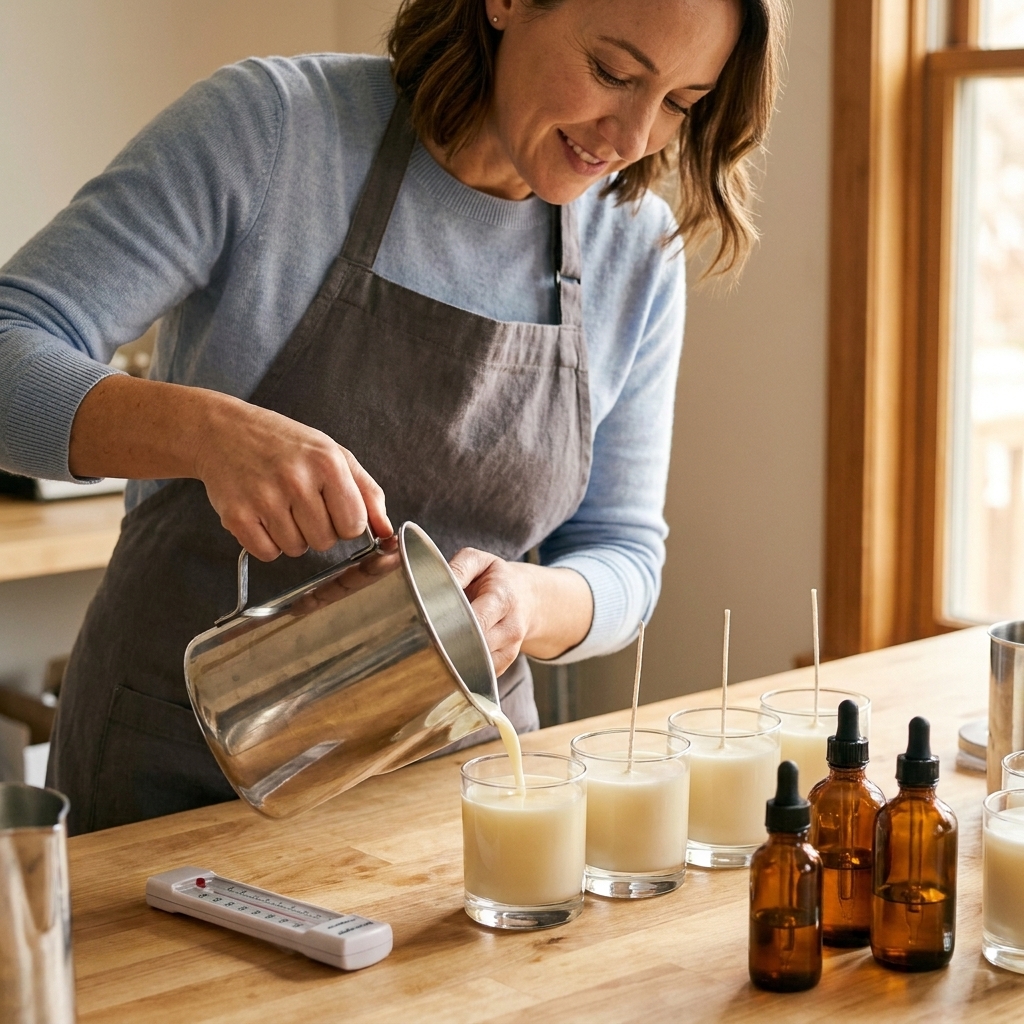
Stay within your wax manufacturer guidance and your fragrance supplier recommendation, then test. Pushing fragrance load too high can cause sweating, rough tops, poor burn, or extra soot, but it is not just “too much oil.” It is an interaction between wax, fragrance, wick, jar size, and cure time. The only way to know is controlled testing.
Usage rates
Usage rates depend on your base, your scent, and your supplier’s documentation. Treat these as practical starting points, then adjust within safe limits.
Cold-process soap
- Fragrance oils: Commonly around 3% to 6% of your oil weight, but always cap at the IFRA maximum for soap. Some FOs hit their IFRA limit below 3% to 6%, so check before you commit to a recipe.
- Essential oils: Often around 1% to 3% of your oil weight for many recipes, with some oils needing much lower limits. A few EOs can be comfortable above 3% in rinse-off products, while others should be far below 1% (cinnamon bark or leaf, clove bud, lemongrass, and other “spicy” or high-citral oils are the classic offenders). Always verify each oil in your blend.
My practical habit: I pick a target rate, then check each essential oil in the blend for safety limits and adjust the blend so nothing is pushed too high.
Candles
- Fragrance oils: Many waxes do well around 6% to 10% fragrance load, but the real ceiling is your wax manufacturer guidance and your fragrance supplier recommendation. Some paraffin blends can handle more, while some natural waxes prefer less.
- Essential oils: Frequently closer to 3% to 6% in practice, but performance varies wildly. Some EOs smell gorgeous cold and then disappear hot. Test before you commit to a big batch.
Important: A higher percentage does not automatically mean a stronger candle. Wick, jar diameter, wax type, cure time, and fragrance chemistry all matter.
How to choose
Choose essential oils when
- You want a botanical, spa-like scent profile: lavender, rosemary, eucalyptus, cedar.
- You are making a “simple ingredients” gift and you are happy with a softer scent.
- You are blending with intention, using base notes to help anchor more fleeting top notes.
Choose fragrance oils when
- You want strong hot throw in candles, or a scent that stays noticeable in cured soap.
- You want fun profiles that nature does not easily provide: birthday cake, cotton candy, “fresh laundry,” complex perfumes.
- You want clear IFRA documentation tailored to finished products.
Choose a blend when
Blending a small amount of essential oil into a fragrance oil can add realism and sparkle, like adding a touch of real bergamot or lavender to a perfume-style FO. If you do this, you still need to stay within the FO IFRA limit and keep the EO portion within safe dermal limits for soap. In candles, blend performance can change wicking, so re-test like it is a brand-new scent.
Testing basics
If you want to save money and frustration, test like a nerd, even if you craft like an artist.
- Change one thing at a time: Same recipe, same temperature range, same mold or jar, same wick series. Only change the scent (or only change the percentage) so you can trust your results.
- Give it time: Cold-process soap usually needs 4 to 6 weeks to judge true scent strength and staying power. Candles often improve after 1 to 2 weeks of cure (sometimes longer depending on wax and fragrance).
- Take notes: Usage rate, brand, lot number, soap behavior (acceleration, ricing), candle performance (melt pool, soot, throw). Your future self is going to want receipts.
Behavior quirks
In cold-process soap
- Acceleration: Many spice, floral, and perfume-type fragrance oils speed up trace. Soap cooler, hand stir more, and choose simpler designs if a scent is known to misbehave.
- Ricing: Some scents cause little granules in the batter. Stick blend briefly in pulses and keep mixing until it smooths out.
- Seizing: The batter can turn into thick mashed potatoes fast. If your batter is already in a safe-to-handle state (no splashing, no frantic stick blending, no rushing with caustic soap), spoon it into the mold and embrace a rustic top. Next time, pick a slower moving recipe and soap cooler.
- Discoloration: Vanillin turns soap brown. Plan for it and use it creatively, like swirl designs where the darkening becomes part of the look.
- Fading: Common with citrus essential oils. Anchor with stronger base notes and accept that “fresh-squeezed orange” may not stay bright for months.
In candles
- Poor hot throw: Often a testing issue, not a “bad oil.” Let candles cure, try a different wick series or size, and confirm your wax is suitable for the fragrance load.
- Sweating: Can come from too high a load, an incompatible fragrance, or temperature swings. Reduce load, confirm the FO is tested for your wax type, and keep cure conditions consistent.
- Sooting and mushrooming: Can happen with too large a wick, too high fragrance load, or certain heavy fragrances. Wick down and retest.
Buying checklist
For fragrance oils
- Buy from suppliers that explicitly test for candles and/or soap, not “general craft fragrance.”
- Look for an IFRA certificate and a clear recommended usage rate for your product type.
- Read notes about soap behavior: acceleration, ricing, separation, discoloration.
For essential oils
- Choose suppliers that provide batch information and basic testing data where possible.
- Be cautious with “fragrance-like” essential oil blends sold without clear safety guidance. If it smells like a designer perfume, it may contain materials that need careful limits.
- Store tightly capped in a cool, dark place. Oxidized essential oils can be more irritating.
Quick answers
Are essential oils safer than fragrance oils?
Not automatically. Both can be skin irritants or sensitizers depending on the materials and the dose. The safest approach is: use reputable suppliers, follow documentation, and stay within limits.
Can I use essential oils in candles?
Yes, but manage expectations. Some essential oils have a gentle hot throw, and some fade quickly. If you want strong throw and consistency, a candle-tested fragrance oil is usually the easier path.
Can I use fragrance oils in cold-process soap?
Yes, as long as they are skin-safe and you follow the IFRA maximum for soap. Also check maker notes for acceleration and discoloration so your design does not turn into a surprise.
Why did my soap scent disappear?
Common causes include using a volatile essential oil heavy blend (lots of top notes), under-scenting, overheating, or using an oil known to fade. Some fragrances also need a few weeks to “settle” in cure, but if it is gone at week four, it is probably not coming back.
What is the best choice overall?
For candles, fragrance oils tend to win for performance. For soap, both can be fantastic depending on the scent profile you want. My personal sweet spot is choosing the ingredient that fits the goal: botanical and subtle means essential oils, bold and complex means fragrance oils.
My bottom line
Essential oils are beautiful, alive, and sometimes maddeningly delicate. Fragrance oils are powerful, consistent, and sometimes a little mischievous in soap batter. Neither is “cheating,” neither is automatically “clean,” and both can be used thoughtfully and safely.
If you are unsure, start with a small test batch, weigh everything, and take notes like your future self is your best customer. That future you will be so grateful when you nail the perfect scent that lasts in cure and throws like a dream when you finally light the wick.