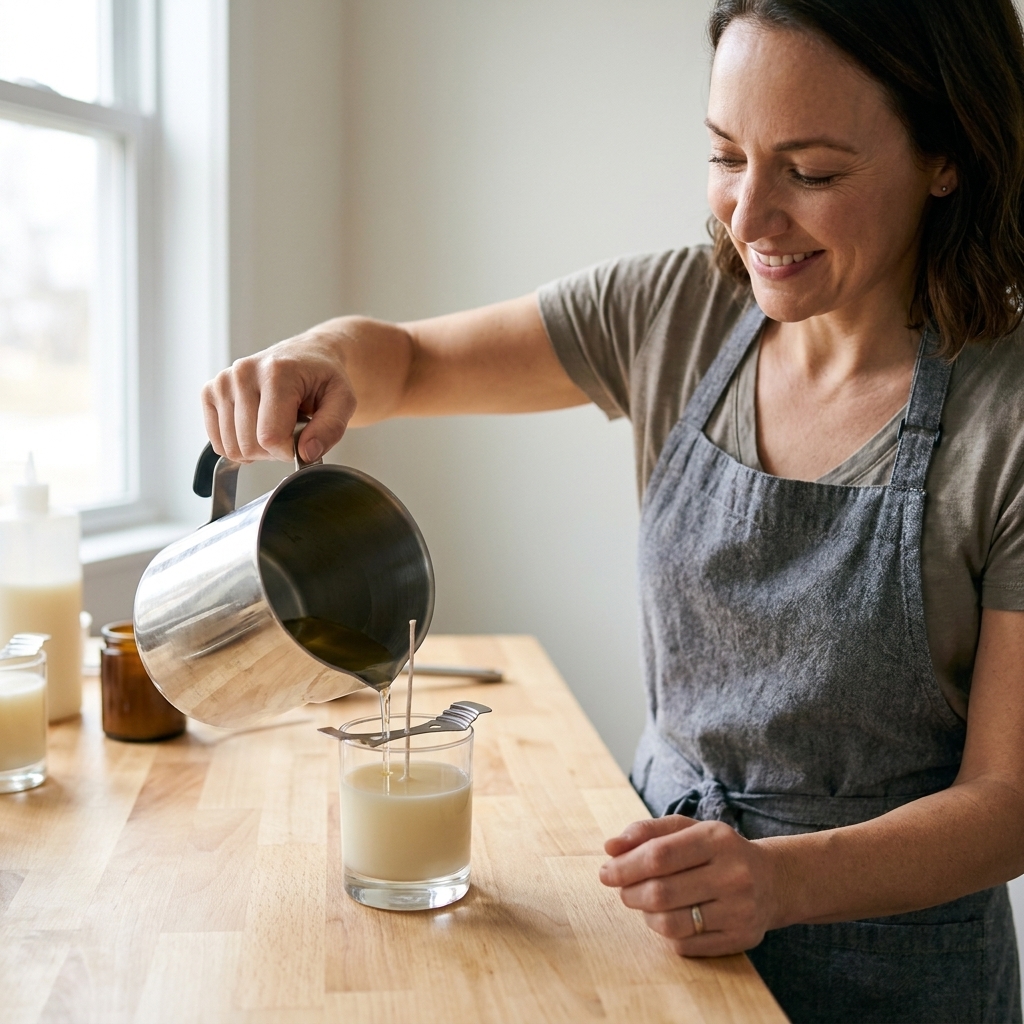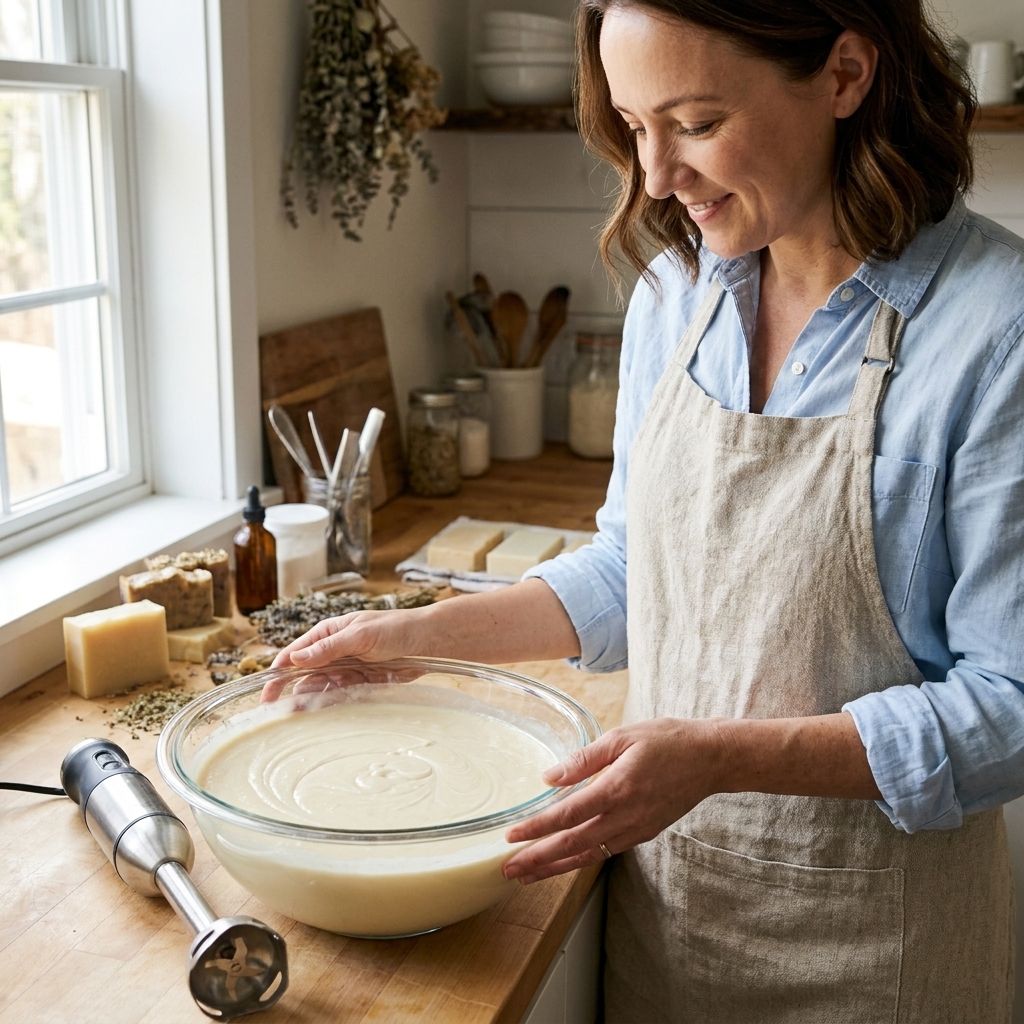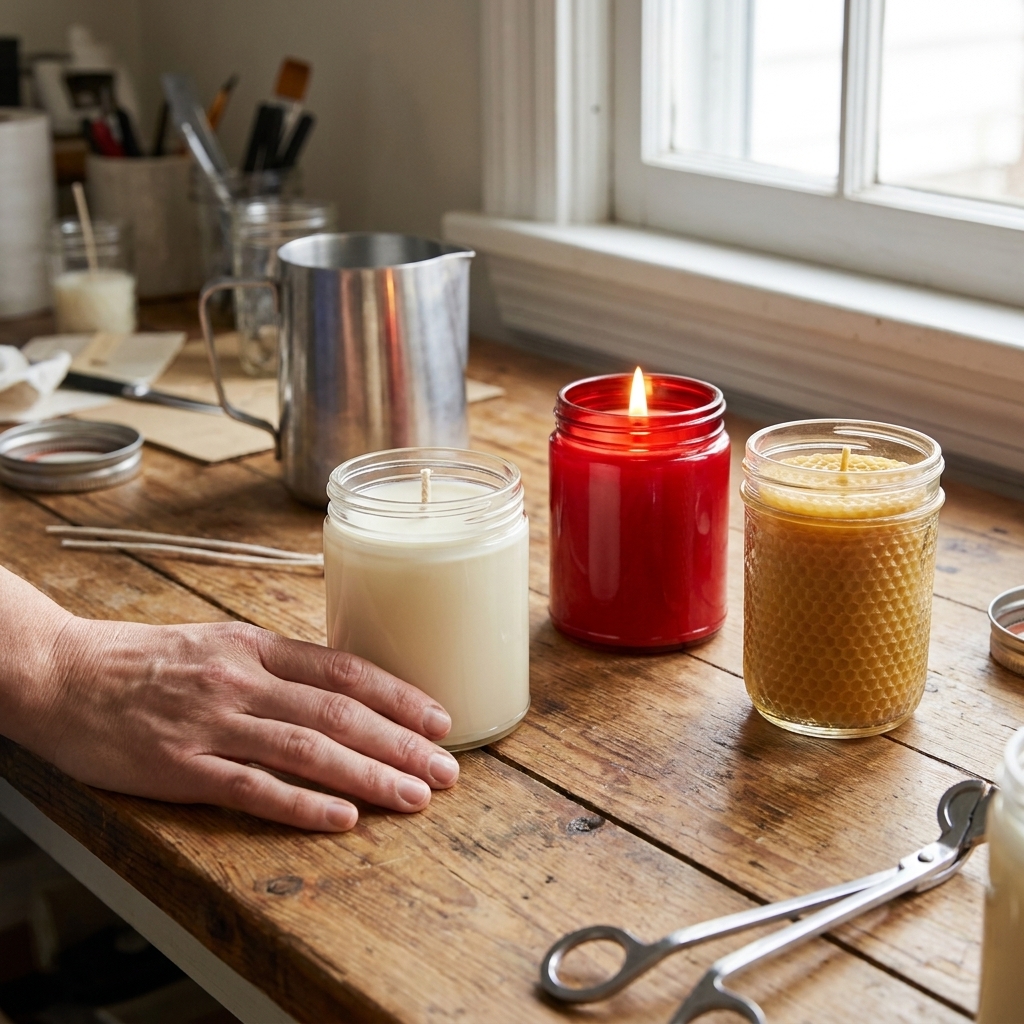
If you have ever had a candle that frosted like a tiny snow globe or a soap batter that went from silky to mashed potatoes in 30 seconds, there is a good chance temperature was part of the story. I used to treat thermometers like “nice to have” tools until I realized they are really consistency tools. Once I started measuring the right way, my fragrance throw (how strongly your candle smells cold and while burning) improved, my tops smoothed out, and my soap batches got a lot more predictable.
Let’s talk about the two most common options in a maker’s toolbox: infrared (IR) “point and shoot” thermometers and classic probe thermometers. Both can be fantastic. Both can also lie to you if you use them the wrong way.
The quick difference
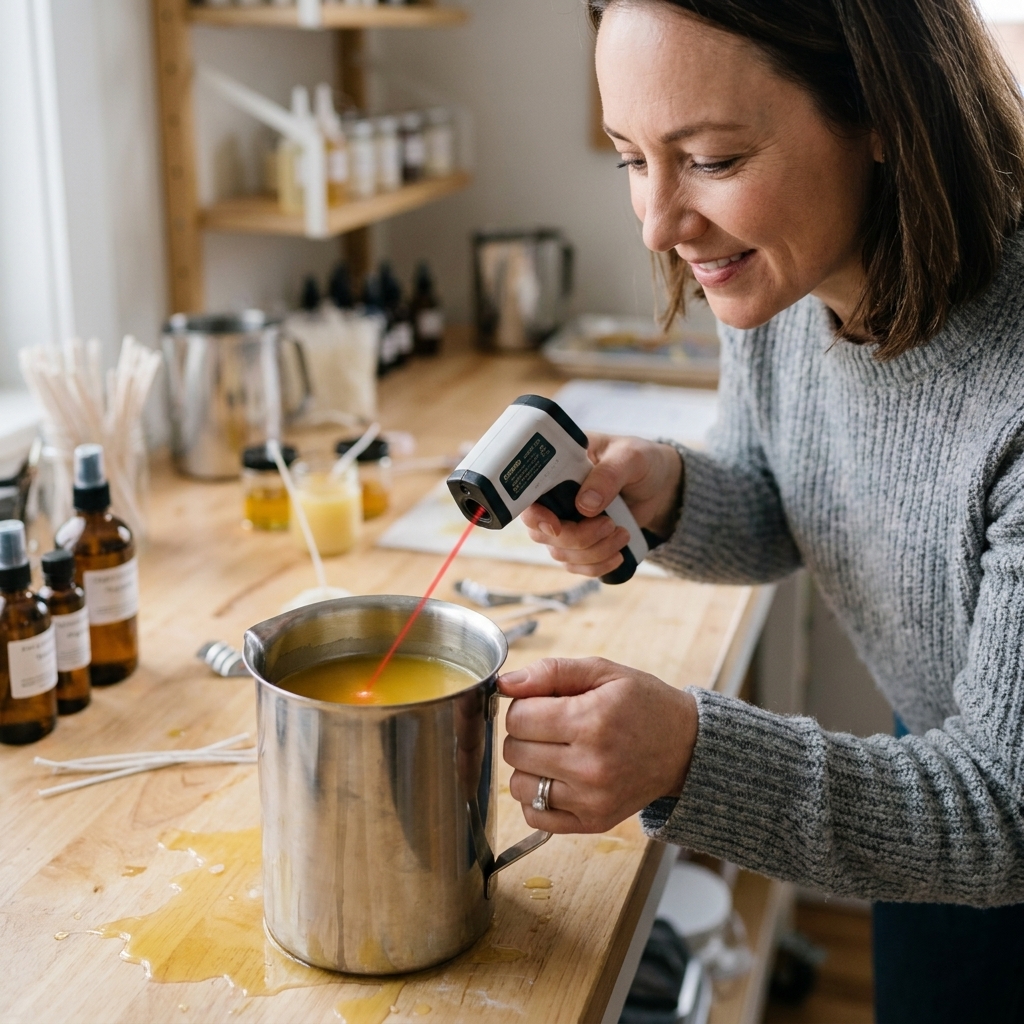
Infrared thermometers read surface temperature without touching your material. They are fast and tidy, but they can be fooled by shiny metal, steam, and temperature layers.
Probe thermometers read internal temperature where the tip sits. They are slower and need cleanup, but they are usually the most reliable choice for wax and especially for lye solution.
- If I have to pick one for soap: probe, every time.
- If I have to pick one for candles: probe for accuracy, IR for speed checks, ideally both.
What accurate means here
In candle and soap making, we are not chasing lab-grade perfection. We are chasing repeatable results. The goal is to measure temperatures the same way every time so you can dial in your process and stop guessing.
Quick note: “right” temperatures vary by wax, fragrance, recipe, and supplier instructions. Use your recipe or wax maker’s guidance for target numbers. This article is about choosing the right tool and getting trustworthy readings.
For candles
Temperature affects how wax binds fragrance, how it cools and crystallizes, how it adheres to glass, and how your tops set. Many waxes also develop temperature layers (thermal stratification), meaning the surface can be cooler than the wax underneath (or vice versa), especially if you are melting in a metal pitcher.
For cold-process soap
Temperature affects emulsification, trace speed, gel phase, and how your batter behaves with fragrance oils, sugar, milks, clays, and salts. Fresh lye solution can be hotter than it looks, and the container can be cooler than the liquid inside. That is why measuring the inside temperature matters.
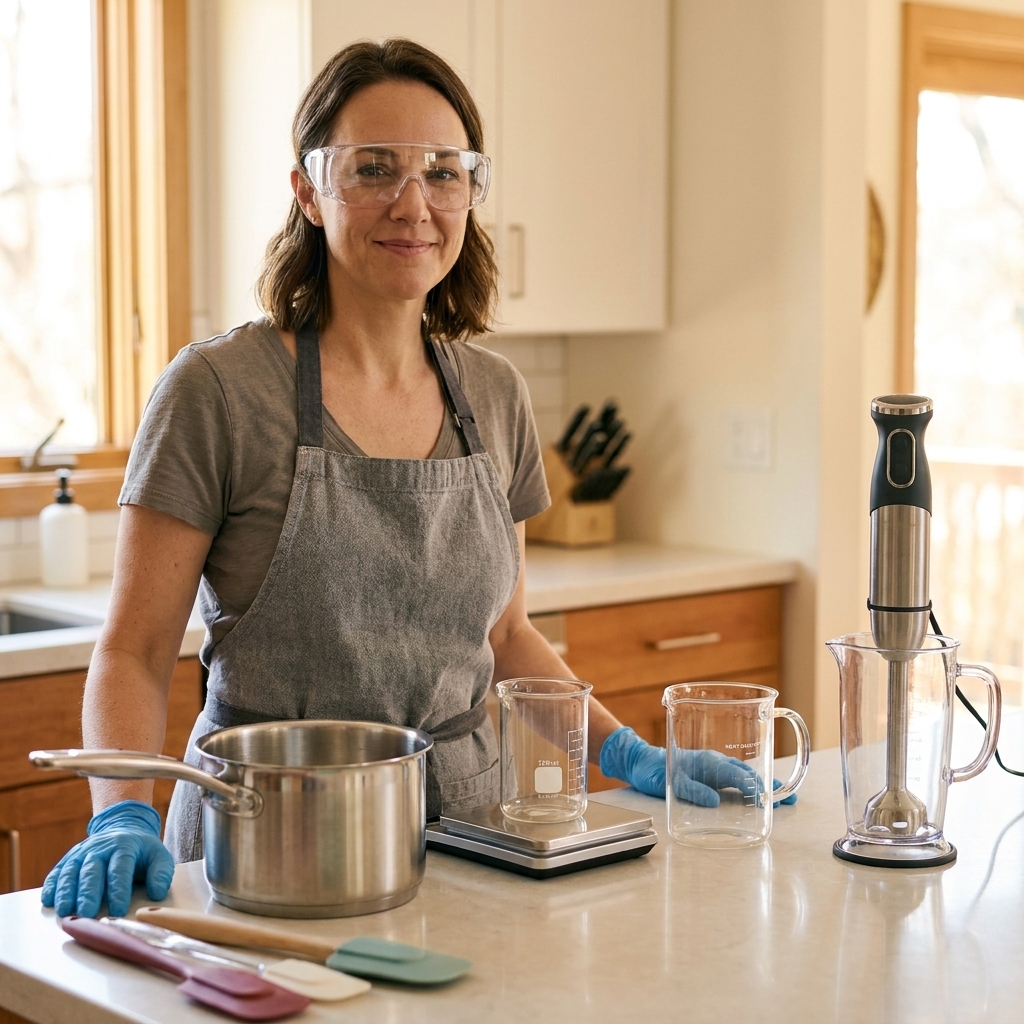
Also, standard safety applies: use lye-safe containers, gloves, and eye protection, and never lean over your lye container to “check” it. Heat and fumes are real.
Infrared thermometers
Where they shine
- Instant readings: great for quick checks while you stir and pour.
- No contact: nothing to sanitize, no probe to wipe clean of wax.
- Safer distance: helpful around very hot wax or freshly mixed lye solution.
The big limitation
An IR thermometer does not read “the wax temperature.” It reads the temperature of the top layer it can see. That is why you can point at a pot of wax and get one number, then stir and suddenly get a totally different number.
Why shiny metal throws it off
IR guns estimate temperature based on emissivity, or how well a surface emits infrared energy. Many IR thermometers default to an emissivity around 0.95, which works well for matte, non-reflective surfaces. Shiny stainless is low-emissivity and reflective, so your IR gun can under-read, over-read, or pick up reflected heat from nearby surfaces. The fix is usually simple: measure the wax surface, not the pot wall.
Common IR mistakes in candle making
- Aiming at the metal pitcher instead of the wax: shiny stainless can skew readings because it reflects IR energy. Aim at the wax surface, not the side of the pot.
- Not stirring before measuring: surface layers cool fast. Give it a gentle stir and then measure.
- Measuring too far away: IR thermometers read an area, not a pinpoint. The farther you are, the larger the spot being averaged. Get close enough that you are reading mostly wax, not wax plus rim plus air.
- Believing the first number: take 2 to 3 readings after stirring. If they vary a lot, you have layering.
Common IR mistakes with lye solution
- Measuring through steam or haze: water vapor can interfere, but the bigger issue is that you are still only reading the surface, which can be cooler than the bulk due to evaporation.
- Measuring the container wall: the outside of the pitcher is often cooler than the liquid inside, especially with thick plastic.
- Assuming the surface equals the center: lye solution can be warmer in the middle, especially in larger volumes or insulated containers.
My rule: I use IR as a quick safety check around lye, but I do not trust it as my main “ready to soap” reading.
Probe thermometers
Why they are the workhorse
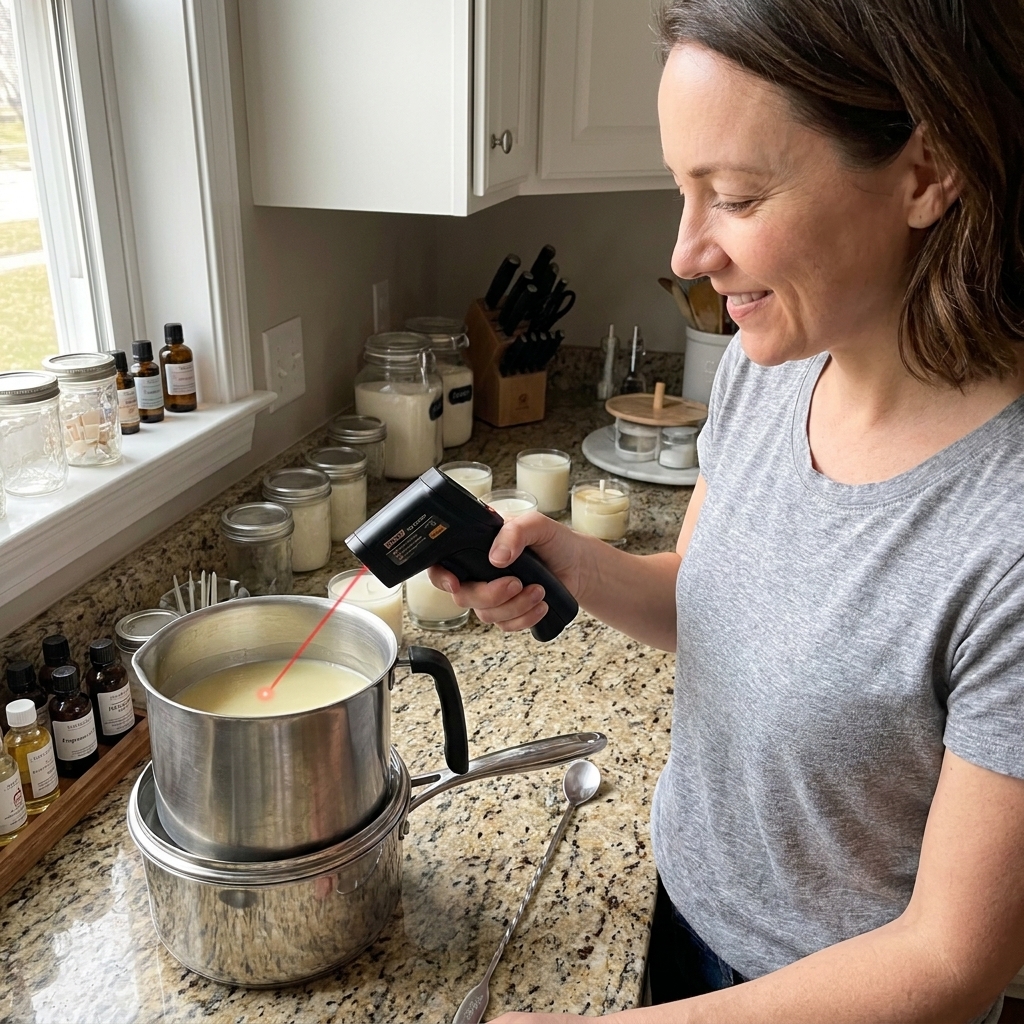
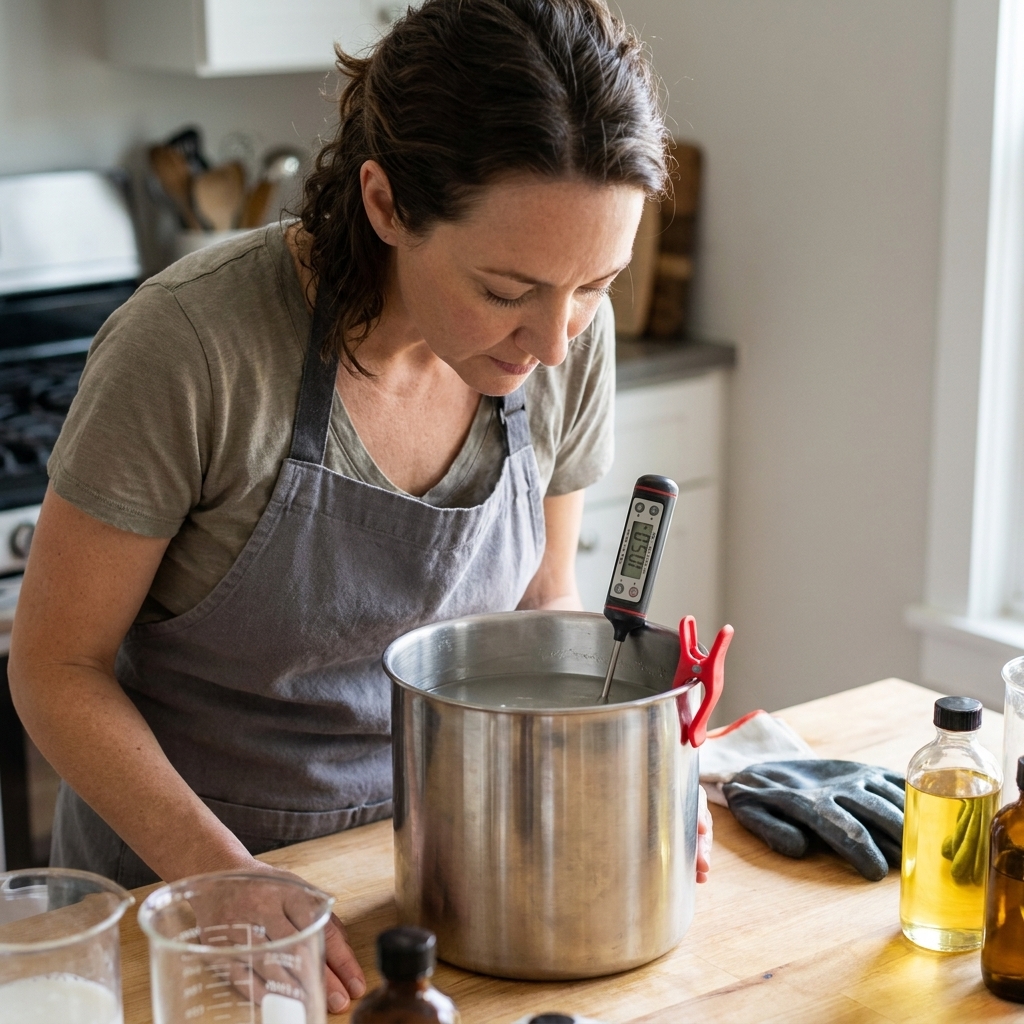
- Reads internal temperature: you can measure where it counts by placing the tip in the middle of the liquid.
- Better for thick materials: soap batter and cooling wax are not perfectly uniform, so internal readings are more trustworthy.
- Less sensitive to surface quirks: shiny pitchers, reflective wax surfaces, and small drafts matter less.
Tradeoffs
- You must clean it: wax residue and soap batter need to be wiped off right away.
- It is slower: some digital probes take 5 to 15 seconds to settle.
- Placement matters: if the tip touches the bottom of a hot pot, you can read hotter than the wax itself.
Which probe style is best?
For most makers, a simple instant-read digital probe is the sweet spot. “Leave-in” probes can work too, but they are easier to bump, snag, or accidentally rest against the pot. If you want to get fancy, a thermocouple style probe is extremely fast, but you do not need it to get great results.
Probe tips that save batches
- Keep the tip suspended: measure in the center, not touching sides or bottom.
- Stir, then measure: especially for wax.
- Use a clip: a simple pot clip keeps the probe stable and your hands away from heat.
- Wipe while warm: wax wipes off easily when it is still liquid. Once it hardens, it is a scraping party.
Best for candles
If you pour candles regularly, a probe thermometer is the best foundation. It helps you hit repeatable melt, mix, and pour temperatures. An IR thermometer is a wonderful sidekick for quick checks, especially when you are bouncing between multiple pitchers.
Best uses for IR
- Quickly checking whether your wax is close to your fragrance-add range
- Monitoring cooling wax without contaminating it
- Spot-checking jar temperature if you pre-warm containers
Best uses for a probe
- Confirming the true wax temperature after stirring
- Verifying fragrance-add temperature when accuracy matters
- Checking a blend wax mixture to ensure it is fully melted and uniform
A simple workflow I use
- Melt and stir.
- Probe reading: confirm the wax is actually at your target melt or mix temperature.
- Add fragrance, stir thoroughly.
- IR checks: during cooling, I use IR to watch the surface temp fall.
- Final probe check: right before pouring if I am chasing a very specific finish.
Best for soap
For cold-process soap, I strongly prefer a probe thermometer. When you are dealing with an active chemical solution and an emulsion that can accelerate, knowing the internal temperature is worth the extra cleanup.
Where IR can still help
- Quickly checking the outside of oils container to see if it is still cooling
- Spot-checking the surface of soap batter in the pot if you are moving fast
- Monitoring mold surface temperature if you are trying to prevent overheating in a very sugary or milky recipe
But for your “Are my lye and oils ready to combine?” moment, a probe is the tool I trust.
What to look for
For an infrared thermometer
- Adjustable emissivity: helpful for more accurate readings on different surfaces, especially reflective metal. If yours is fixed, it can still work, you just need good technique.
- Clear distance-to-spot info: so you know how close to hold it.
- Backlit screen: small detail, big quality-of-life upgrade in a steamy kitchen.
Practical workaround: when you are dealing with reflective metal, skip the metal and measure the wax, oils, or batter surface instead. If you ever see people using matte tape or paint dots to “fix” emissivity, that can work in some industries, but I do not recommend sticking anything to hot candle equipment unless you know it is heat-safe and will not contaminate your materials.
For a probe thermometer
- Fast response time: fewer seconds hovering over hot wax.
- Wide temperature range: suitable for hot wax and freshly mixed lye solution.
- Stainless probe and sturdy hinge or cable: the cheap ones fail at the bend point.
- Calibration option: being able to adjust or at least test accuracy matters.
One non-negotiable for soap: choose something that is easy to clean and will not trap batter in seams.
Accuracy checks at home
You do not need fancy equipment to sanity-check your thermometer. I do this whenever I buy a new one or if a tool takes a tumble off the counter.
Ice water test
- Fill a cup with plenty of ice, then add just enough water to make a thick slush.
- Stir well and let it sit 2 to 3 minutes so the whole cup equalizes.
- Probe: place the tip in the middle of the slush without touching the sides. It should read close to 32°F (0°C).
- IR: aim at the slush surface. Expect more variation since it is reading the surface, but it should be in the neighborhood.
Boiling water test
At sea level, boiling water is about 212°F (100°C). Altitude changes the boiling point, so use this as a rough check. A probe should read close to boiling for your area. For IR, steam and a moving surface make it a less stable target.
If your readings are consistently off, you can still use the thermometer, but you must account for the offset every time. That is annoying, and in soap making it can become a safety issue, so I usually replace anything that is clearly drifting.
Habits that help fast
Stir before you measure
This is the easiest upgrade you can make. Wax stratifies. Oils stratify. Even lye solution can be warmer in the middle after dissolving, especially in larger batches. Stir, then measure.
Measure the same way every time
Consistency is everything. If you probe near the bottom one day and near the surface the next, your notes will not match your results.
Do not chase the number
Especially in soap, a few degrees difference is usually fine if your method is consistent. What matters is that your lye and oils are in a range where they emulsify well and you can control trace. I aim for repeatable behavior, not perfection.
Keep a simple temperature log
A sticky note on your shelf works. Record wax type, fragrance load, add temperature, pour temperature, room temperature, and which thermometer you used. This turns “mystery batches” into solvable puzzles.
My pick
- One dependable probe thermometer for wax, lye solution, and oils. This is my primary tool.
- One infrared thermometer for fast checks and general monitoring, especially during candle pouring sessions with multiple pitchers.
If you only want to buy one right now, buy the probe. It is the most universally useful for both crafts, and it reduces the number of “Wait, why did this happen?” moments.
FAQ
Can I use an infrared thermometer to measure lye solution?
You can, but it only reads the surface, and steam plus evaporation can skew what you see versus what the liquid is doing internally. For cold-process soap, use a probe thermometer for your real decision-making temperature.
Why does my IR thermometer give different readings on wax?
Usually it is thermal layering and surface cooling, plus the fact that IR reads a larger area than you think. Stir the wax, aim at the wax surface (not the metal), and measure from a consistent distance.
Do I need a candy thermometer?
A traditional glass candy thermometer can work for wax, but I find digital probes easier to read and faster to respond. For soap, I prefer a digital probe that is simple to clean.
Is it okay to use the same probe for lye and food later?
I do not. I keep craft tools as craft-only tools. It is a small boundary that keeps my kitchen safer and my brain calmer.