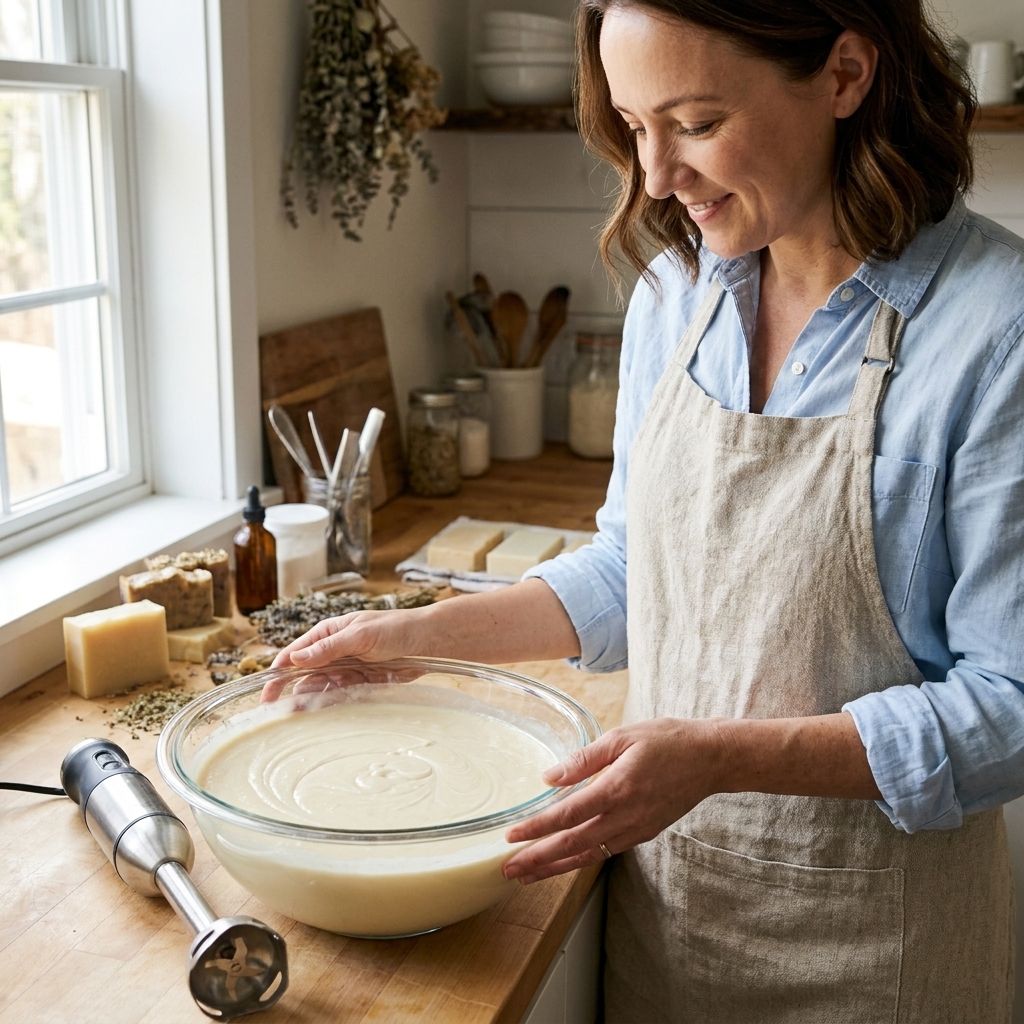
If you have ever wanted a bar that feels like a warm oatmeal bath and leaves your skin feeling calm instead of tight, this is the recipe I reach for. Goat milk brings creamy lather and a soft, lotion-like feel, colloidal oatmeal adds that velvety slip, and a touch of raw honey boosts bubbles and gives the batter a cozy, comforting warmth.
The only catch is that milk and honey are both loaded with sugars. Sugars love heat, and heat is a common troublemaker in cold-process soap. In this tutorial, I will show you exactly how to keep your goat milk from scorching, how to add honey without turning your mold into a little volcano, and how to get a smooth, pale, soothing bar that cures into something you will want to hoard.
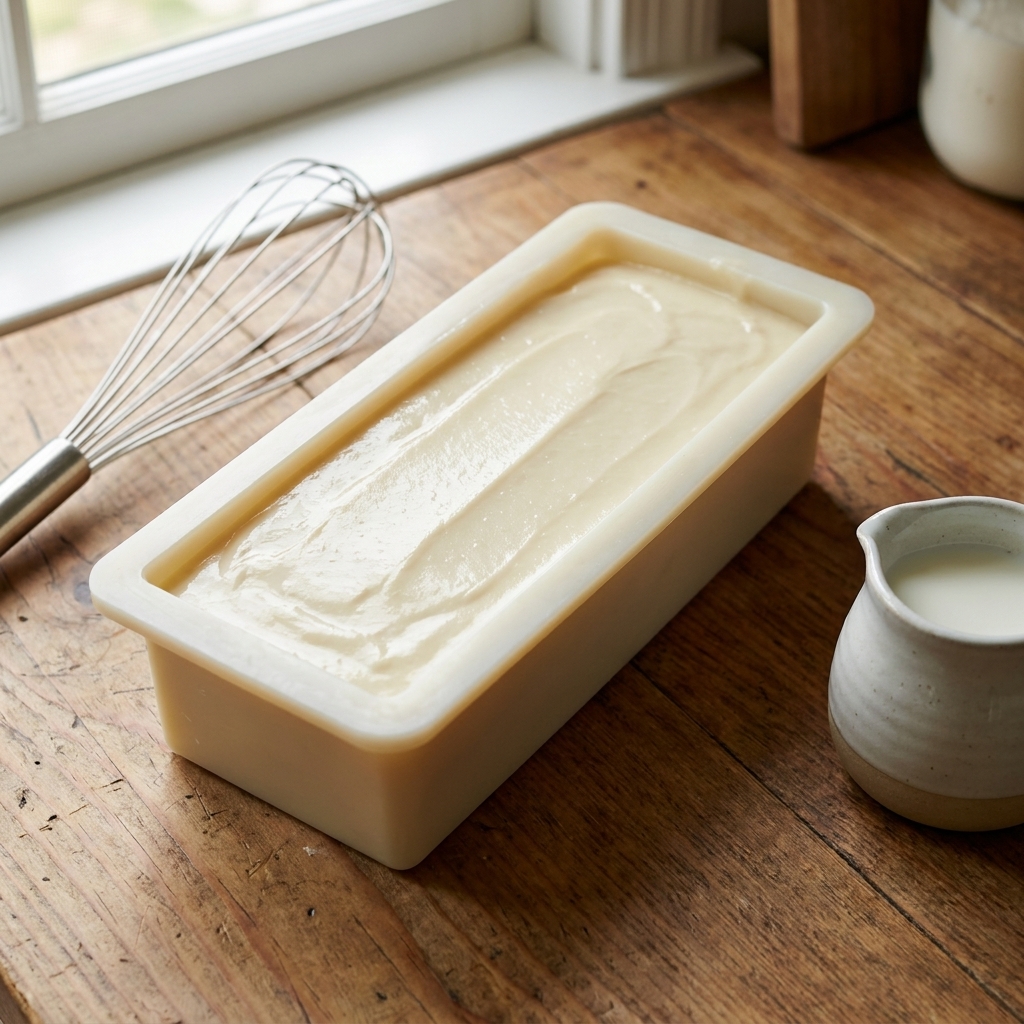
What makes this soap soothing
Goat milk
Goat milk contains fats, proteins, and sugars that make soap batter feel extra creamy. In the finished bar, it often translates to a more conditioned feel and a dense, silky lather. The sugar content is also why goat milk soaps can heat up fast and darken if the milk gets too warm during lye mixing.
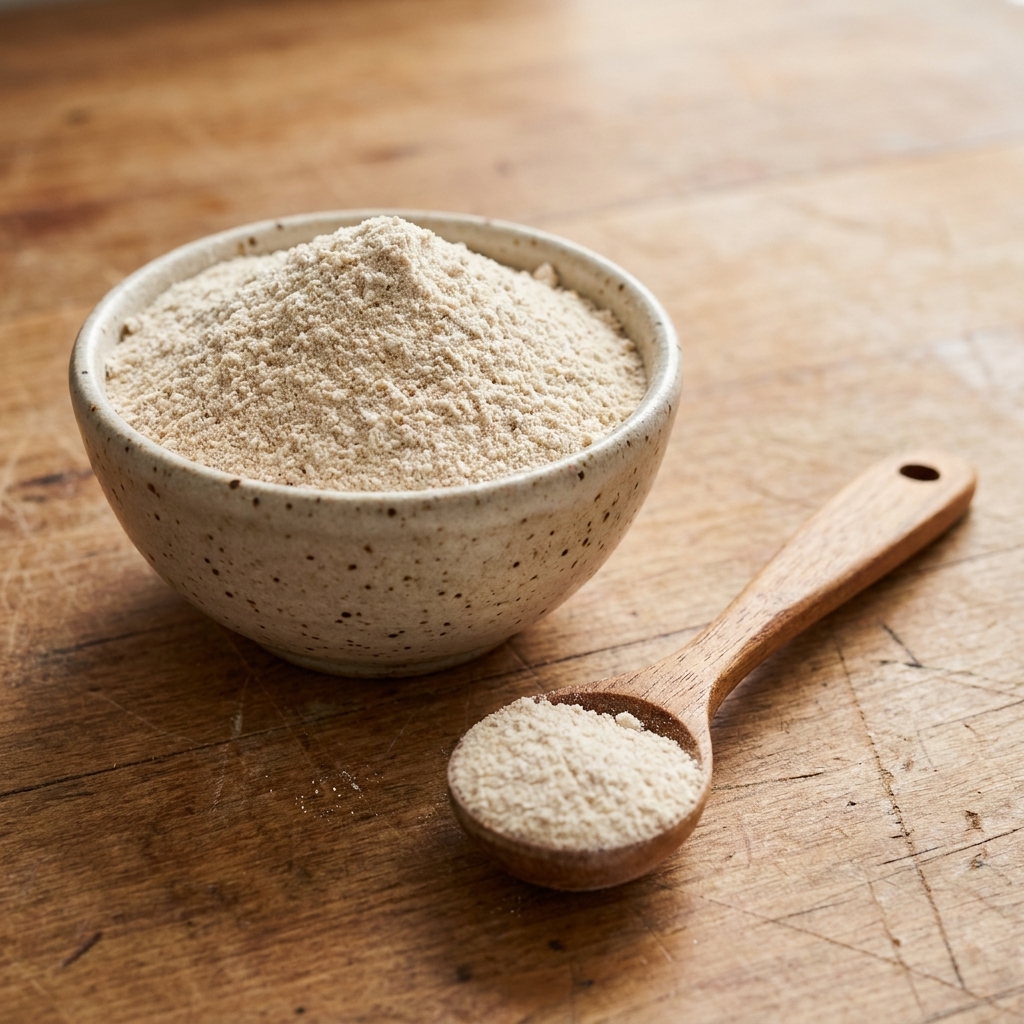
Colloidal oatmeal
Colloidal oatmeal is oats ground finely enough to stay suspended and feel silky rather than scratchy. It is my favorite way to get that classic “oatmeal comfort” without turning the bar into exfoliating sandpaper. It can also help soften the feel of a more cleansing formula, depending on your oil choices.
Raw honey
Honey is a humectant and sugar source. In soap, it can boost bubbles and add a subtle warmth to the overall feel of the bar. It also encourages the batter to heat up, so we treat it like a spice. Use a small amount, dilute it, and keep temperatures under control.
Safety first
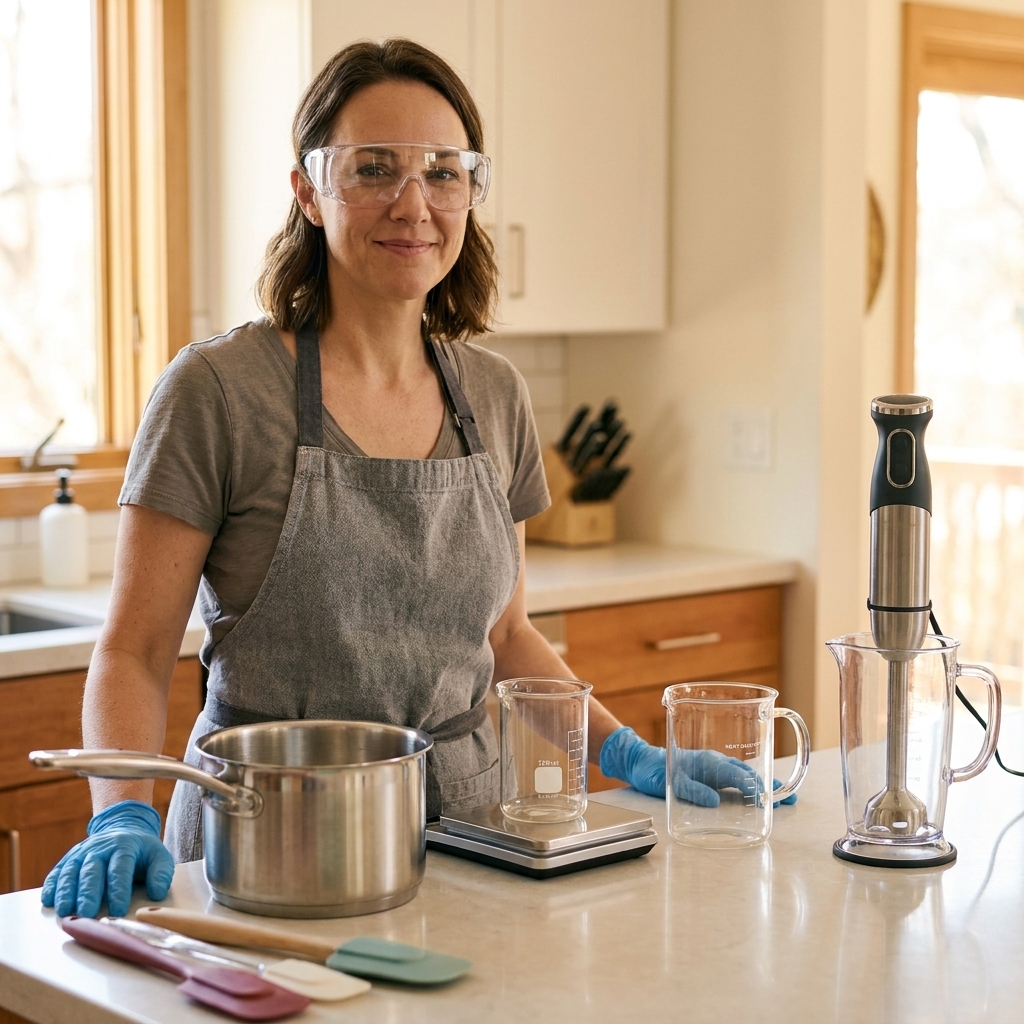
Cold-process soap is a chemistry project with real consequences if you rush it. Please do not skip the basics:
- Wear eye protection and gloves the entire time.
- Work in a well-ventilated area.
- Always add lye to liquid, never the other way around.
- Keep kids and pets out of the room.
- Use heat-safe containers and dedicated soap tools.
Milk soaps add one more note: when lye hits milk, the reaction can heat rapidly and release caustic fumes. Keeping the milk cold and moving slowly makes the process calmer and safer.
Recipe at a glance (1 kg oils)
This is a gentle, balanced formula designed for a creamy, non-stripping bar with good longevity.
Yield: About 1.3 to 1.4 kg of raw soap batter (enough for a standard 10 inch loaf mold, roughly 2.5 to 3 lb capacity). Do not fill your mold to the brim.
Oils (1000 g total)
- 450 g olive oil (45%)
- 250 g coconut oil (76°F) (25%)
- 200 g shea butter (20%)
- 100 g castor oil (10%)
Lye solution
- Sodium hydroxide (NaOH): 136 g (targeting 5% superfat)
- Total liquid: 300 g
- Use frozen goat milk for all 300 g liquid
Important: Always verify lye amounts in your own lye calculator before making soap. SAP values vary slightly by source (especially for butters). This recipe assumes NaOH is close to 100% purity. If your lye is a different purity, adjust in your calculator.
Additives
- Colloidal oatmeal: 20 to 30 g (about 2 to 3% of oils). If you are brand new to soap, start at 10 to 20 g for an easier, slower-moving batter.
- Raw honey: 15 to 25 g (about 1.5 to 2.5% of oils)
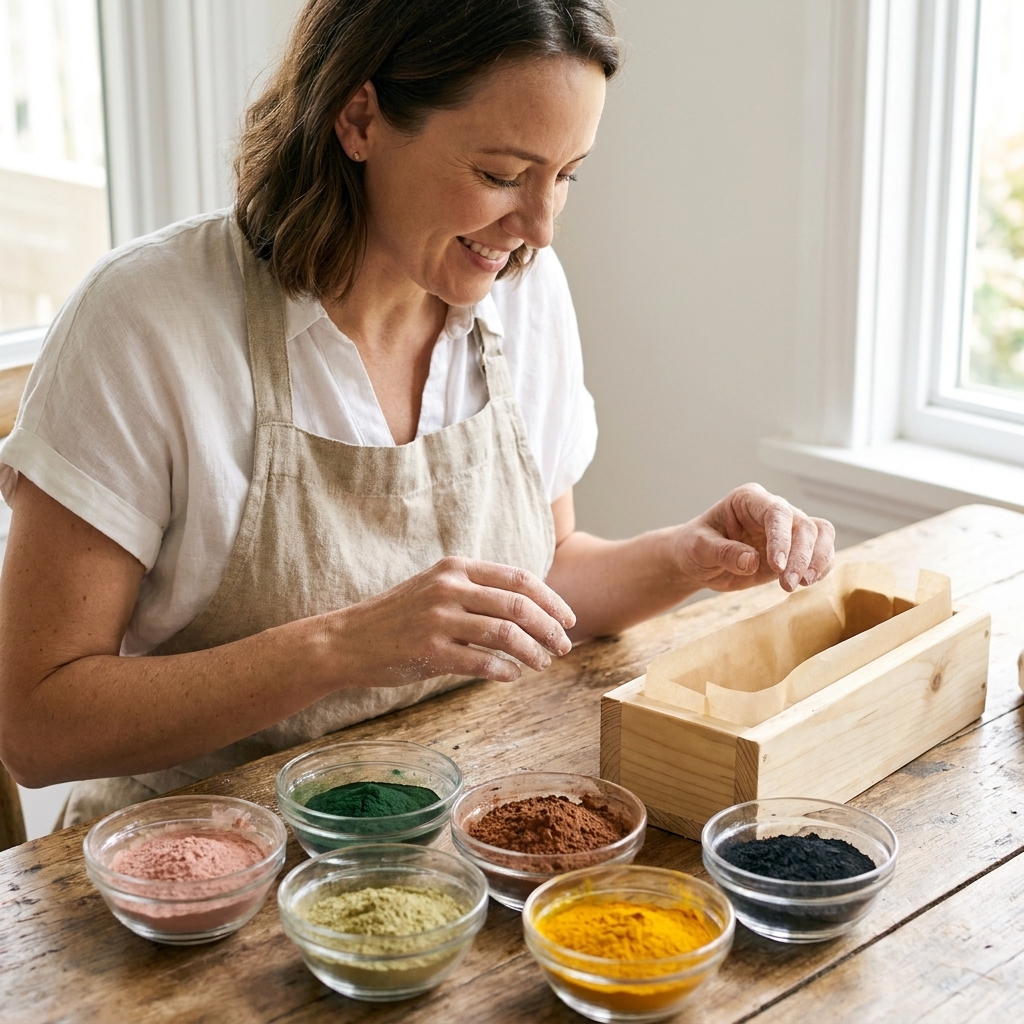
- Optional: titanium dioxide 1 tsp dispersed in oil for a brighter bar
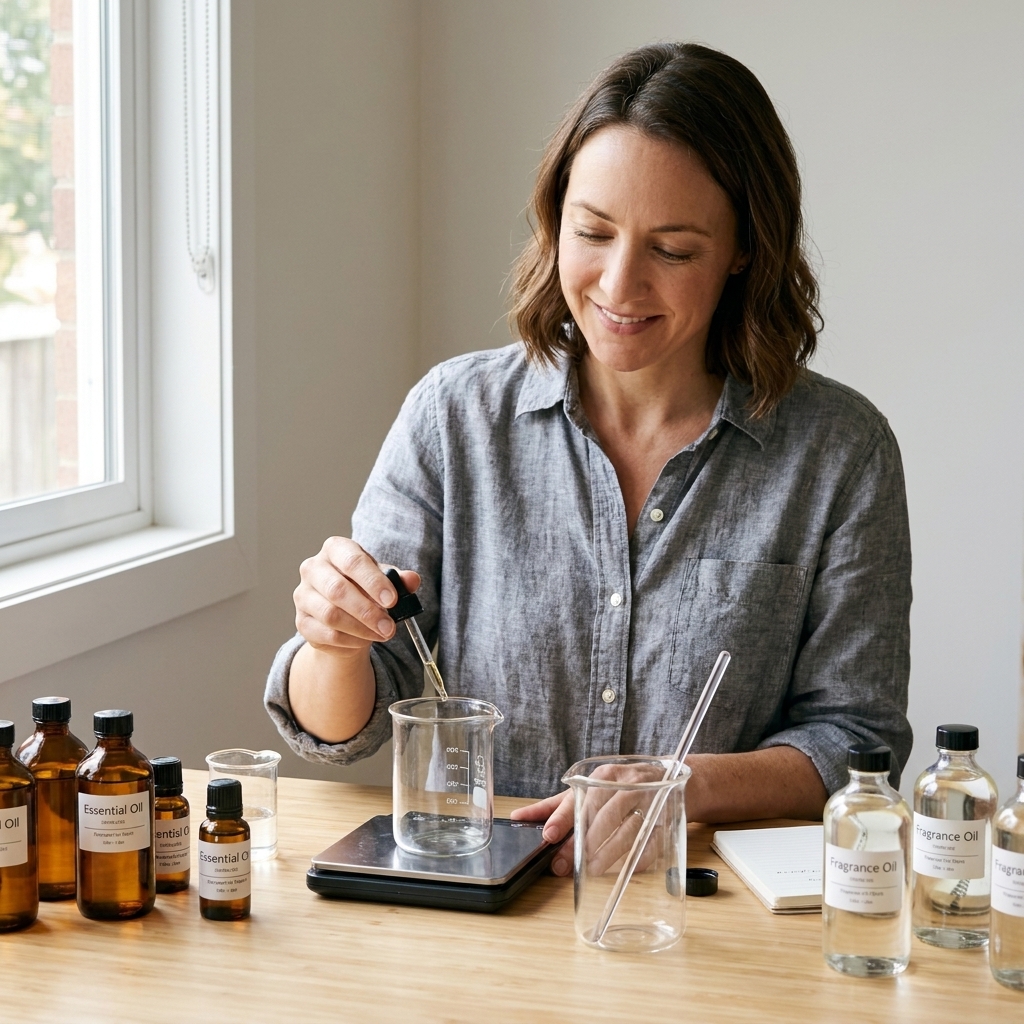
- Optional fragrance: 20 to 30 g skin-safe fragrance oil that behaves well in CP (or skip for an unscented “baby blanket” bar)
Tools and setup
- Accurate digital scale
- Heat-safe lye container (stainless steel or heavy-duty polypropylene)
- Stainless steel pot or soap-safe pitcher for oils
- Stick blender
- Thermometer (infrared or probe)
- Silicone spatula
- Loaf mold or individual cavity molds
- Parchment liner if using a wooden mold
For milk soaps, I also like to have a larger bowl filled with ice water ready. If your lye-milk container starts heating up too quickly, you can nestle it into the ice bath immediately.
Step-by-step
1) Prep the goat milk
Measure 300 g goat milk into ice cube trays and freeze solid. This is the simplest way to avoid scorching. If you only have liquid milk, you can freeze it in a zip bag laid flat, then break it into chunks.
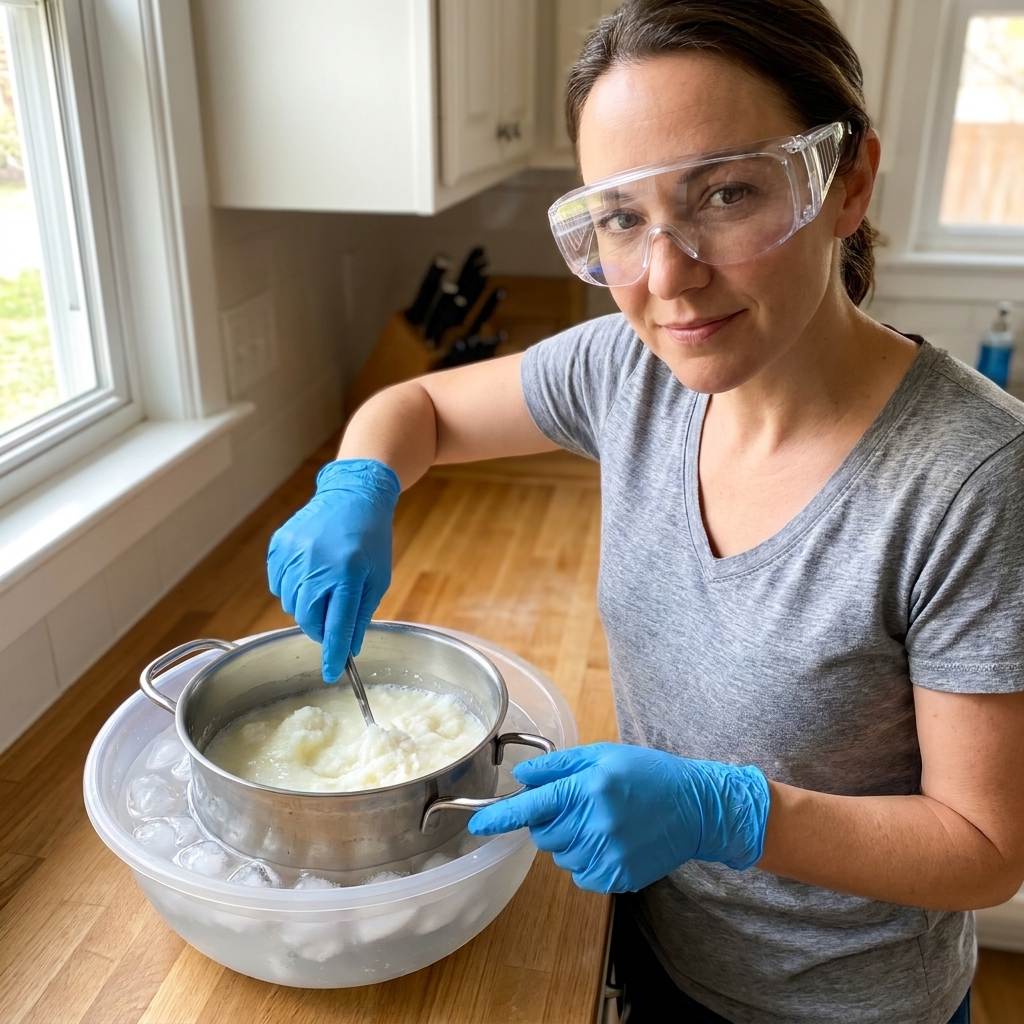
Set your frozen milk cubes into your lye-safe container. Place that container into a larger bowl with ice water to create an ice bath.
2) Add lye to the frozen milk slowly
Weigh 136 g sodium hydroxide. Sprinkle a little lye over the milk cubes, stir until it starts dissolving, then repeat. Go slow. The goal is to keep the milk slushy and pale, not to melt it into a hot latte.
As you stir, the mixture will look grainy and creamy at first. Keep stirring gently until the lye is fully dissolved and you have a smooth, pale solution. Some tiny milk bits are okay as long as the lye itself is dissolved. If the container starts to feel warm, pause and let the ice bath do its job.
Color cue: Pale ivory to light yellow is perfect. Dark orange or tan means the milk got too hot and the sugars started to caramelize. The soap will still be safe, but it will be darker and may smell “cooked” for a while.
3) Melt and cool your oils
Gently melt the coconut oil and shea butter. Add the olive oil and castor oil to bring the temperature down. For milk and honey soap, I like to soap cool, around 80 to 95°F (27 to 35°C) for both oils and lye solution. Cooler temps reduce overheating, cracking, and unexpected darkening.
4) Bring to light trace
Pour the lye-milk solution through a fine mesh strainer into your oils. Stick blend in short bursts, alternating with hand stirring. Stop at light trace, when the batter looks like thin custard and a drizzle leaves a faint line for a moment.
5) Add colloidal oatmeal
To avoid clumps, pre-mix your colloidal oatmeal with a small amount of liquid oil taken from your pot, then pour that slurry back into the main batter. Stir well. Your batter should feel silkier immediately.
6) Add honey the low-heat way
Honey is famous for adding heat and it can also contribute to faster thickening, especially if your batter is already warm. Here is the method that has saved me the most drama:
- In a small cup, mix the honey with 1 to 2 tablespoons of warm distilled water and stir until fully loosened.
- Add the diluted honey to your soap batter and hand-stir thoroughly. Use the stick blender only if needed, and only briefly.
If you prefer not to add any extra liquid at all, you can reserve 15 to 30 g of your goat milk before freezing, keep it refrigerated, and use that to loosen the honey. Just remember to freeze only the remaining milk so your total liquid still equals 300 g.
If you are using fragrance, add it after the honey and stir gently. Choose a fragrance known to behave well, because this batter already has enough personality.
7) Pour and manage heat
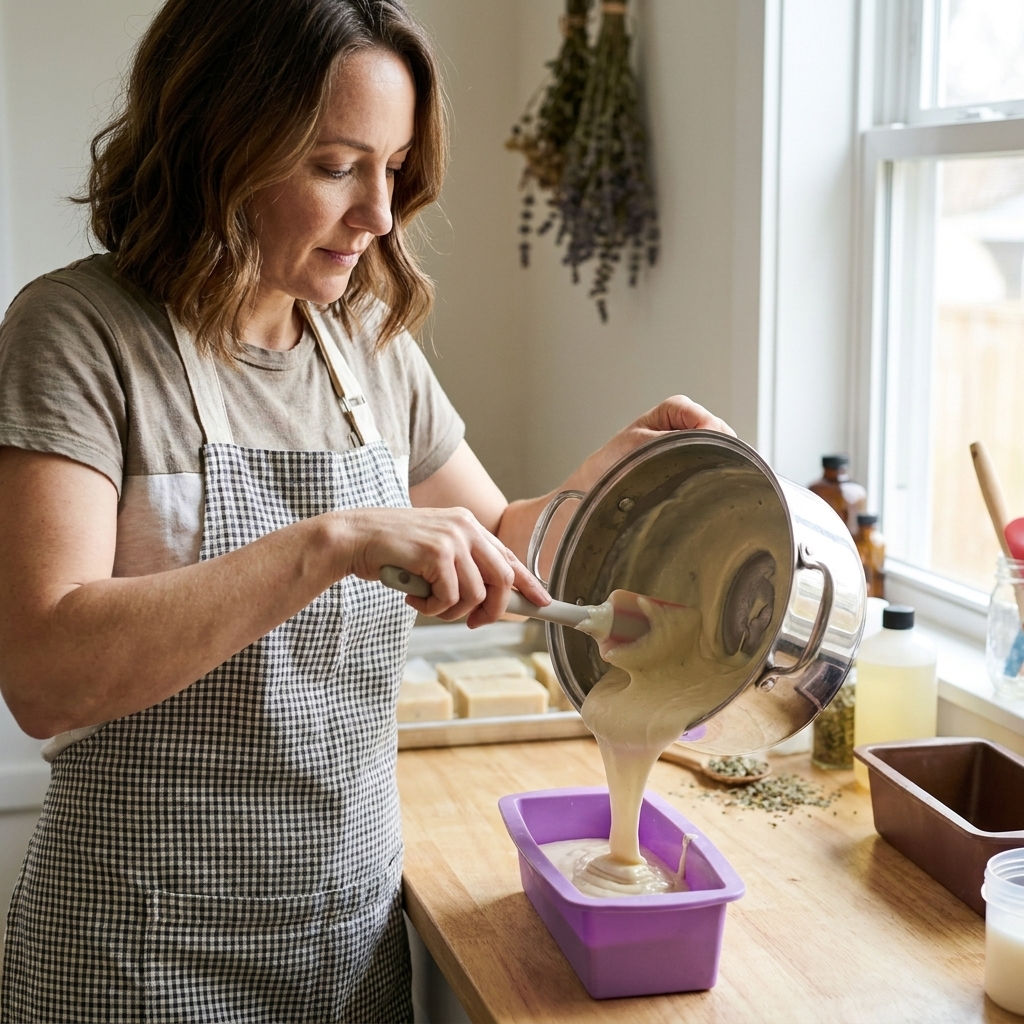
Pour into your mold, tap it gently to release bubbles, and smooth the top.
This is important: do not force gel for this recipe. Honey and milk can heat the loaf on their own. Instead:
- Leave the mold uncovered or cover very lightly with cardboard.
- Place the mold in a cool room.
- If your house is warm, pop the mold into the fridge for 8 to 12 hours.
Overheating signs: A crack down the center, a raised “puff” on top, or the loaf looking glossy and very hot. If you see that happening, move it to the fridge immediately.
Unmolding and curing
When to unmold
Milk soaps can be softer at first. Expect 24 to 48 hours in the mold. If the loaf dents when you press lightly, give it more time. If you used individual cavity molds, you can often unmold sooner.
Cutting
Cut once the loaf is firm enough to slice cleanly. If it is sticky, wait. If it is crumbling, you waited a bit long, but it will still cure fine.
Cure time
Cure for 4 to 6 weeks in a well-ventilated area out of direct sunlight. This is when the magic happens: the bar gets harder, milder, and longer-lasting in the shower.
Keep it pale
- Freeze the milk. Slushy is your friend.
- Soap cool. Keep oils and lye solution under about 95°F (35°C).
- Use an ice bath. It gives you a brake pedal.
- Skip heavy insulation. Refrigerate if your mold runs hot.
- Go easy on honey. More honey usually means more heat and more browning.
If you want an extra-bright bar, a small amount of titanium dioxide dispersed in oil can help. Just do not overdo it, because too much can make glycerin rivers more obvious, especially if the soap warms up.
Troubleshooting
My milk turned orange when I added lye
That is scorching from heat. The soap is still usable, but the color will be darker and the scent may be more “cooked caramel” for a bit. Next time, start with fully frozen milk, sprinkle lye slowly, and keep the container in an ice bath.
The loaf cracked on top
Classic overheating. Pop the mold in the fridge as soon as you see a crack forming. For the next batch, soap cooler, use less honey, and avoid insulating.
The soap has translucent streaks
Those are often glycerin rivers, usually caused by extra heat and titanium dioxide. They are cosmetic. Reduce gel and lower temperatures next time.
The batter thickened too fast
Some fragrance oils accelerate trace, and honey and oatmeal can nudge batter thicker too. Stick blend less, add fragrance at a thinner trace, and choose a well-behaved scent or go unscented.
The bars feel a little sticky at first
Honey can do that early on. A full cure usually fixes it. Make sure you are curing with airflow and spacing between bars.
Scent ideas
This recipe is lovely without fragrance. If you do want scent, I like soft, comforting blends that match the “soothing breakfast” vibe:
- Oat milk and honey type fragrance (well-tested for CP)
- Lavender and vanilla (keep vanilla discoloration in mind)
- Chamomile and a touch of sweet orange
- Warm almond and oatmeal type fragrance
If you are working with essential oils, keep dermal limits in mind and remember that some citrus oils fade in CP. I often recommend fragrance oil for longer-lasting scent, especially in a giftable bar.
FAQ
Can I use fresh goat milk instead of frozen?
You can, but it is much easier to scorch. If you only have fresh liquid milk, chill it well and set the lye container in an ice bath before you start. Add lye very slowly and stir constantly.
Can I use regular ground oats instead of colloidal oatmeal?
You can, but regular oats feel more exfoliating and can turn brown or look spotty. Colloidal oatmeal is the best choice for a truly soothing bar.
How much honey is too much?
In cold-process soap, I stay around 1 to 2.5% of oil weight. More than that can overheat, darken, and make bars tacky for longer. This recipe’s range keeps the “honey benefits” without inviting chaos.
Do I have to discount water for goat milk soap?
You do not have to. A moderate liquid amount helps keep the batter workable. If you do a steep water discount, the batter can thicken quickly, which is not ideal when you are also adding oatmeal and honey.
When is this soap safe to use?
After it is fully cured. Technically, soap is often safe after saponification completes (usually within a couple of days), but a 4 to 6 week cure makes a noticeably milder, harder, better bar.
Final cozy tip
If you want this bar to feel extra luxe without changing the base recipe, try a simple design: reserve a small portion of batter, stir in a pinch of extra colloidal oatmeal, and swirl it gently across the top with a spoon. It looks like cream in coffee, and it fits the whole warm, nourishing vibe perfectly.
If you make it, let it cure fully before you judge it. Milk soaps mature beautifully, and this one becomes the kind of bar that makes you look forward to your next shower.