Melting wax looks innocent until it isn’t. One minute you are daydreaming about a creamy vanilla amber blend, and the next you are hovering over a pot that is far hotter than you realized. Wax is a fuel, and overheated wax can ignite. The goal is simple: melt gently, control temperature, and set up your space so a small mistake does not become a big emergency.
This is the safety routine I use at home for soy, coconut blends, beeswax, and paraffin. It is calm, repeatable, and it keeps direct flame away from your wax.
Why direct heat is risky
Putting wax in a pot directly on a burner creates hot spots. Even if the wax looks fine on top, the bottom layer can spike in temperature fast. Overheating increases fumes, can discolor wax and some fragrance oils, and can alter scent. It also raises the chance of a fire.
Different waxes have different melt points, but none of them appreciate being rushed. The safest approach at home is indirect heat, most commonly a double boiler.
- Hot spots: direct contact with the burner can overheat one area.
- Thermal lag: wax keeps climbing in temperature even after you turn the heat down.
- Ignition risk: wax vapors can ignite if overheated.
The safest option: a double boiler
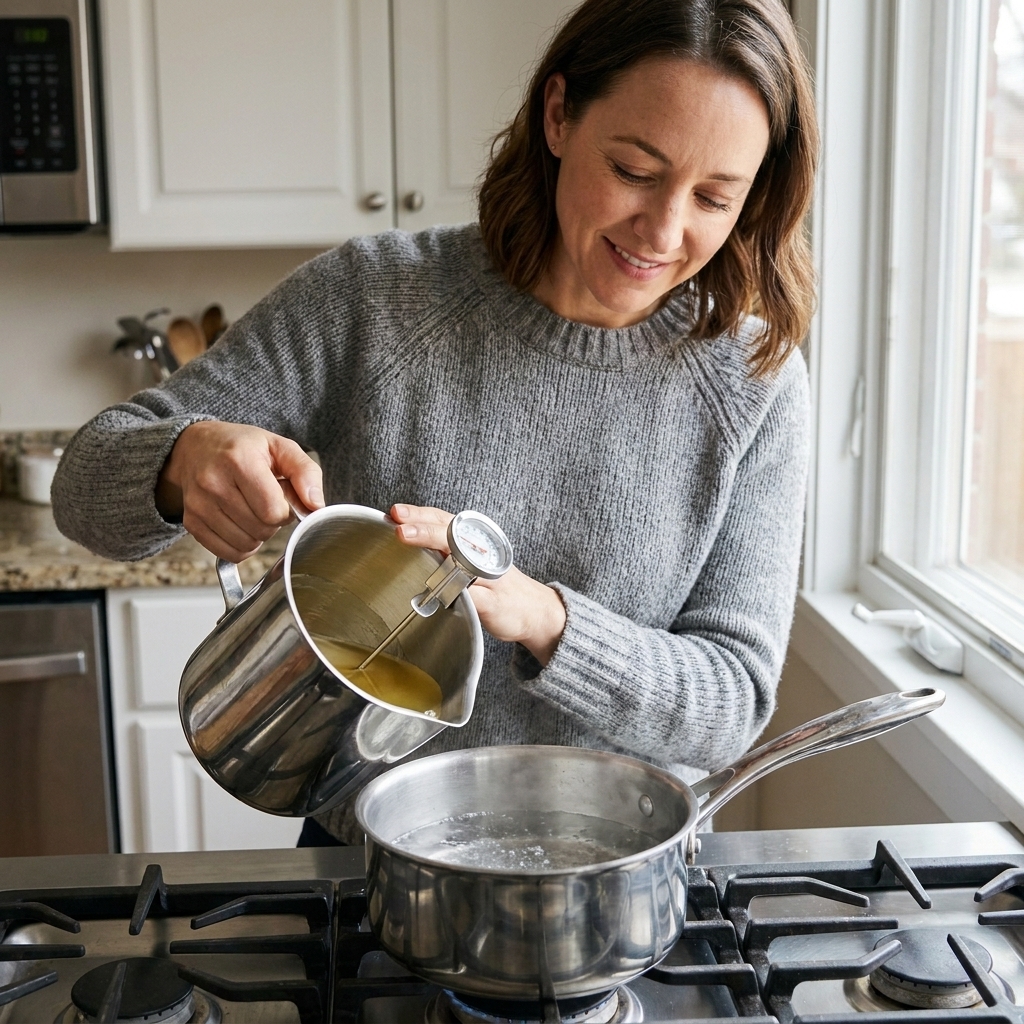
A double boiler is simply wax heated by hot water, not by the burner itself. You can use a dedicated double boiler insert, but my everyday method is a saucepan plus a stainless pouring pitcher.
What you need
- A sturdy saucepan or stockpot
- A stainless steel candle pouring pitcher (or a heat-safe metal bowl)
- A candle thermometer (clip-on or probe)
- Oven mitts or heat-resistant gloves
- A stable trivet or heat-safe landing spot for the hot pitcher
Step-by-step method
- Add water to the pot: Fill the pot with a few inches of water. You want enough to surround the lower portion of the pitcher, but not so much that it can slosh into the wax.
- Bring to a gentle simmer: Medium heat is usually plenty. You are aiming for a quiet simmer, not a rolling boil.
- Place wax in the pouring pitcher: Add wax flakes or chunks to the pitcher. Set the pitcher into the pot of water.
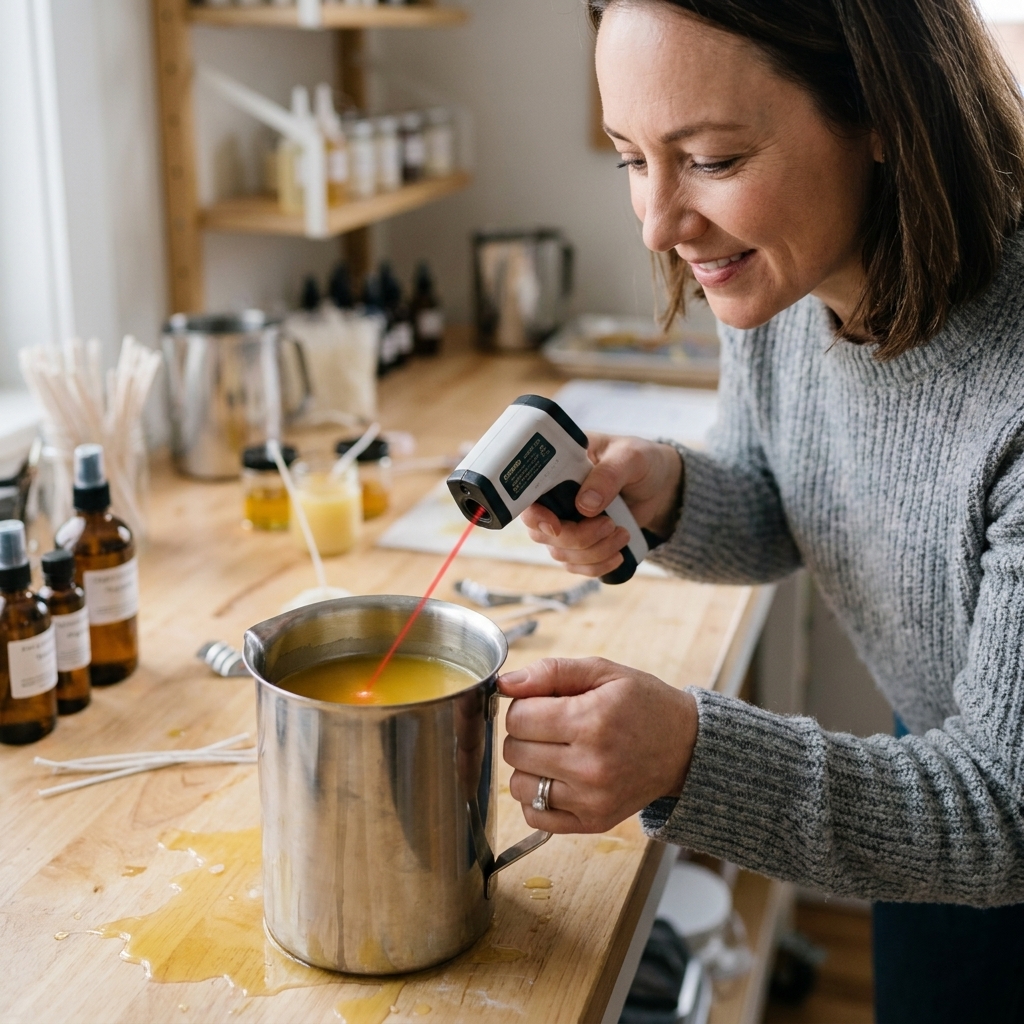
- Clip on the thermometer: Monitor wax temperature the whole time. This is your best safety tool.
- Stir slowly: Stir with a silicone spatula or stainless spoon as the wax softens. Slow stirring helps even the temperature and prevents unmelted bits hiding at the bottom.
- Control the heat early: If the water starts boiling hard, reduce the heat. If you see aggressive bubbling around the pitcher, you are heating too fast.
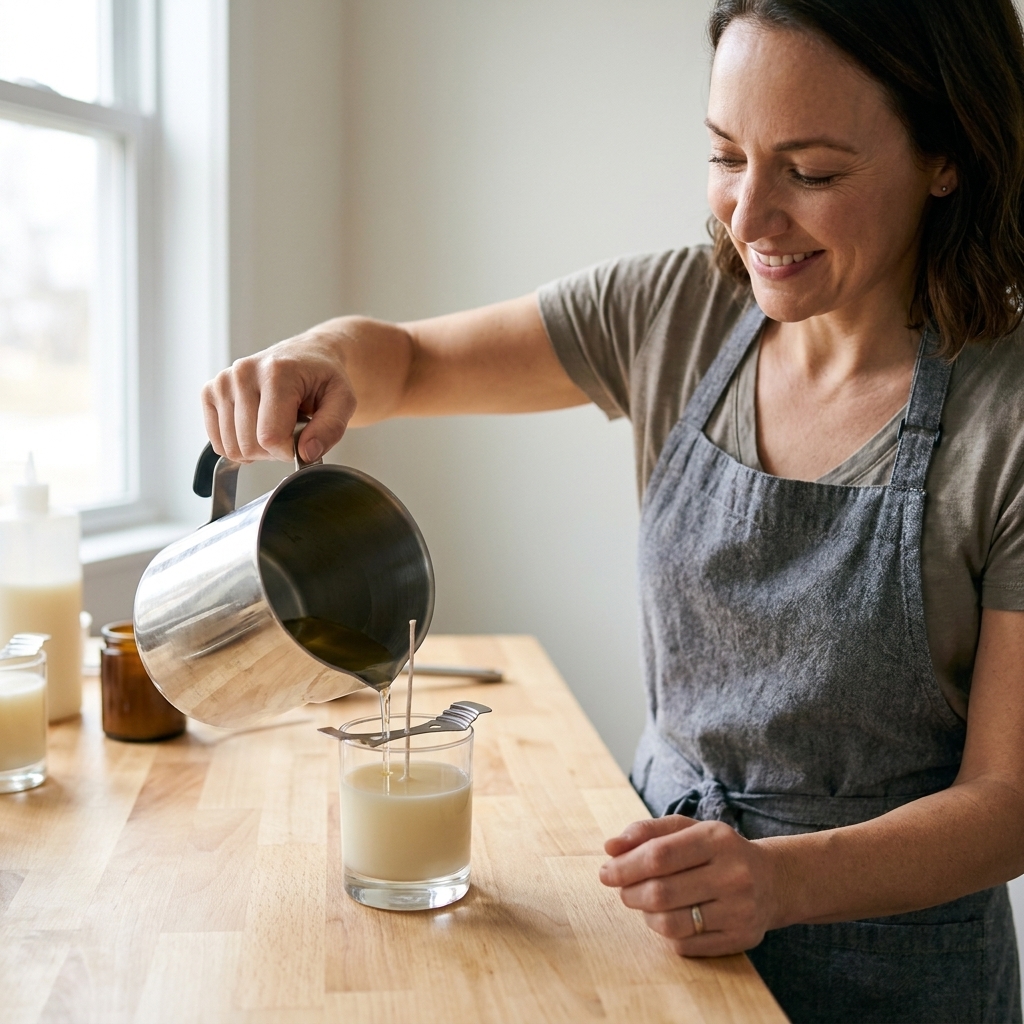
- Dry the pitcher before pouring: When you lift the pitcher out, wipe the bottom dry. Water droplets are not your friend in hot wax.
Thermometer habits that help
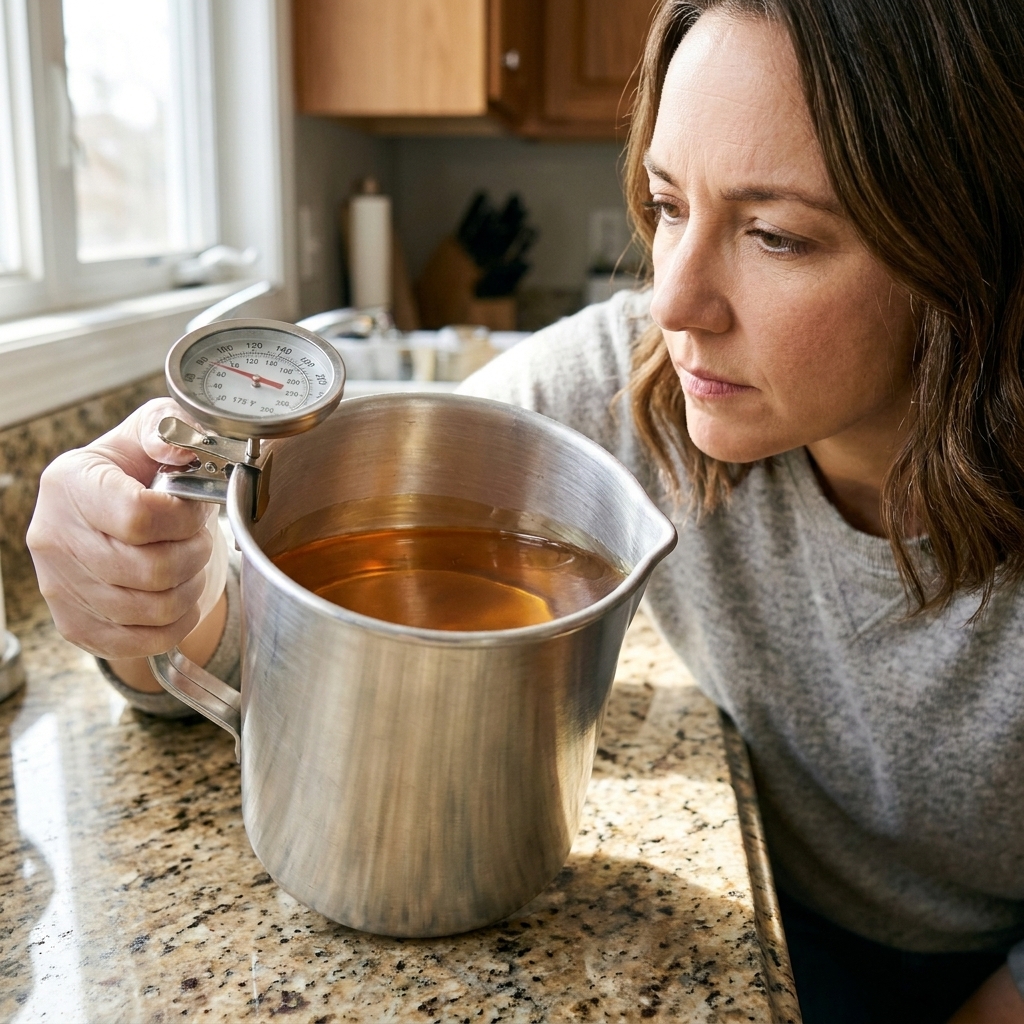
- Measure the wax, not the metal: Keep the probe in the liquid wax without pressing it against the side or bottom of the pitcher.
- Stir, then read: A quick stir evens out temperature so your reading is real, not just a hot or cool pocket.
- Stay consistent: I check temperature often, especially right before adding fragrance and right before pouring.
Little safety details that matter
- Keep the handle out of steam: Steam heats metal handles quickly. Use mitts.
- Do not cover or seal the wax container: A lid on the wax pitcher can hide rising temps and condensation can drip into wax. If you cover anything, cover the water pot lightly and stay with it.
- Avoid splashes: Water in wax can cause spitting and popping across all wax types, especially when the wax is hot.
- Never leave melting wax unattended: Most accidents happen in the “I will be right back” moment.
Temperature control
Think of temperature as both a safety control and a quality control. You want hot enough to melt smoothly, but not so hot that you scorch wax, cook off delicate top notes, or drift toward ignition risk.
Useful temperature guide (typical)
Always follow your wax and fragrance manufacturer specs first, because blends and additives can change the numbers. That said, these ranges are common in home candle making:
- Soy wax: often melts around 120 to 180 F (49 to 82 C) depending on the blend. Many makers add fragrance around 160 to 185 F (71 to 85 C).
- Coconut or coconut blends: often melt in the 100 to 160 F (38 to 71 C) range. Fragrance is commonly added around 150 to 175 F (66 to 79 C).
- Paraffin: often melts around 130 to 170 F (54 to 77 C). Fragrance is commonly added around 175 to 200 F (79 to 93 C), depending on the wax and load.
- Beeswax: often melts around 145 to 155 F (63 to 68 C), but many makers heat higher for full melt and easier pouring. Fragrance (if used) is often added around 160 to 185 F (71 to 85 C).
My safety rule: I avoid pushing temperatures higher than I need. If you do not have a reason to be above 200 F (93 C), do not go there without manufacturer direction.
Practical tips I use every batch
- Melt low and slow: Use the lowest heat that keeps a gentle simmer in the water bath.
- Use smaller wax pieces: Flakes or chopped chunks melt faster with less aggressive heating.
- Do not crank heat to fix impatience: If you are behind schedule, reduce batch size instead.
- Watch for warning signs: Visible smoking, a sharp acrid odor, or a sudden shimmer of heat at the surface means you are too hot. Remove from heat immediately.
Important: Exact flash points vary by wax type and by additives, including fragrance oils. Treat every wax blend as if it can ignite when overheated and keep your process conservative.
Safe alternatives
Electric wax melter
If you make candles often, an electric melter with steady temperature control can be a very safe choice because it avoids open flame and tends to heat more evenly than a burner. You still need a thermometer, and you still do not walk away, but it is a calmer setup for frequent batches.
Slow cooker (with cautions)
A slow cooker can work for some waxes, especially for gently pre-melting in a controlled container. The downsides are slow response time and less precise temperature control. If you use one, keep batches small and use a thermometer. Do not heat fragrance oils directly in a slow cooker.
Microwave (tiny test melts only)
I only recommend a microwave for very small amounts, like color tests, and only in a dedicated, microwave-safe container with short bursts and constant stirring. Microwaves can create sneaky hot spots, and wax can jump from “not melted” to “too hot” quickly.
If you ever feel tempted to microwave a full batch, that is your sign to switch to a double boiler or electric melter instead.
Workspace setup
A safe melt is not just about the pot. It is also about everything around you.
My non-negotiables
- Clear the area: No paper towels near the burner, no loose sleeves, no clutter.
- Tie back hair and secure sleeves: Wax burns are miserable and preventable.
- Keep kids and pets out: A curious bump can tip a pitcher.
- Use stable surfaces: Set hot tools on a trivet or thick silicone mat.
- Ventilate gently: Normal airflow is good, but avoid a strong fan that can feed a flame if something ignites.
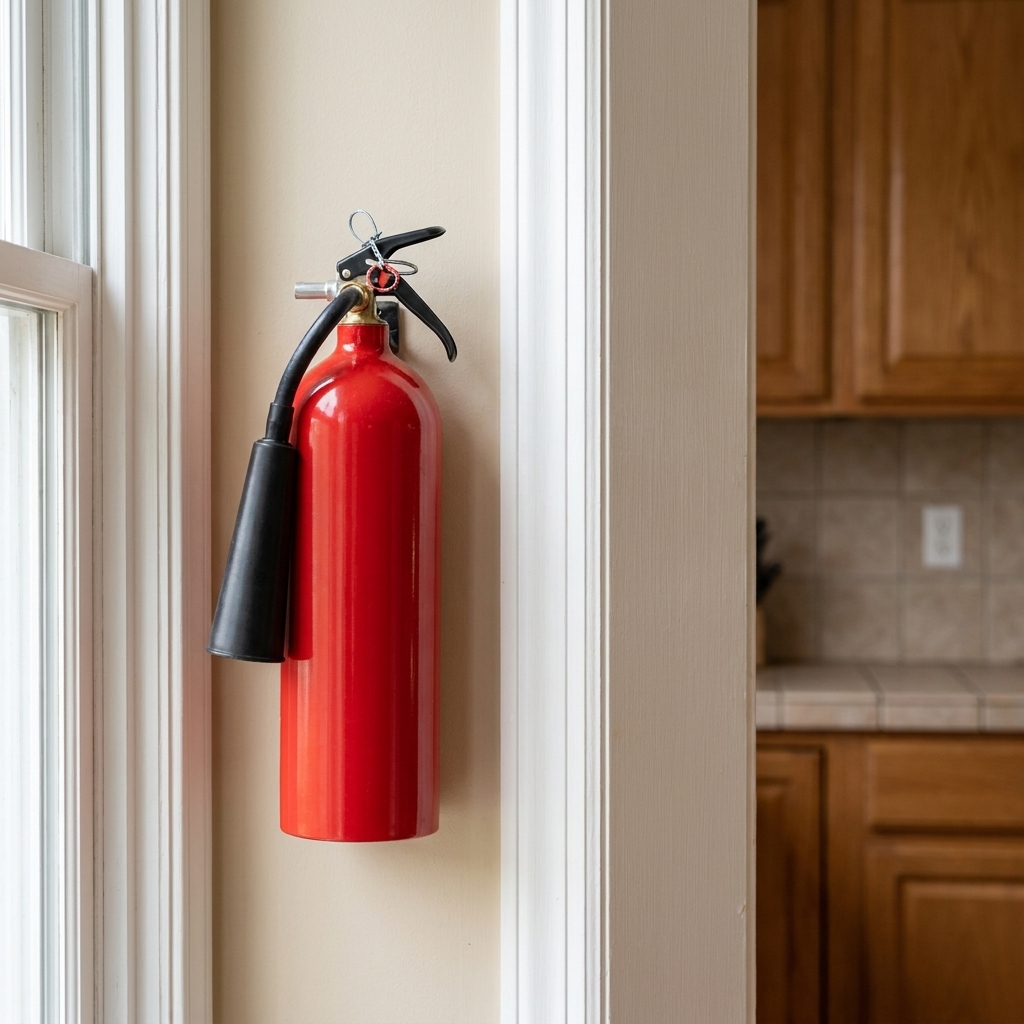
- Have the right extinguisher: Many households keep an ABC extinguisher, which is a solid all-around choice for kitchens and craft spaces and includes Class B coverage for flammable liquids. Whatever you buy, confirm on the label that it is rated for B fires and check the expiration date.
What not to do
- Do not melt wax directly in a saucepan on a burner.
- Do not leave melting wax unattended, even briefly.
- Do not add water to hot wax. Water can cause violent spattering.
- Do not pour overheated wax to cool it down. Move it off heat and let it settle safely.
- Do not rely on scent to tell you it is too hot. Use a thermometer. Fragrance oils can smell fine even when the wax is overheating.
If wax catches fire
First, take a breath. Wax fires are scary, but the right steps are simple. Your goal is to cut off oxygen and heat without spreading burning fuel.
Do this immediately
- Turn off the heat source: Shut off the burner or unplug the electric melter if you can do it safely.
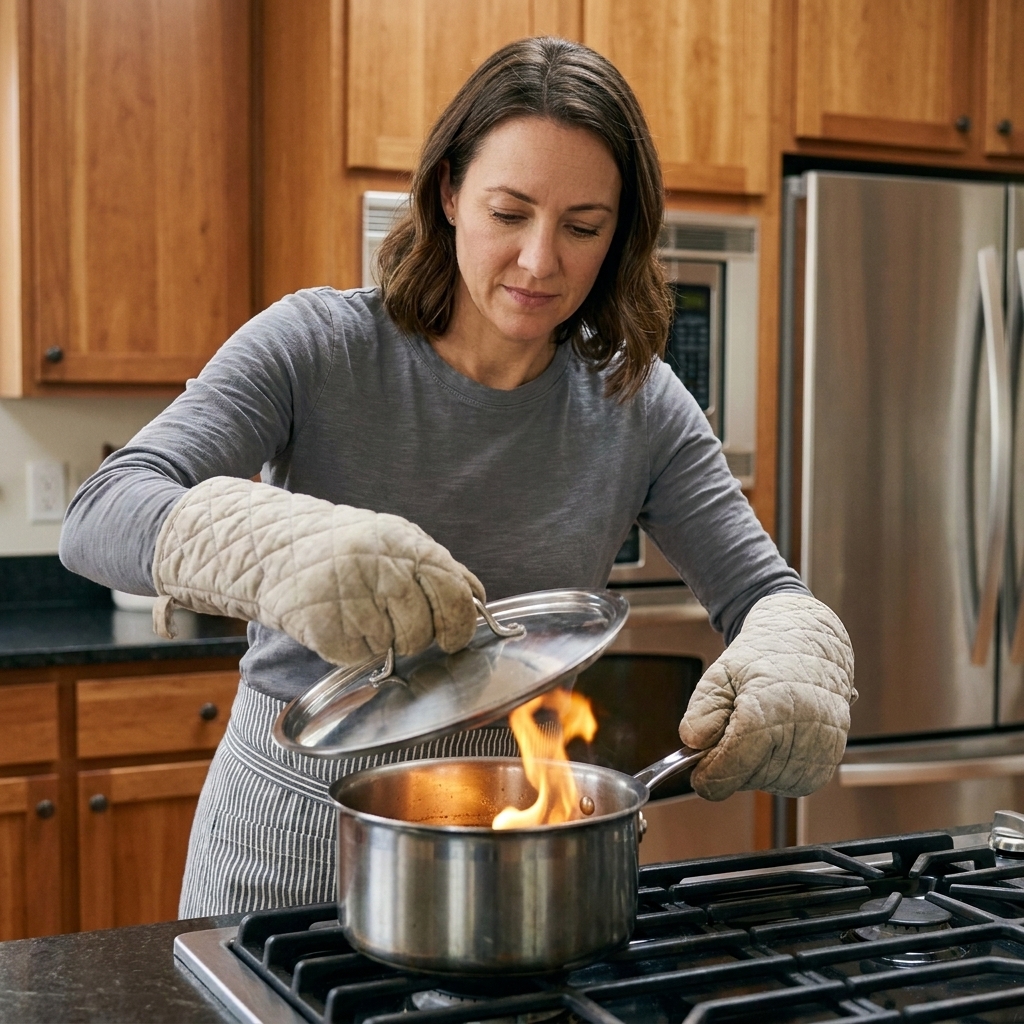
- Smother the fire: Slide a metal lid or baking sheet over the pot or pitcher to cut off oxygen. If you have a fire blanket, use it according to directions.
- Use a fire extinguisher if needed: If the flame does not go out quickly when smothered, use your extinguisher and aim at the base of the flames.
- Back away and call emergency services: If the fire grows, spreads, or you feel unsure at any point, get everyone out and call for help.
Never do this
- Never throw water on a wax or oil fire. Water can splash burning wax outward and instantly worsen the fire.
- Never carry a burning pot. It is how kitchen fires become house fires.
- Never try to blow it out. You can spread flames and hot wax.
After a fire is out, leave the pot covered until everything cools down. Reignition is possible if wax is still very hot and vapors remain.
Common problems
My wax is taking forever to melt
Turn your water bath up slightly, not your wax. Make sure the water is simmering, chop wax into smaller pieces, and stir occasionally. Patience is safer than a temperature spike.
I got water drops in my wax
Remove from heat. Let everything cool. Skim off visible droplets if you can, and consider using that wax for test candles only. Water can cause sputtering during later reheats or pours.
The wax looks smoky or smells sharp
Remove from heat immediately and move the pitcher to a heat-safe surface. Do not add fragrance oil. Let it cool and reassess. If it truly scorched, I do not risk it in candles meant to burn in someone’s home.
Wax burn first aid
Even with a careful setup, accidents happen. If you get hot wax on skin, treat it like a heat burn first.
- Cool the burn: Run cool (not icy) water over the area for 10 to 20 minutes.
- Do not peel hardened wax off: If wax is stuck to skin, let it cool fully, then gently loosen it with oil if it releases easily. If it is adhered or the skin is blistered, get medical help.
- Cover lightly: Use a clean, nonstick dressing if needed.
- Get help fast: Seek urgent care for large burns, burns on the face or hands, severe blistering, or any sign of infection.
Quick safety checklist
- Thermometer ready and working
- Double boiler set up with a gentle simmer
- Long hair tied back, sleeves secure
- Clear counters and a trivet for hot tools
- Lid or baking sheet within reach for smothering
- Fire extinguisher accessible and rated for B fires
- No distractions, no leaving the room
Safe candle making is not about being fearless, it is about building a process you can repeat on autopilot. Once your setup is solid, you get to focus on the fun parts like creamy tops, crackling wooden wicks, and that perfect scent throw.
FAQ
Can I melt wax directly on an electric coil if I stir constantly?
I do not recommend it. Constant stirring does not eliminate hot spots at the bottom, and wax can overheat quickly. Use a double boiler or an electric melter designed for wax.
Is a double boiler safe on a gas stove?
Yes, as long as the wax container is sitting in the water bath and not exposed to direct flame. Keep the flame low enough that it does not lick up the sides of the pot, and keep handles turned inward.
Should I use a candy thermometer?
A candy thermometer can work if it reads accurately in your working temperature range and clips securely. Dedicated candle thermometers are convenient, but the key is accuracy and consistent monitoring.
What is the safest container for melting wax?
Stainless steel pouring pitchers are my favorite for home batches. They handle heat well, pour cleanly, and are easy to wipe out. Avoid thin plastic and anything not rated for high heat.