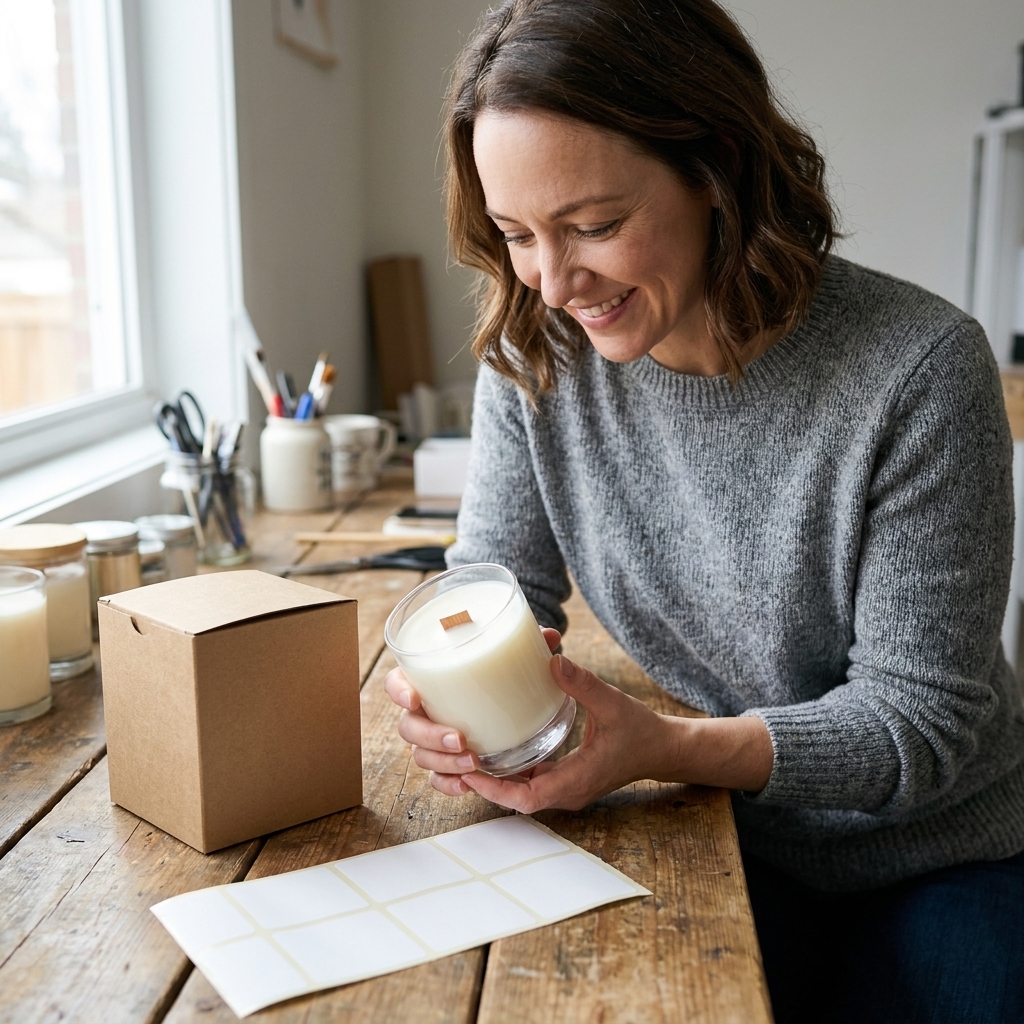
I still remember the first candle I ever mailed. I packed it like a fragile treasure, taped it into a box that felt indestructible, and then spent three days imagining it bouncing down conveyor belts like a pinball. It arrived safe, but only because I got lucky.
Shipping candles is its own craft. Wax softens, glass breaks, lids dent, and fragrances can “sweat” if the box gets warm. The good news is that once you understand a few packaging basics, you can ship confidently even during busy gifting seasons.
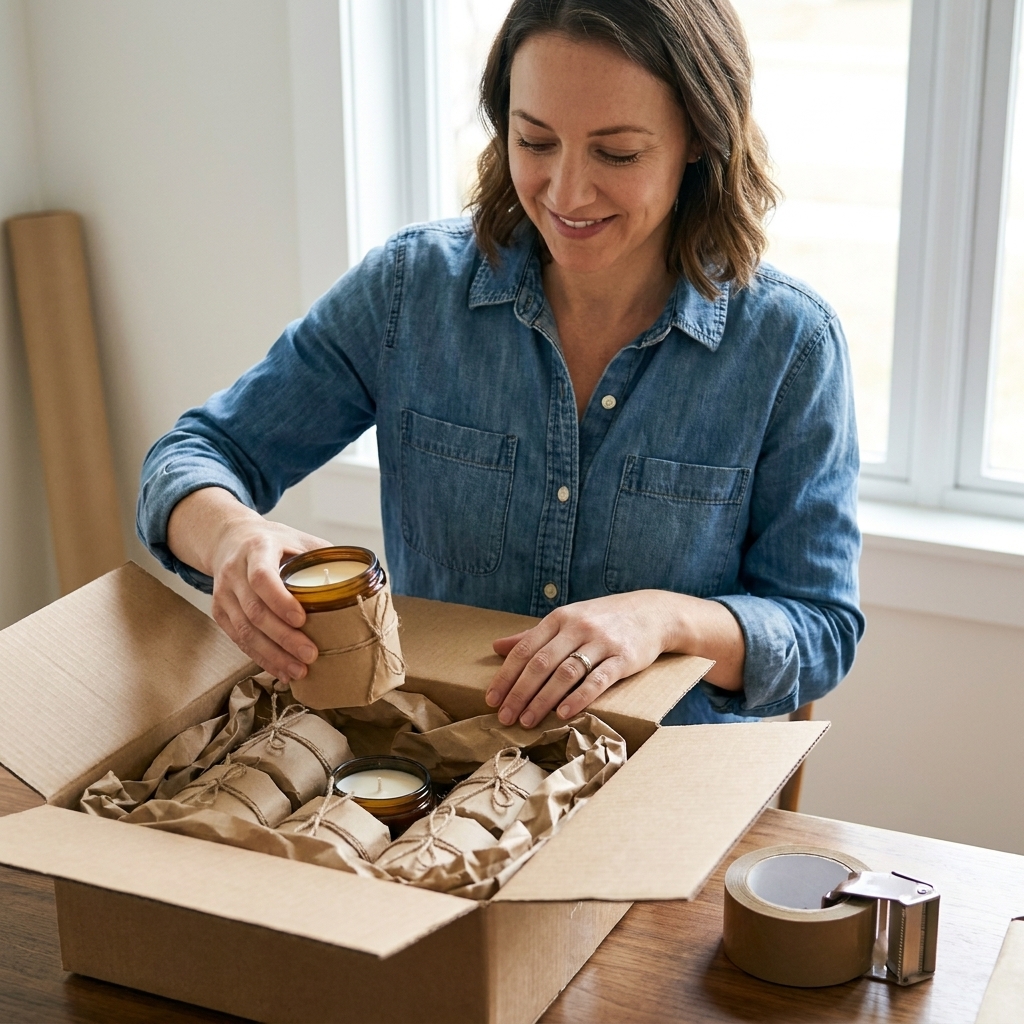
Start with the right box
The most common shipping failures I see are not about bubble wrap. They are about box choice. A box that is too big invites movement, and movement is what breaks glass.
Quick definition for beginners: void fill is the material you use to eliminate empty space so the candle cannot shift in transit.
Choose a new, sturdy corrugated box
- Use new boxes for glass candles. Reused boxes can have weakened corners and invisible crush damage.
- Double-wall is best for heavy jars, multiple-candle orders, or longer shipping distances.
- Match the box size to the order. You want enough room for cushioning on every side, but not so much that you need a mountain of void fill to stop shifting.
Plan your padding space
A practical rule: plan for about 1 to 2 inches (2.5 to 5 cm) of padding on all sides of each candle, including the top and bottom. For glass, 2 inches is a safer default, especially for heavier jars or longer trips.
If your jar is 3 inches wide, you ideally want an inside width after padding closer to 7 inches once cushioning is included.
Wrap for impact and heat
There are two separate problems to solve: impact and temperature. Regular bubble wrap is great for bumps. It may add a little insulation, but it is not designed to manage heat exposure in a meaningful way.
Thermal bubble wrap: what it can (and cannot) do
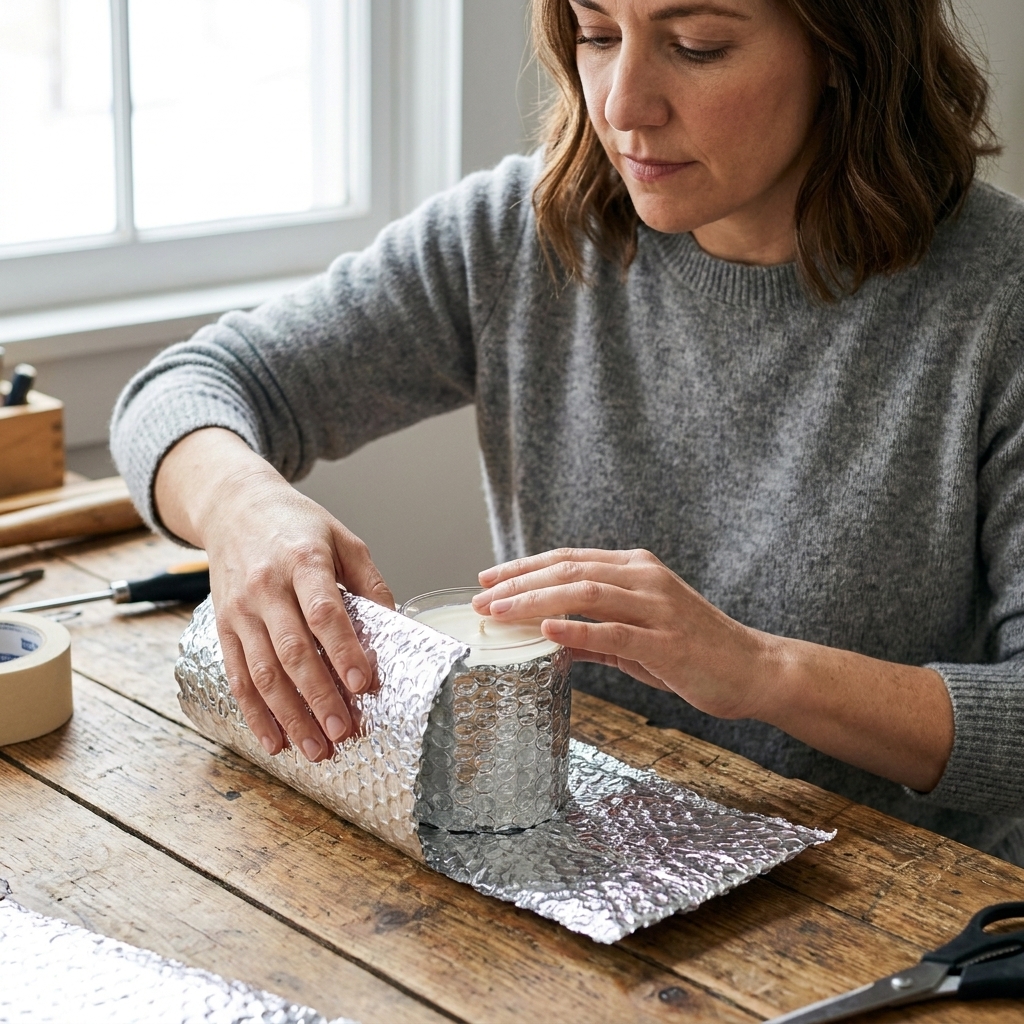
Thermal bubble wrap (the reflective, foil-looking kind) can slow heat gain during short exposures to warmth. Think of it as a buffer, not a miracle shield. It works best when you:
- Wrap the candle completely with seams taped shut
- Pair it with firm void fill so the candle cannot move
- Ship early in the week so boxes do not sit in hot warehouses all weekend
If you ship in very hot climates or during a heat wave, consider pausing shipments, offering local pickup, or upgrading your hot-weather packaging. No wrap can guarantee a perfect, melt-free arrival if a box sits for hours in an extremely hot delivery environment.
Bubble wrap, foam, and molded inserts
- Bubble wrap: Great for impact. Use multiple layers and tape it so it cannot unwind.
- Foam sheets: Excellent for preventing scuffs and lid scratches, especially on matte jars.
- Molded pulp or foam inserts: Best for shipping multiple candles consistently. If you ship often, inserts are one of the biggest stress reducers.
Void fill: stop movement
Once the candle is wrapped, the job is to lock it in place so it cannot build momentum.
Best void fill options for jar candles
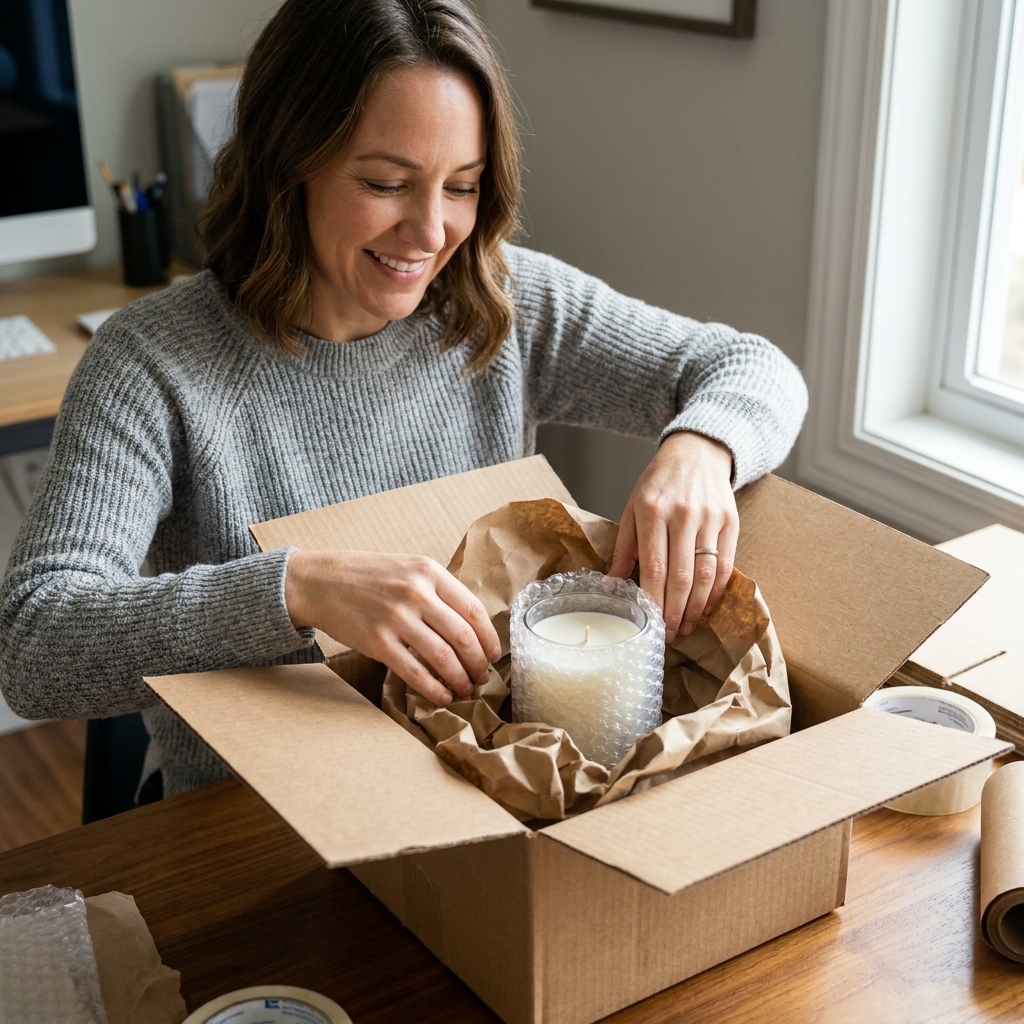
- Kraft paper (crumpled): My go-to. It is reliable, recyclable, and grips well inside the box.
- Honeycomb paper wrap: Great for a gift-like unboxing feel, especially paired with tissue paper.
- Air pillows: Lightweight and clean, but they can shift if you do not pack tightly.
- Packing peanuts: They work, but candles can “float” through them unless the box is packed very firmly. If you use peanuts, combine them with a snug inner box or molded insert.
The shake test
Before sealing the box, close the flaps and gently shake. You should feel zero movement. If you hear or feel shifting, add more void fill until it is solid.
How to pack one jar candle
This is my simple, repeatable method for most 6 to 12 oz jar candles.
1) Prep the candle
- Let it fully cure and cool. A candle that is still releasing heat can soften its own top.
- Center and secure the lid. If the lid is loose, add a small strip of paper tape around the seam, or place the candle in a snug bag to keep it from rattling.
- Trim the wick so it will not snap or poke packaging.
2) Protect the jar
- Wrap the jar in 2 to 3 layers of bubble wrap or one full layer of thermal bubble wrap plus one cushioning layer.
- Tape the wrap so it stays tight and covers the base and sides.
3) Cushion the bottom
Add a thick pad of crumpled kraft paper or other cushioning to the bottom of the box. Glass hates hard landings.
4) Center the candle
Place the wrapped candle in the middle, then pack void fill around all sides firmly.
5) Top cushion and seal
- Add top padding so the candle cannot rise and fall inside the box.
- Tape with the H-tape method: one strip along the center seam, plus two strips across the edges.
Ship multiple candles safely
Multiple-candle orders are where breakage risk jumps. The goal is simple: no candle should be able to touch another candle, even if the box is dropped.
Individual protection plus separation
- Wrap each candle individually as if it were shipping alone.
- Create dividers using corrugated cardboard partitions, molded inserts, or separate inner boxes.
- Fill the gaps between partitions and the outer box so nothing shifts.
A quick layout tip
For two to four jar candles, I like a snug box with cardboard dividers, plus kraft paper packed tightly above and below. If you can press on the outside of the box and feel the contents give, add more support.
Hot weather upgrades
Heat does not just soften wax. It can also cause oil migration or “sweating,” especially with heavily fragranced candles or softer wax blends.
Timing and delivery choices
- Ship early in the week. Monday and Tuesday shipments are less likely to sit over a weekend.
- Choose a faster service during hot spells if you can do it without blowing up your pricing.
- Avoid porch baking. Encourage customers to use a shaded delivery spot, delivery alerts, or hold for pickup.
Insulated liners and cold packs
If you routinely ship through high heat, consider an insulated mailer or foam liner. For extreme conditions, some sellers add gel packs or phase-change packs, but there are tradeoffs: added weight, higher shipping costs, and the risk of condensation if the pack sweats as it warms.
I still treat all of this as risk reduction, not a guarantee. If the forecast is brutal, sometimes the best option is a short shipping pause and clear communication.
Materials and melt points
I reach for thermal protection when daytime highs are consistently warm or when I know a package will travel long distances. It is especially useful for candles made with lower-melt-point waxes, including many soy container blends, compared with higher-melt-point blends (which can include some paraffin blends).
If your candle tops are prone to cosmetic changes like frosting, remember: a little surface change is not dangerous, but customers can mistake it for damage. Good packing plus a short note in your order insert can prevent confusion.
Labels and proof
Labels do not guarantee gentle handling, especially with automated sorting, but they can help in two important ways: they set expectations and they support claims if something goes wrong.
- Use “Fragile” labels if you like, but do not rely on them instead of proper cushioning.
- Include a packing slip inside the box in case the outer label is damaged.
- Take quick photos of your packed box before sealing if you ship high-value orders. It is helpful if you ever need to document packaging for an insurance claim.
Damage and returns plan
If you sell candles, a simple damage protocol saves time and stress. I like to include one line on the packing slip or order insert: if anything arrives damaged, take photos of the item and the packaging and keep the box until the claim is resolved. Carriers often want to see both the product and the packing materials.
Common mistakes
Box is too big
Fix: Downsize the box or add structured inserts. Void fill alone cannot always stop heavy jars from shifting.
Only wrapping the sides
Fix: Give the base extra love. A cushioned bottom prevents a very common crack pattern: impact at the base edge.
Using tissue paper as padding
Fix: Tissue is pretty, but it compresses instantly. Use it for presentation, then add real cushioning like bubble wrap, foam, or kraft paper.
Taping directly on the label
Fix: Tape your protective wrap, not the product. If you need to secure a lid, use a removable paper tape and keep it off printed labels when possible.
Other candle types
Most of this guide is aimed at glass jars, but the same principles apply elsewhere.
- Tins: Less breakable, but they dent. Use firm side cushioning and keep them from rubbing each other.
- Pillars and tapers: No glass to shatter, but edges can chip and heat can warp them. Wrap to prevent scuffs, then immobilize them.
- Wax melts: Very heat sensitive. Consider insulated liners in summer and avoid long transit times.
Quick checklist
- Candle is fully cooled and lid is secure
- Jar is wrapped completely, including the base
- About 1 to 2 inches of cushioning on all sides (2 inches is safest for glass)
- No movement when you do the shake test
- Box is taped with the H-tape method
- Shipping early in the week during warm weather
FAQ
Should I double-box glass jar candles?
If the candle is heavy, expensive, or traveling far, double-boxing is a smart upgrade. Use a snug inner box with padding, then place that inside a larger outer box with another cushion layer all around.
Do I need to worry about candles being hazardous for shipping?
Most finished candles are not shipped as hazardous materials, but rules can vary by carrier, quantity, and destination. International shipments can have additional restrictions. If you include extras like matches, lighters, or aerosols, that is a different situation. When in doubt, check your carrier’s current guidelines.
What is the best void fill for an eco-friendly unboxing?
Crumpled kraft paper and honeycomb paper wrap are my favorites. They lock items in place well and feel intentional when the recipient opens the box.