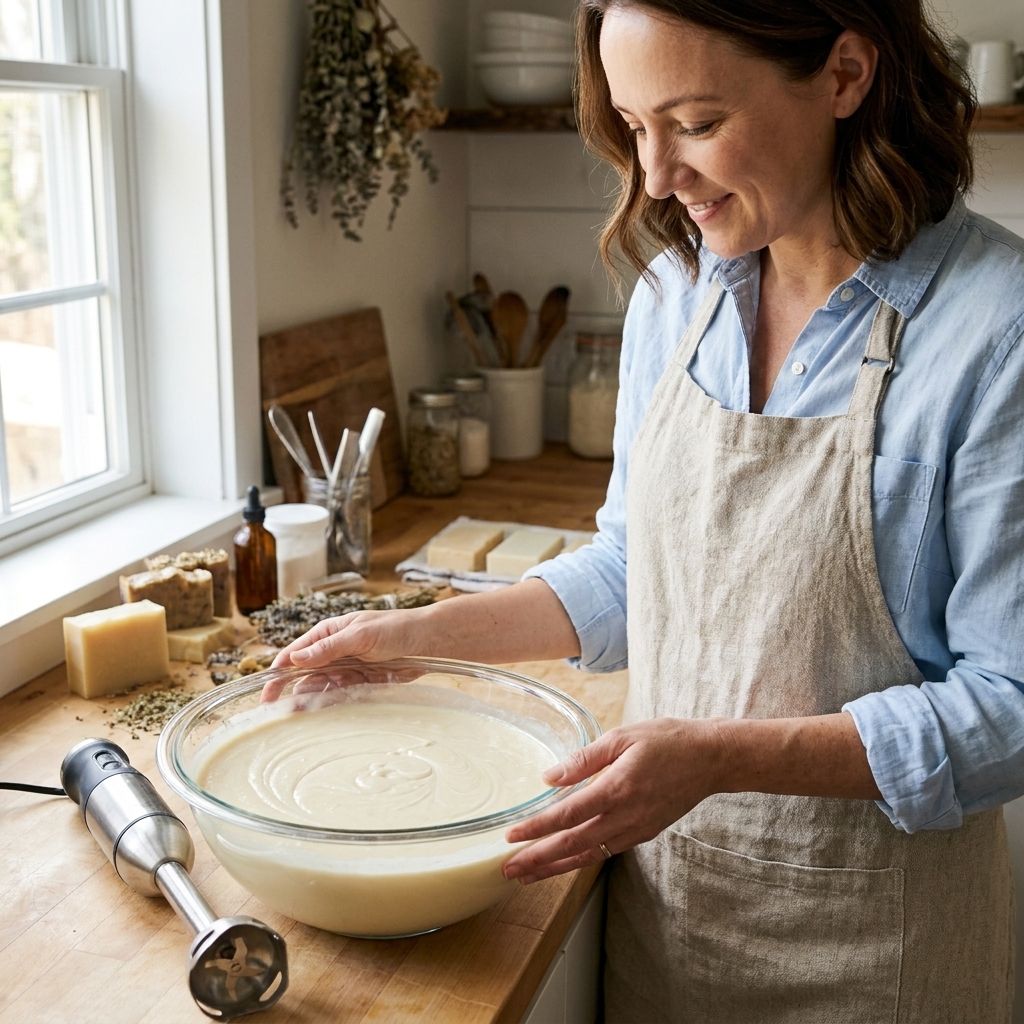
I still remember my first batch of liquid soap paste. I expected instant, silky hand soap. Instead, I got a glossy blob that looked like warm taffy and absolutely refused to dissolve on my schedule. That was the moment I learned the secret of great liquid hand soap: it is not hard, but it is a process. Once you understand what the paste is doing, it becomes wonderfully predictable.
This tutorial walks you through making true soap (not detergent-based “soap”), using potassium hydroxide (KOH) and hot process. We will formulate a balanced hand soap paste, cook it to completion, dilute it into a pourable liquid, then finish it so it feels good at the sink.
Before you start
What this is and what it is not
This is liquid soap made by saponifying oils with potassium hydroxide. The end product is potassium soap. It behaves differently than melt and pour and differently than body wash made with surfactants.
- Pros: naturally derived, customizable oils, can be very gentle, and usually does not require a preservative when it is made with distilled water and kept free of contamination (more on that below).
- Tradeoffs: it takes time, clarity can be finicky, and thickening relies on dilution control and sometimes salt or a compatible thickener.
Safety first (KOH is hazardous)
Potassium hydroxide is highly caustic. Treat it with the same respect you give sodium hydroxide.
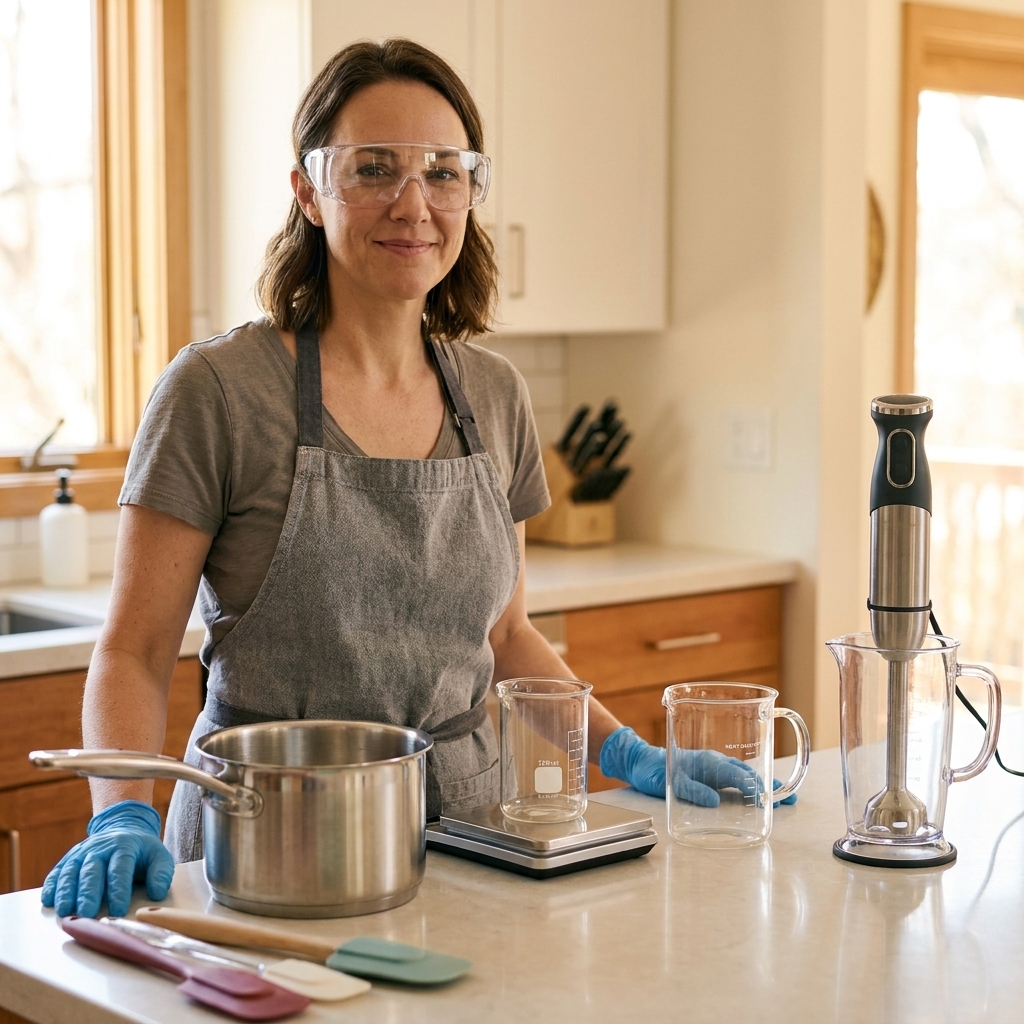
- Wear eye protection, gloves, long sleeves, and closed-toe shoes.
- Mix lye solution in a well-ventilated area.
- Add KOH to water, never water to KOH.
- Use heat-safe containers. Avoid aluminum (it reacts with lye).
- Label everything. Keep kids and pets out of the workspace.
Tools and equipment
- Accurate digital scale (0.1 g resolution is ideal)
- Slow cooker (crockpot) or a heavy stainless pot plus stove
- Stick blender
- Heat-safe lye solution container (HDPE plastic or stainless)
- Thermometer (helpful, not mandatory)
- pH strips that read in the 8 to 14 range and phenolphthalein solution if you have it
- Distilled water (important for clarity and consistency)
- Stainless or silicone spatula
- Mesh strainer (optional, for filtering diluted soap)
- Bottles or jugs for dilution and storage
Ingredients you will see referenced
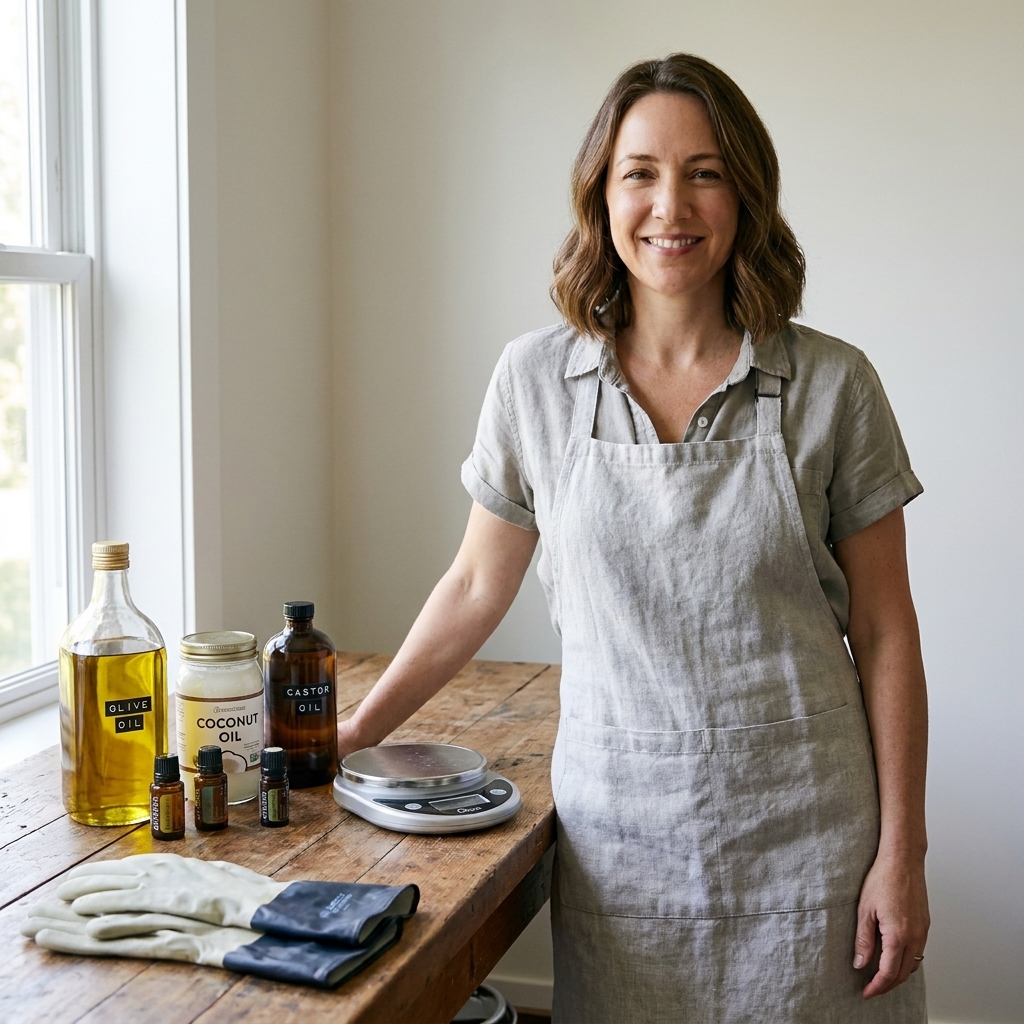
- Oils: your recipe base
- Potassium hydroxide (KOH): soapmaking grade, commonly around 90 percent pure. Purity matters.
- Glycerin (optional but recommended): helps dissolve KOH, speeds trace, and can improve paste texture
- Distilled water: for lye solution and dilution
- Citric acid (optional): helps with chelation when converted to citrate, used carefully
- Borax (optional): sometimes used as a clarifying or buffering aid in liquid soap. It is alkaline and it is not a substitute for a true chelator like citrate.
- Fragrance or essential oils (optional): for scent
A quick word on KOH purity and storage
If your supplier provides a COA (certificate of analysis), use that purity number in your lye calculator. Also store KOH airtight. It pulls moisture and carbon dioxide from the air, which can change its effective strength over time.
The formula
I am giving you a balanced starter formula that makes a paste that dilutes well, cleans nicely, and does not feel squeaky. It is coconut-forward for lather, softened with olive and castor for slip.
Soap paste oils (1000 g oils total)
- 500 g olive oil (50%)
- 350 g coconut oil, 76-degree (35%)
- 150 g castor oil (15%)
KOH and liquid amounts (you will calculate)
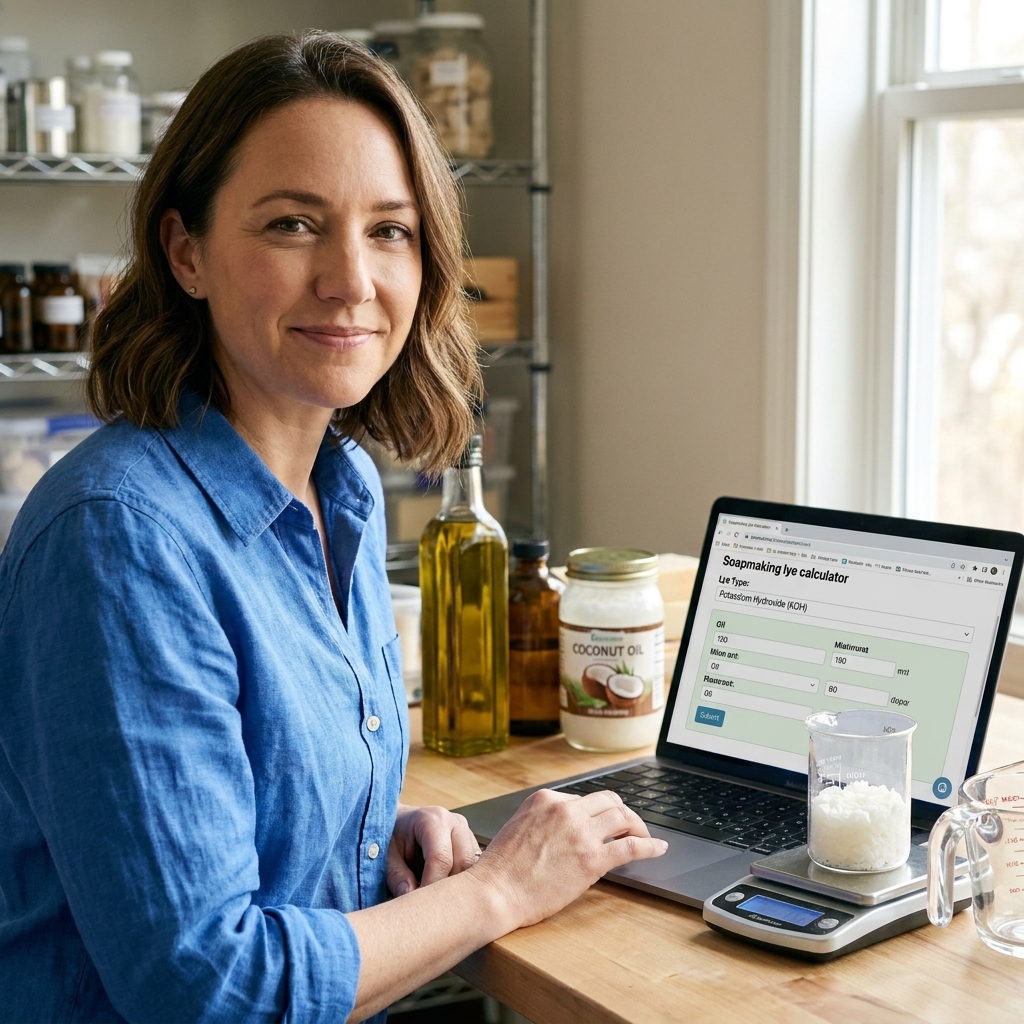
Use a lye calculator that supports KOH purity (SoapCalc works well). Enter:
- Lye type: KOH
- KOH purity: match your supplier (commonly 90%)
- Superfat: 3% (great for hand soap)
- Water: choose 25 to 30% lye concentration (a little more water makes mixing easier, a little less speeds cooking)
Because KOH purity varies, I am not hardcoding a single gram number here. Two makers can buy “KOH flakes” from different suppliers and get different purity. Your calculator keeps you safe and keeps your batch consistent.
Cook the soap paste
1) Prep your station
Cover your work surface, set out measured oils, and pre-measure your distilled water and glycerin if using. Turn your slow cooker to low to pre-warm.
2) Make the KOH solution
In a heat-safe container, weigh your distilled water. If you are using glycerin to help dissolve, you can replace part of the water with glycerin or add glycerin separately. Slowly sprinkle the KOH into the liquid while stirring.
- The mixture will heat up quickly and may look cloudy.
- Stir until all flakes are dissolved. If you see stubborn bits, give it time.
3) Melt and combine oils
Melt your coconut oil, then add olive and castor. Warm oils and lye solution do not have to match a perfect temperature for hot process, but I like them both warm so trace comes faster and smoother.
4) Bring to trace
Pour the KOH solution into the oils. Use your stick blender in short bursts, alternating with stirring, until you reach a stable trace. For liquid soap, trace often looks like glossy pudding or thin applesauce.
5) Cook the paste
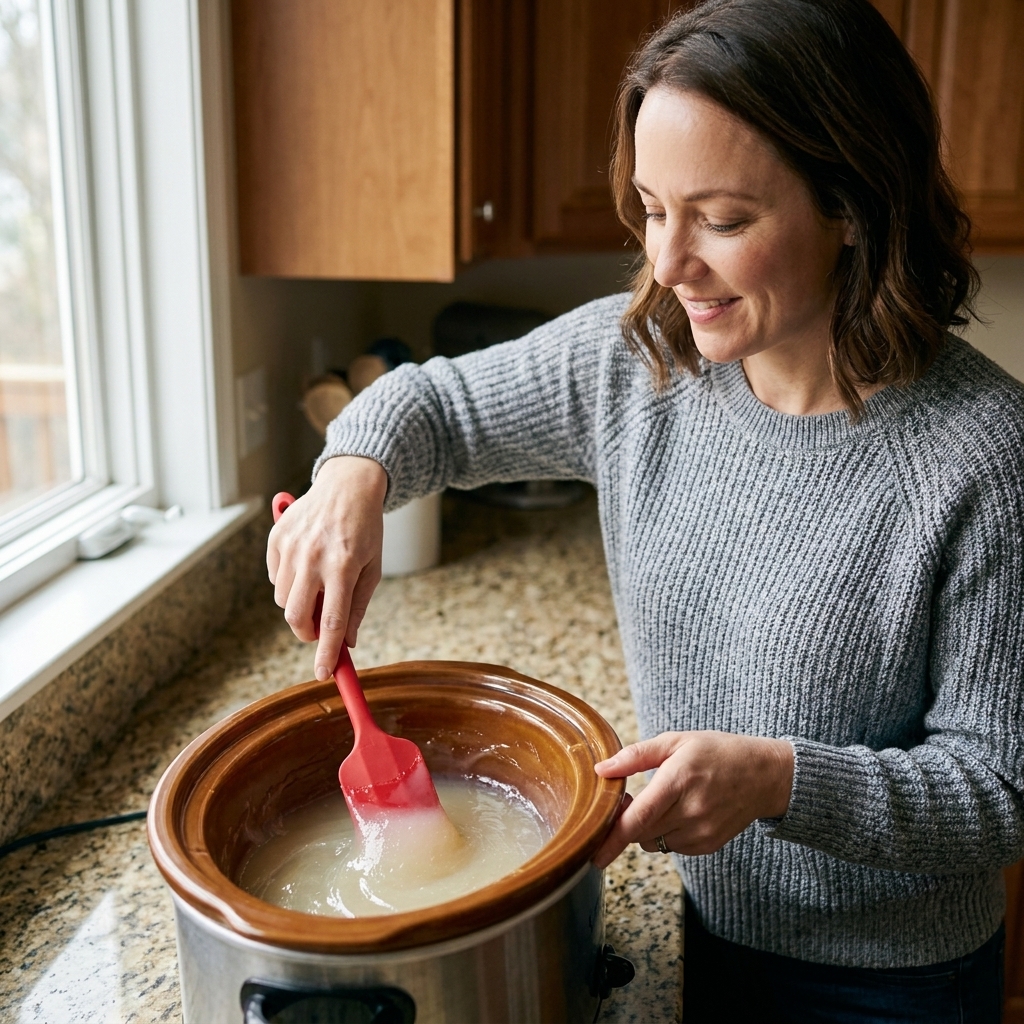
Put the lid on and cook on low. Every 10 to 20 minutes, stir and check the texture. Liquid soap paste typically moves through stages:
- Applesauce: opaque and fluffy
- Mashed potatoes: thicker and chunkier
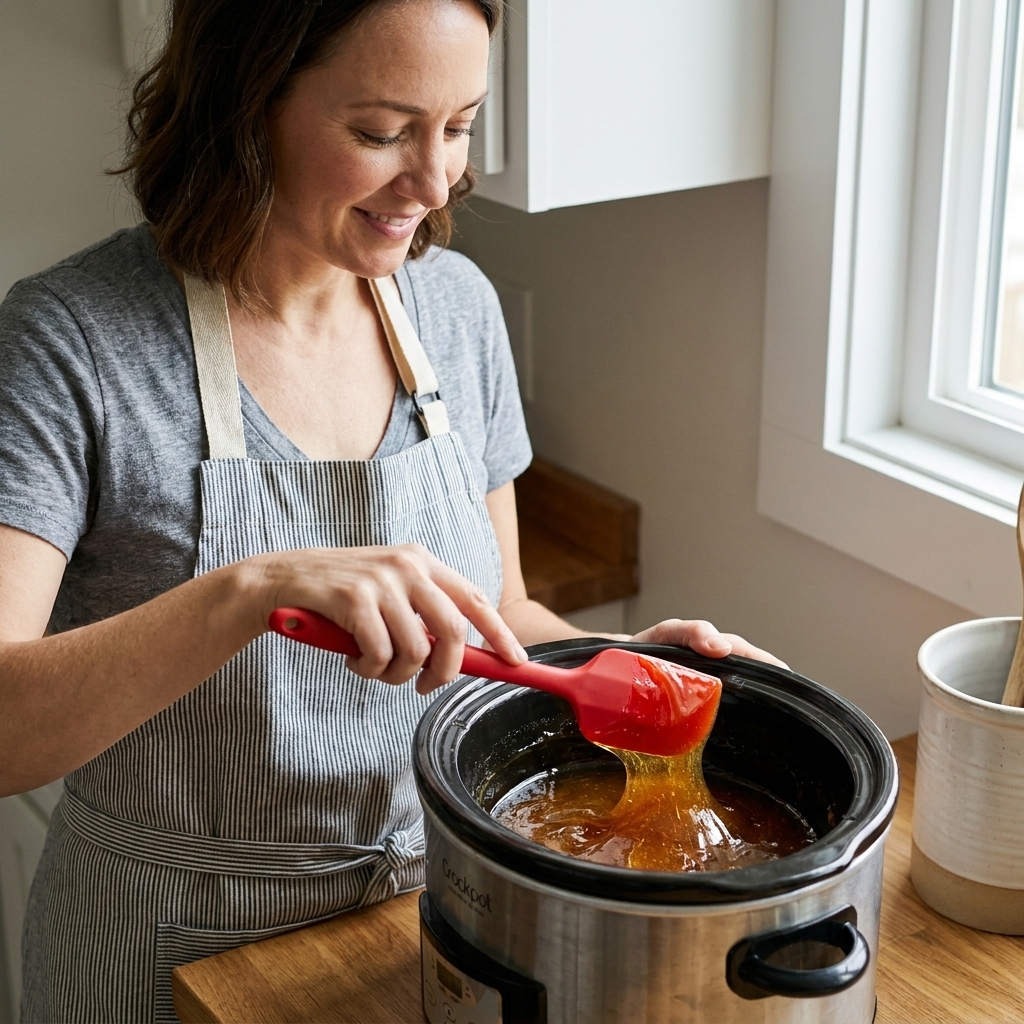
- Taffy: glossy, stretchy, harder to stir
- Vaseline stage: translucent, gel-like, looks like petroleum jelly
Your goal is a mostly translucent paste that is fully saponified. Depending on batch size and heat, this can take 1 to 3 hours.
6) Check for doneness
There are a few ways to confirm the paste is finished. Think of these as tools that work best together. Your primary controls are correct calculation, full cook, and a small dilution test.
- Clarity test: dissolve a small pea-sized bit of paste in hot distilled water. If the solution is mostly clear (not milky), you are close or done.
- Phenolphthalein (if you have it): a tiny smear of paste with one drop can be a useful screening check for excess free alkali, but it is not a definitive pass or fail on its own.
- pH strips: most useful after dilution. Strips are approximate, and paste itself is hard to test accurately. Many true soaps fall somewhere around pH 9 to 11 when diluted, depending on formula, dilution, and superfat.
If your test solution stays milky, cook longer and test again. Most “mystery cloudiness” early on is simply incomplete paste.
Dilution
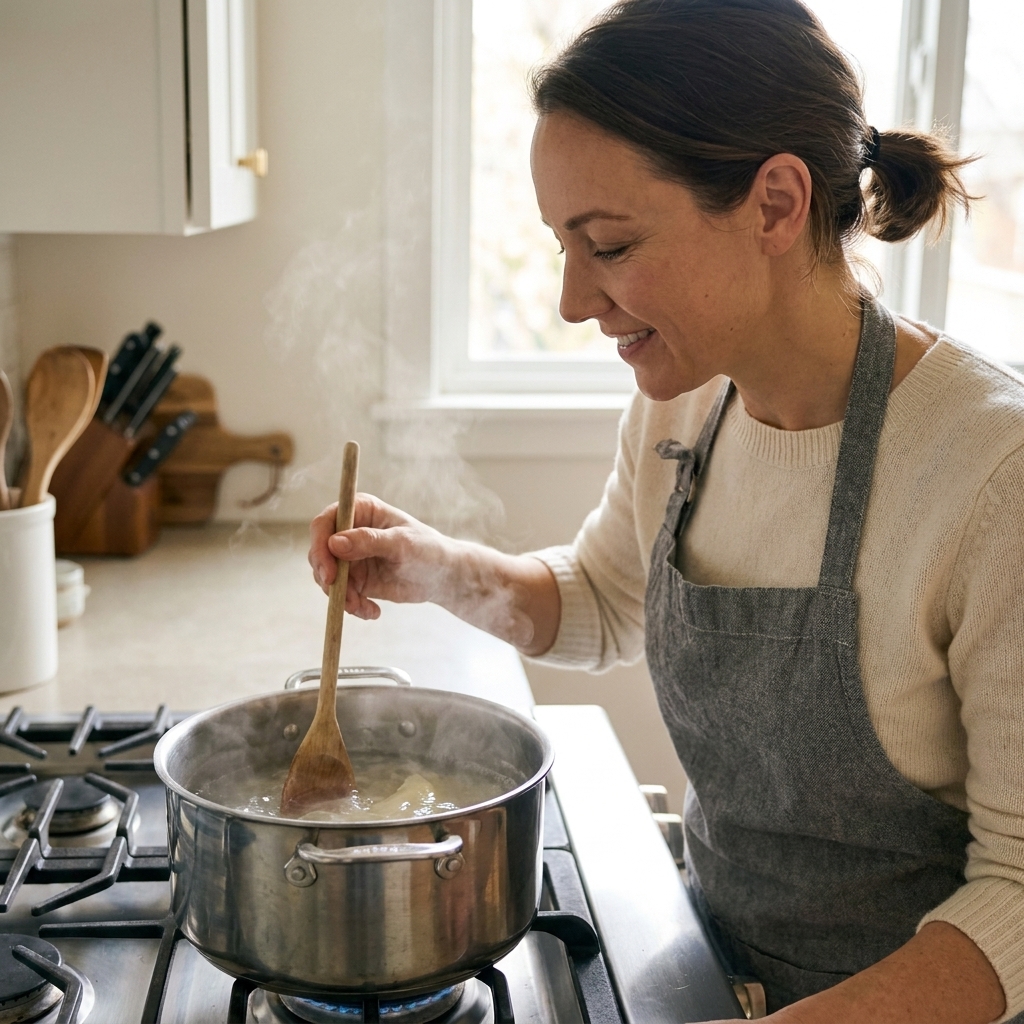
This is where patience pays off. Paste dissolves when it feels like it. Gentle heat and time beat aggressive boiling every single time. Aim for a low, steady heat, roughly 60 to 80°C (140 to 175°F) if you are the type who likes a number.
Pick a starting ratio
Different formulas want different dilution ratios. Start here, then adjust:
- For a typical hand soap: 1 part paste to 2 parts distilled water by weight
- For a thicker soap: 1 part paste to 1.5 parts water
- For foaming pump soap: 1 part paste to 3 to 4 parts water
How to dilute smoothly
- Weigh your paste into a heat-safe pot or your slow cooker.
- Add the measured distilled water.
- Heat on low with the lid on. Stir occasionally, but do not whip air into it.
- Give it time. A few hours is normal. Overnight is not unusual.
If you see floating translucent chunks, it just needs more time. If you see stubborn opaque bits, it may not be fully cooked paste or you may have cooled too quickly.
If you added too much water
Do not try to rescue a thin batch with a hard boil. You can darken the soap and cook off water unevenly. Instead, either (1) dissolve more paste into the batch, or (2) split it into smaller pots and adjust one portion at a time until it hits the feel you want.
Finish the soap
Let it settle
Freshly diluted soap can look hazy from tiny bubbles. Let it sit 12 to 24 hours. Many batches clear dramatically just from resting.
Optional: chelate for better rinse
If you have hard water, a chelator can improve rinse feel and reduce dull buildup around sinks.
- Sodium citrate is one of the easier options for liquid soap and tends to be gentler on viscosity than trying to adjust with acids after the fact.
- Citric acid can be used, but it must be handled with care. It can thin soap, and if you plan to add it during making, it should be accounted for in your lye calculation.
- Borax is not a classic chelator. If you experiment with it, treat it as a separate, optional technique for clarity or buffering, and test in small jars first.
If you are brand new to liquid soap, I recommend mastering paste and dilution first. Then experiment with chelation in small test jars.
Scenting
Liquid soap holds scent differently than cold process bars. Over-scenting can cause cloudiness or separation.
- Start around 0.5 to 1.5% fragrance by total diluted soap weight.
- Stir in gently at room temperature or slightly warm.
- Let the batch rest and re-check clarity the next day.
Safety note: essential oils and fragrance oils are not automatically skin-safe at any amount. Follow IFRA guidance for fragrance oils, respect dermal maximums for essential oils, and remember that some materials are common sensitizers.
Color
Botanicals are my favorite playground, but in liquid soap the rules change. Many natural colorants fade or go murky at high pH.
- Clays can cloud soap and may settle.
- Infused oils change the paste color subtly and are the most reliable “natural tint.”
- If you want clear, keep color minimal.
Thickening options
Some liquid soaps get naturally thick at the right dilution. Others stay runny, especially high-olive formulas. You have a few routes:
1) Adjust dilution
The simplest thickener is less water. Try thickening by dissolving a little more paste into your finished soap, or make your next batch with a lower dilution ratio.
2) Salt solution
Salt can thicken certain liquid soap formulas, especially those with more coconut or palm kernel. It can also thin others or make them cloudy, so go slow and keep notes.
- Make a 20% salt solution (20 g plain sodium chloride in 80 g distilled water). Non-iodized salt is your friend here.
- Add a tiny amount at a time, then wait. A good starting point is around 0.1 to 0.3% of your total soap weight, then creep upward only if it is responding well.
- Stop as soon as you like the texture. Too much salt can break viscosity.
3) Commercial thickeners
If you want a luxe gel texture every time, a compatible thickener like hydroxyethylcellulose can be a good option. It is common in handmade liquid soap products, but it does move you away from the simplest “just oils and lye” approach.
Troubleshooting
My paste is cloudy and the dilution never clears
- Most common cause: paste is not fully cooked. Go back, cook longer, and re-test with a small dilution clarity test.
- Hard water: use distilled water for dilution and cleaning your tools during the process.
- Fragrance issues: some fragrances haze soap. Test scents in a small jar before scenting the whole batch.
My soap separated into layers
- Incomplete saponification or uneven dilution can cause separation. Reheat gently and stir, then let it rest.
- If you added a lot of fragrance or a heavy essential oil, it may be the culprit. Reduce load and choose a more compatible scent next time.
It feels drying
- Reduce coconut percentage next time (try 20 to 30%).
- Increase superfat slightly (from 3% to 5%), but understand this can reduce clarity and can increase the chance of cloudiness.
- Make sure you are not over-concentrated. Too little water can feel harsh.
It is too thin
- First, let it rest 24 hours. Bubbles can make it seem thinner than it will be.
- Try a lower dilution ratio next time, or dissolve more paste into this batch.
- Try salt solution slowly, only after you love the base soap.
It stings or seems too alkaline
True soap is alkaline, but it should not feel zappy or sting. If you suspect excess alkali:
- Double-check your KOH purity setting and weights.
- Test a properly diluted sample (pH strips are more meaningful here than on paste, but still approximate).
- If you truly have lye-heavy soap, the fix is not random acid dumping. The safest correction is usually to re-batch with additional oils calculated to consume the excess alkali, or to set the batch aside and consult a precise recalculation. When in doubt, do not use it on skin.
Storage and shelf life
Do I need a preservative?
Properly made liquid soap is high pH and often does not support microbial growth the way lotions do. That said, microbes can still be introduced through dirty bottles, topping off dispensers, and additives that bring extra spoilage risk.
- Use clean, dry bottles. Ideally sanitize and let fully dry.
- Avoid repeatedly topping off a pump bottle without washing it.
- If you add ingredients like aloe juice, herbal teas, honey, or milk, you have changed the risk profile. In that case, use a broad-spectrum preservative designed for high pH products and follow supplier guidance.
- If you are making for a household, small-batch bottling helps. Keep a refill jug closed, and only fill clean dispensers.
Best containers
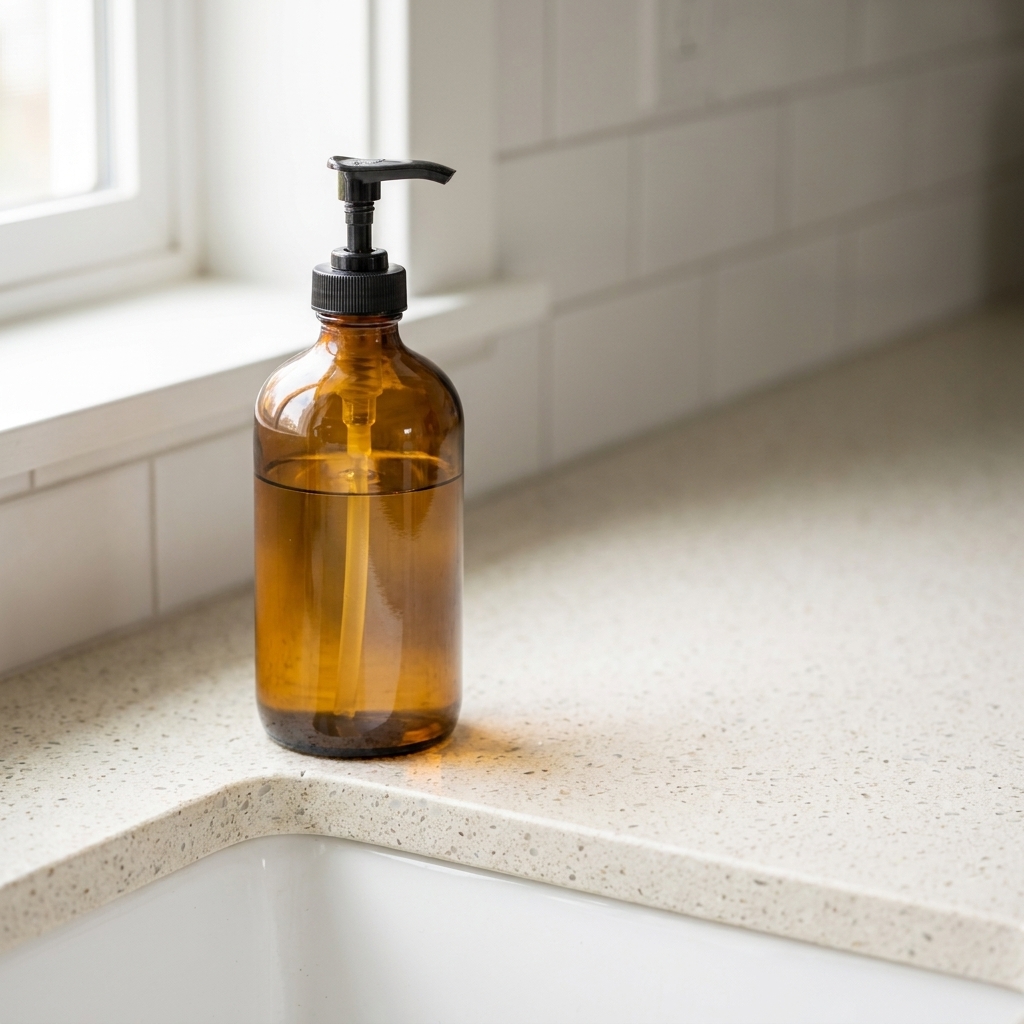
- Pump bottles for bathroom sinks
- Jugs for refills
- Foaming bottles for more diluted soap
My workflow
- Day 1: make and fully cook paste, then cover and let it rest overnight in the slow cooker insert.
- Day 2: dilute on low heat, then let it settle 12 to 24 hours.
- Day 3: adjust thickness, scent lightly, bottle.
Liquid soap rewards the slow approach. Every time I rush the dilution, I end up with floating paste islands and a bad attitude. Every time I give it a little time, I get that satisfying, glassy pour.
FAQ
Can I use sodium hydroxide (NaOH) instead of potassium hydroxide?
For true liquid soap, KOH is the standard. NaOH makes hard bar soap. Some makers use a blend of KOH and NaOH to tweak firmness and viscosity, but if you are learning, stick with 100% KOH.
Can I make this in an Instant Pot?
Yes, many soapmakers do, but it introduces temperature variables that can surprise beginners. A slow cooker on low is forgiving and keeps you in control.
Why is my soap not crystal clear?
Clarity depends on oils, superfat, water quality, cook completeness, and additives. A little haze is still excellent soap. If you want maximum clarity, use distilled water, fully cook paste, keep superfat modest, and scent lightly.
Is liquid soap pH the same as “pH-balanced” store soap?
No. True soap is naturally alkaline. Many store “hand soaps” are syndet cleansers formulated at a lower pH. Handmade liquid soap can still be gentle, especially with a balanced recipe and reasonable superfat, but it will not be the same pH as a syndet.
Formula summary
Oils (1000 g total)
- Olive oil: 500 g
- Coconut oil (76-degree): 350 g
- Castor oil: 150 g
Lye and liquids
- KOH: calculate with your KOH purity and 3% superfat
- Distilled water: set for 25 to 30% lye concentration
- Optional glycerin: use to help dissolve KOH and smooth paste
Process
- Make KOH solution (KOH into water).
- Combine with warm oils and blend to trace.
- Cook on low until translucent paste.
- Dilute paste with distilled water (start 1:2 paste to water).
- Rest 12 to 24 hours, then adjust thickness and scent.