If you have ever pulled a gorgeous bar from your cure rack only to spot rusty freckles a few weeks later, you have met the heartbreak known as DOS, or dreaded orange spots. They can smell stale, show up as orange-brown dots or patches, and make even a perfect swirl feel like a flop.
The good news is that DOS is not a curse. It is usually a chemistry, ingredient, and storage problem, and antioxidants are one of the best tools we have to slow down the oxidation piece of the puzzle.
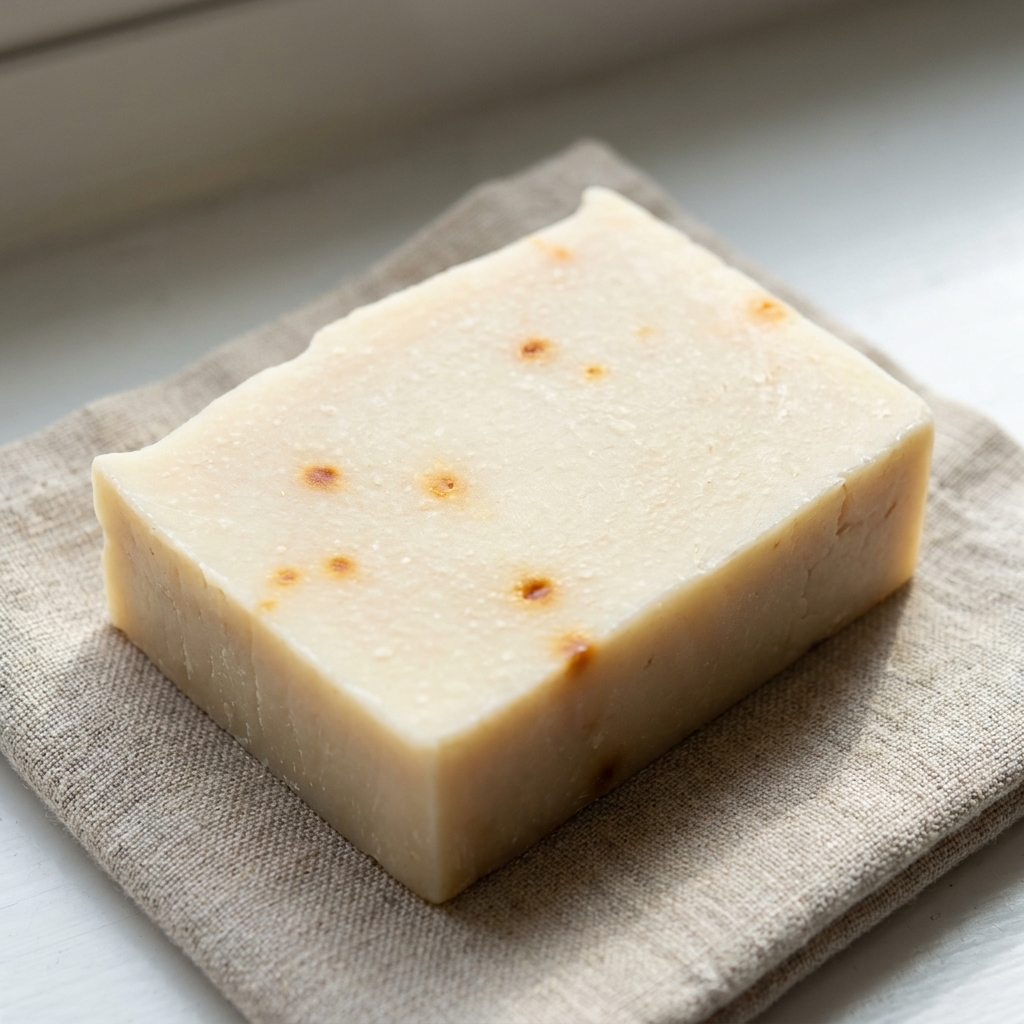
In this guide, I am going to walk you through what antioxidants actually do in soap making, when they help, when they do not, and exactly how to use Vitamin E and Rosemary Oleoresin Extract (ROE) to protect your oils and extend shelf life.
What DOS is (and is not)
DOS is commonly linked to oxidation and rancidity in fats and oils, especially the unsaponified portion of the bar (your superfat and any free-floating oils). Over time, oxygen reacts with vulnerable fatty acids (often in highly unsaturated oils). That can create:
- Discoloration (orange or brown spots, patches, or streaks)
- Off odors (crayon-like, stale nuts, old cooking oil)
- Texture changes (sometimes a slightly tacky or weepy area)
It is also true that “DOS” is sometimes used as a catch-all for orange or brown discoloration, and real-life diagnosis can be messy. Factors like oil quality, metals, storage conditions, fragrance components, and botanicals can overlap, and two issues can happen in the same bar.
DOS is different from:
- Vanillin browning from fragrance oils, which is usually overall tan to brown and predictable
- Spice or botanical bleed from cinnamon, clove, paprika, and some infused botanicals
- Uniform fragrance discoloration that looks even rather than spotty
Antioxidants are designed to slow oxidation, so they help most when oxidation is the main driver. If the discoloration is coming from fragrance behavior or colorant bleed, antioxidants will not change much.
Quick DOS check
If you are trying to figure out what you are looking at, here is a fast, practical checklist:
- Smell test: Crayon, cardboard, stale oil, or old nuts points toward oxidation.
- Pattern: Random dots or blotches often suggest DOS. Uniform browning often suggests vanillin or fragrance discoloration.
- Timing: DOS often shows up weeks to months into cure or storage, not always immediately.
- Location: Spots can cluster where air hits most (edges, corners) or where additives are concentrated.
- What is in the bar: Real plant bits, purees, milks, or “fragile” oils increase the chance that more than one thing is going on.
Oxidation: where it starts
Here is the sneaky part: oxidation problems often start before you even make soap. If your sweet almond oil, rice bran oil, or specialty butter has already begun to oxidize on the shelf, that damage carries into your batch.
In cold-process soap, a few things can raise oxidation risk over time:
- High unsaturated oils (grapeseed, hemp, sunflower, safflower, flax, canola, sweet almond)
- Heat and light during storage and cure
- Trace metals (tiny contamination from tools, some clays, or water impurities can speed oxidation)
- High superfat leaving more free oils available to oxidize
Antioxidants work best when you treat them as oil protection, not a last-minute rescue.
What antioxidants do in soap
Antioxidants like ROE and certain forms of Vitamin E act as oxidation inhibitors. They help slow the chain reactions that turn fresh oils into rancid-smelling oils. In soap making, that usually means they are most useful for protecting oils in storage and supporting the early life of the bar.
Two key realities to keep expectations realistic:
- Antioxidants do not fix rancid oil. If an oil already smells off or has a sharp, stale odor, no additive will make it “new” again. That oil will usually telegraph into the finished soap eventually.
- Antioxidants are not preservatives. They are not meant to prevent microbial growth. Typical fully saponified, high-pH bar soap is generally not considered a product that needs a broad-spectrum preservative, but exceptions exist. If you are formulating something with extra water phases, fresh purees, unusual additives, or a low-pH cleanser, your preservation needs can change.
Vitamin E vs ROE
Both get lumped together as “antioxidants,” but they behave differently and shine in different situations.
Vitamin E (tocopherols)
Vitamin E in soap making is usually mixed tocopherols or tocopherol sold as a thick, golden liquid. It is oil-soluble and can slow oxidation, but the effectiveness varies based on:
- the specific form (mixed tocopherols are often preferred over a single isolate)
- freshness and quality
- how much you use and how you store it
Vitamin E is also popular because it is skin-friendly and label-friendly, but in my experience it is not always the strongest option for preventing DOS in high-risk oil blends. Think of it as helpful support, especially for oil storage, not a guarantee.
ROE (Rosemary Oleoresin Extract)
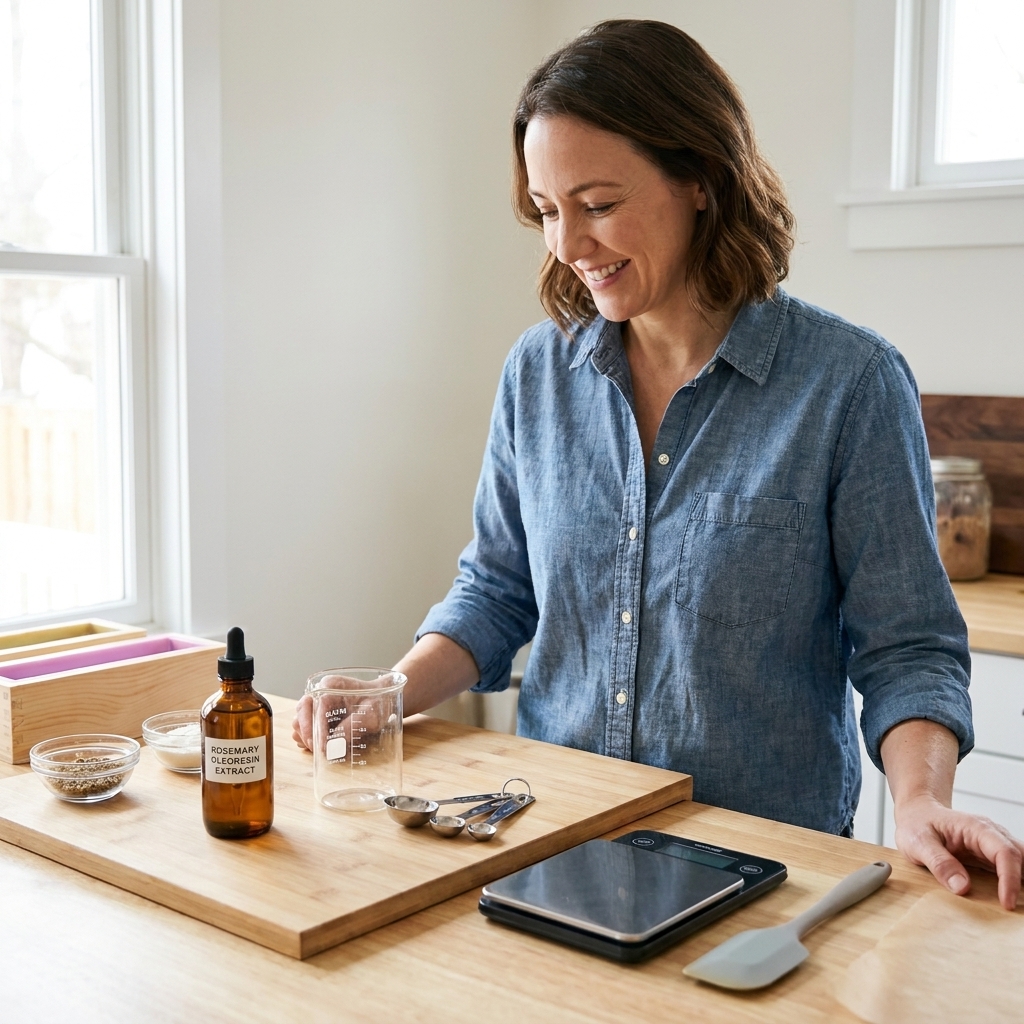
ROE is a concentrated extract of rosemary, typically standardized for antioxidant compounds like carnosic acid and carnosol. It is oil-soluble and potent at very low usage rates.
In soap making, ROE is loved as an oil stabilizer. It is not meant to scent your soap like rosemary. When used correctly, you usually will not smell it at all in the finished bars.
Quick comparison
| Feature | Vitamin E | ROE |
|---|---|---|
| Primary use in soap | Antioxidant support, label appeal | Strong antioxidant for stabilizing oils |
| Strength | Moderate, depends on form | High, very concentrated |
| Typical usage rate | 0.1% to 0.5% of oil weight | 0.05% to 0.2% of oil weight |
| Typical scent impact | None | Usually none at proper dose |
| Best time to add | To oils (pre-lye) or to stored oils | To stored oils ASAP, or to batch oils |
| Common mistake | Using too much and expecting DOS to vanish | Overdosing and getting herbal notes or wasting product |
How to use ROE
If I had to pick one antioxidant for soap oils, ROE is usually it. It is especially helpful if you soap with delicate oils or buy oils in bulk.
Add it to fresh oils
ROE is most effective when it protects oils before they have started oxidizing. For high-risk oils like sweet almond, rice bran, grapeseed, hemp, and specialty nut oils, I add ROE right to the storage bottle and give it a good shake.
Typical ROE rate
Because concentrations vary by supplier, always check the product documentation. That said, common soap-making usage rates are:
- 0.05% to 0.2% of the oil weight (0.5 g to 2 g per 1000 g oils)
Many makers settle around 0.1% of oil weight as a practical middle ground. You will also see ROE guidance written in ppm. If you do, treat that as another way of expressing the same idea and follow your supplier’s spec.
How to add ROE
- Warm your oils gently if they are cloudy or thick. Lukewarm is plenty.
- Pre-mix ROE into a small amount of liquid oil from your recipe so it disperses easily.
- Stir thoroughly into your full batch oils before adding lye solution.
Skip “drops” as a measuring method. Drop size varies wildly by bottle, temperature, and viscosity. ROE is easiest to dose accurately by weight with a 0.01 g scale.
Where it fits in cold process
- Best: in your stored oils or master batch oils
- Also fine: in melted oils right before lye addition
- Not ideal: after trace, when you are racing a thickening batter
How to use Vitamin E
Vitamin E can absolutely play a role, especially if you already own it or you want a simple antioxidant boost for moderate-risk recipes.
Choose the right kind
For soap making, look for oil-soluble Vitamin E listed as:
- Mixed tocopherols, or
- Tocopherol (often a thick liquid)
Avoid confusing it with tocopheryl acetate (an ester form often used in cosmetics). It is not the same antioxidant performer for oils.
Typical Vitamin E rate
Usage varies, but a common range is:
- 0.1% to 0.5% of oil weight (1 g to 5 g per 1000 g oils)
More is not always better. Overdoing it can be sticky, expensive, and not noticeably more protective.
When to add Vitamin E
- To your oils before lye, mixed well
- To stored oils if you are trying to extend shelf life in the bottle
Because Vitamin E is oil-soluble, it needs to be dispersed into the oils. I like to add it after my hard oils are melted, while everything is warm and easy to stir.
Using ROE and Vitamin E together
Yes, you can use both, and some makers like pairing them. If you do, keep the doses reasonable. ROE does the heavy lifting for oil stability, and Vitamin E can add a little extra support.
If you are trying to choose one because you want a simple routine, I would generally prioritize ROE for DOS prevention in high-unsaturated recipes.
More tools: chelators
Remember that “trace metals” can speed oxidation. This is where chelators come in. Chelators help bind metal ions (like iron and copper) so they are less available to catalyze rancidity reactions.
Common options soap makers use include:
- Sodium citrate (often made by neutralizing citric acid with some of your lye, or purchased pre-made)
- EDTA (used in some commercial-style formulations where it is available and desired)
- Citric acid (used carefully, with correct lye adjustment)
This is not an either-or choice. Many makers use ROE to stabilize delicate oils and a chelator to reduce the metal-catalyst problem, especially if their water is mineral-heavy.
Antioxidants will not fix everything
If you add ROE or Vitamin E and still see DOS, do not assume the additives “did not work.” It might be that oxidation is being pushed by something else in your process, or that the discoloration was never DOS in the first place.
Common issues
- Old or poorly stored oils: heat, light, and air exposure matter a lot.
- High superfat: more free oils can mean more opportunity for oxidation.
- Metal contamination: rusty racks, reactive containers, or tiny bits of metal can accelerate rancidity.
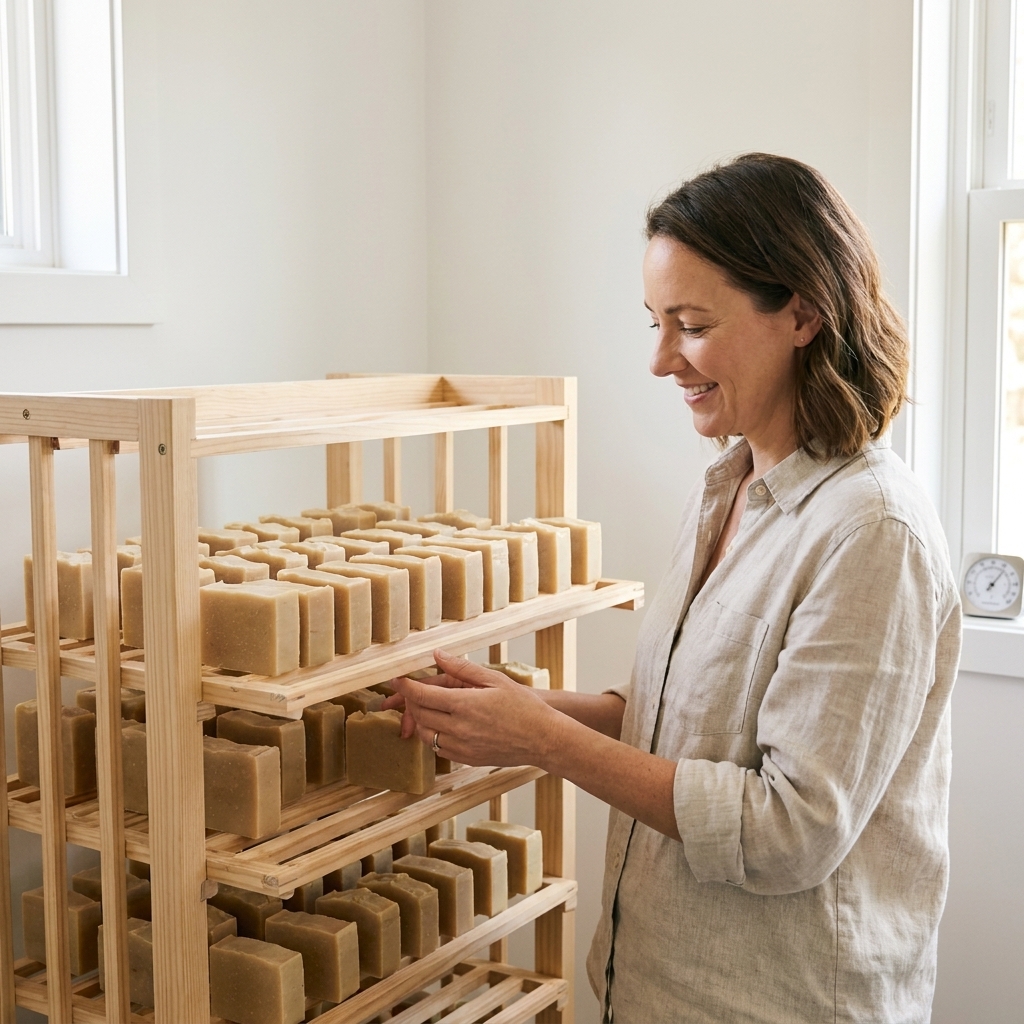
- High humidity and poor airflow: these can worsen storage conditions by slowing drying and encouraging sweating or dampness, which can make bars age less gracefully.
- Botanicals: real plant matter can discolor or create localized spoilage-like effects in some cases.
Recipe choices that reduce risk
- Use more stable oils (olive, tallow, lard, cocoa butter, shea butter, high oleic sunflower)
- Keep very delicate oils at lower percentages, especially grapeseed and hemp
- Consider a modest superfat (many makers stick around 3% to 6% for general bath bars)
- Use distilled water if your tap water is mineral-heavy
Storage and packaging
You can buy the best antioxidant on earth and still lose the battle if your oils and bars sit warm, bright, and exposed to air for months.
Oil storage
- Store oils cool and dark. A cabinet away from the stove is better than an open shelf by a sunny window.
- Minimize headspace in bottles. More air in the bottle means more oxygen exposure.
- Cap tightly and wipe rims clean.
- Label dates when you open a new oil, especially delicate ones.
- Buy sizes you will use. Fragile oils are rarely a bargain if half the bottle oxidizes before you get to it.
Finished bar storage
- Keep bars out of direct light. Light and heat both speed up oxidation over time.
- Choose packaging intentionally. Breathable wraps (like paper) help finished bars continue to dry, while airtight plastic can trap moisture and scent. For long-term storage, prioritize a cool, dark space and protect bars from dust and humidity.
- Avoid metal contact. If you cure on racks, make sure there is no rust and no reactive metal surfaces touching the soap.
Safety and handling
ROE and Vitamin E are used in tiny amounts, but treat them like the concentrated ingredients they are.
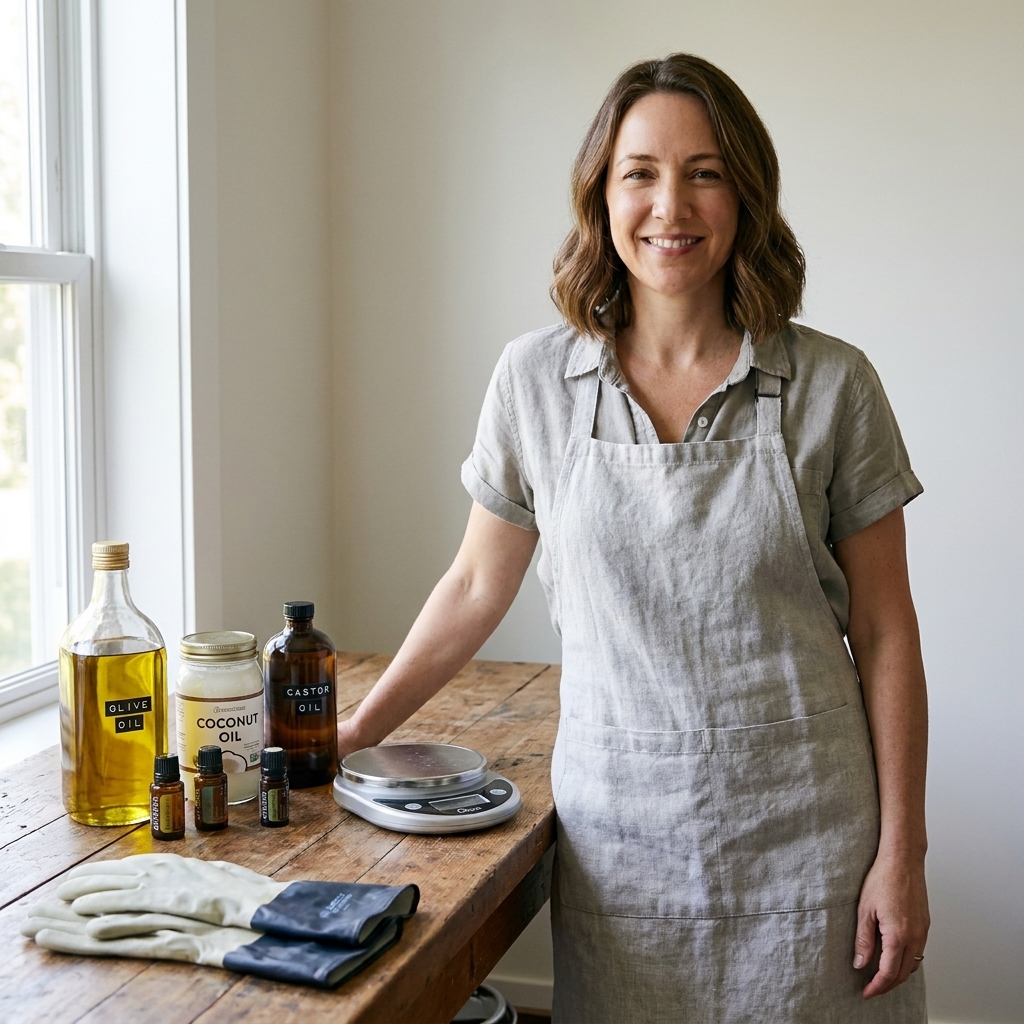
- Wear gloves when handling ROE. It is sticky and potent.
- Avoid eye contact and wash skin promptly if you spill.
- Keep bottles tightly closed and store away from heat and sunlight.
- Measure by weight when possible. Antioxidants are easiest to dose accurately with a 0.01 g scale, especially ROE.
FAQ
Will Vitamin E or ROE prevent DOS 100%?
No additive can guarantee that, because DOS is usually a combination of oil freshness, recipe design, metal exposure, and storage conditions. Antioxidants stack the odds in your favor, especially when you start with fresh oils and store them well.
Can I add antioxidants to melt-and-pour soap?
You can, but it is usually unnecessary. Melt-and-pour bases are formulated for shelf stability. If you are adding a lot of extra oils or fragile botanicals, oxidation risk can rise. In that case, keep additions modest and store finished bars cool and dry.
My soap already has DOS. Can I save it?
You can still use it if it smells fine and feels fine, but the spots usually do not go away. For gift-worthy bars, I retire them to personal use and focus on preventing the next batch from developing the same issue.
Does ROE affect trace or lather?
At typical usage rates, ROE should not noticeably change trace, lather, or hardness. If you use too much, you are mostly wasting product, and you may notice a faint herbal note.
What is the simplest anti-DOS routine?
Use fresh oils, store them cool and dark, add ROE to delicate liquid oils when you open them, and consider using a chelator if you suspect metals or hard water are part of your issue. Then keep your superfat reasonable and cure bars somewhere with good airflow and low humidity.
The takeaway
Antioxidants are one of those quiet, unglamorous supplies that can make your soap making feel smoother and more predictable. If you are battling DOS or you love working with delicate oils, start thinking of ROE as oil insurance and Vitamin E as a helpful supporting player.
And if you ever feel discouraged, I will just say it: every soap maker I know has had a batch go spotty on them at least once. The trick is turning it into data, tweaking one variable at a time, and getting right back to the fun part.